
The guests at a hotel in the Alps are temporarily cut off from the rest of the world; murder and mayhem ensue. Sound familiar?
It’s the plot of an Agatha Christie short story, “The Erymanthian Boar” (from the mythology-themed The Labour of Hercules), in which Poirot finds himself stranded with a motley crew of fellow guests after the funicular breaks down.
Lucy Foley brings not Poirot but Miss Marple to the Alps in the first authorized novel featuring Agatha Christie’s iconic village spinster to appear in fifty years.
(Christie’s own final Marple novel was published ten months after her January 1976 death, but it was initially drafted and set during the Second World War years and then retained for later publication.)
Several years ago, a dozen authors were selected to craft new Miss Marple stories. The results were published as Marple: Twelve New Mysteries.
The contributors varied from stalwart mystery and suspense authors like Val McDermid, Ruth Ware, and Lucy Foley to writers who are best known for their YA writing (Leigh Bardugo) or their speculative or historical fiction (Naomi Alderman and Kate Mosse, respectively).
Crime novelist Dreda Say Mitchell’s “A Deadly Wedding Day,” set in the 1960s, was especially adept. This is a fun BBC conversation with Mitchell and Mosse about their fondness for Agatha Christie and Miss Marple.
But it appears that the invitation to write a Marple story was an audition, of sorts: Lucy Foley was subsequently asked by Agatha Christie’s estate to write a Miss Marple novel.
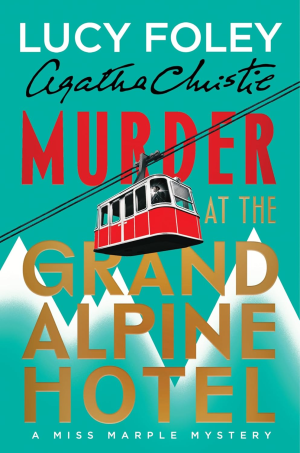
Murder at the Grand Alpine Hotel is newly in print this fall, and it’s terrific: a well-paced story with interesting characters (and multiple narrators), set in 1950 and brimming with both period detail and nods to Christie’s work.
The novel takes place at a luxurious mountaintop resort. Skiing, sleigh rides, rich hot chocolate, and a relaxing spa are on offer, all of them especially appreciated by the the English visitors, like Miss Marple’s party, who are still enduring post-war rationing back home.
Foley draws from Christie’s novels her description of Miss Marple’s startlingly alert blue eyes, but she also incorporates the more disparaging view of her as a meddling “old cat,” the judgment of the vicar’s irreverent wife, Griselda, in Murder at the Vicarage.
As Foley recounts, the authors of the Twelve New Mysteries stories were given strict instructions: Miss Marple is never to marry; she can’t even be given a fleeting romantic interest. And she can’t be depicted in her youth: Miss Marple is, always and forever, to be elderly.
Foley has adhered to these requirements in her novel, so we meet a suitably aged and perceptive Jane Marple who is in the company of her well-off friend, Dolly Bantry, also a Christie creation.
Dolly is mourning her husband and appreciating her new and very efficient paid companion, Diana, who has taken care of all of the irksome details of travel planning.
An English Conservative MP and war hero is vacationing at the hotel with his much younger wife, whose patrician upbringing included lessons on overlooking a husband’s indiscretions.
A Hollywood blonde bombshell, a nervous young medical student, and an old war buddy of the husband’s round out the cast.
Tensions simmer, while Miss Marple watches and wonders.
In the novel’s Prologue, a gondola attendant discovers a body slumped in a compartment. The novel then jumps back in time for a number of chapters.
Foley introduces her various characters with greater depth than Christie, whose mystery novels were driven by plot. That produces both a longer and slightly more leisurely story.
The use of multiple first-person narrators also means that the action shifts away from Miss Marple for substantial portions of the novel–but this is also the case in many of Christie’s stories and novels, where Miss Marple is always on the sidelines, watching from her garden.
And like Christie, Foley is adept at building her mystery and scattering clues.
After a train accident in a tunnel cuts the hotel off from the town below, tensions rise. Serendipitously, a police office is vacationing at the hotel, and he enlists Miss Marple to help him interview the guests.
As always, Jane Marple’s acute understanding of human nature helps her ferret out the guilty.
For readers who have devoured all of the Miss Marple stories and novels, from “The Tuesday Night Club” (1927) to Sleeping Murder (1976), and who still long for more, her re-appearance in Foley’s novel is most welcome.


Leave a comment