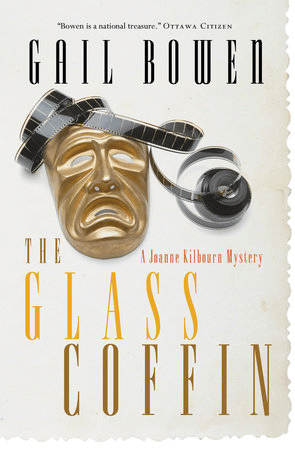
The eighth book in Gail Bowen’s Joanne Kilbourn Shreve series is one of my favourites.
It’s just before Christmas, and the perennially unlucky-in-love Jill Oziowy is visiting Regina to hold her wedding at the local art gallery. Having given up on romantic happily-ever-afters, Jill is pragmatic in her choice: marrying documentary-maker Evan MacLeish will offer her a family, complete with a gorgeous seventeen-year-old stepdaughter, Bryn. Jo is worried, but she tries to be supportive.
Unfortunately, Evan’s marital history is checkered: his first wife died of suicide, his second in a single-car accident. He made films about both of their lives–and deaths–even pulling out his camera at the accident site as his wife’s body was being retrieved from the wreckage.
He keeps the camera on a resentful Bryn, too, and his hyper-focus has damaged her. Fortunately for Bryn, her two aunts–the sisters of her father’s two wives–dote on her, and they all live together in the comfortable Toronto home of Evan’s profoundly agoraphobic but brilliant mother.
In these complicated circumstances, and especially after watching Bryn happily manipulating Jill, it’s hard for Jo to smile for the wedding photographer and wish them well as they plan for their new life together in New York.
The day of the wedding is inauspicious: Gabe, the best man, abruptly returned home, Evan announces; the officiant has the flu. But they get through the ceremony.
During the reception, Jo encounters her estranged lover, police officer Alex Kequahtooway. He’s been distant for months, and their encounter is awkward; it gets worse when she learns he’s there to break the news that Evan’s best man has been found dead in unpleasant circumstances. Gabe, and Jo had connected briefly the previous evening at dinner, and and they’d intended to meet up for a snowy walk; instead, she has to identify his body.
And that’s not the only sudden death to mar the celebration of Jill’s wedding.
The Glass Coffin is intended to be Evan’s most important documentary yet: a portrait of his mother trapped in her home by her phobia. As in Burying Ariel, Bowen draws on fairy-tale motifs here to craft a complex (if sometimes improbable) story.
All of Bowen’s strengths are on display: her careful character sketches, effective pacing, and superb sense of place. Bowen conjures up a frosty Saskatchewan winter so effectively that readers will be reaching for the hot chocolate.
The University of Regina has announced a display of their Gail Bowen archival materials, a tribute to the author, who recently passed away. Some materials can be viewed on their website.

