Oxfam’s website describes the desperate plight of asylum-seekers who land on the beaches of Lesvos, a Greek Island that has become the temporary home of tens of thousands over the last fifteen or so years:
“Every day, boatloads of people fleeing war and poverty arrive. . . . After paying traffickers sums of nearly 1,000 euros each, the passengers risk their lives on a dangerous voyage with no guarantees, often at night and in unfavorable weather conditions.”
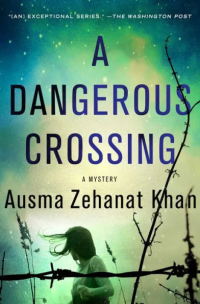
They land on beaches where volunteers greet them–and collect the bodies of those drowned during the “dangerous crossing,” as Ausma Zehanat Khan terms it in her 2018 mystery novel.
The book, the fourth in the series, finds Rachel Getty and Esa Khattak in Greece looking for their friend Audrey Clare, who has been providing refugee support through her organization, Woman to Woman. A young boy and a French agent have been shot to death; Audrey has disappeared: potential target or, as the local police seem to suspect, potential culprit? Her gun was used in the crime.
Ausma Zehanat Khan writes politically-informed crime fiction that portrays historical atrocities, including genocide in the former Yugoslovia, and the more recent cruel regimes in Syria and Iran, where persecution of their own citizens includes mass torture and state-sponsored murder. Zehanat Khan’s work conveys these events and their impact on individual characters with extraordinary care and empathy. Her depictions of the most vulnerable become not only a means of pricking readers’ consciences but also of educating us about the complexity of geopolitical situations distant from our own contexts.
A particular strength of her approach is the way she connects Canadian policies (of multiculturalism, immigration, or cultural integration) to what is happening overseas, linking the lives of newcomers who have survived extreme experiences to the need for a more comprehensive international approach to justice, asylum, and healing.
The novel’s UK title is No Place of Refuge, which is also apt. Desperate asylum-seekers are fleeing their home nations, and especially the violently strife-torn Syria. Passage from Turkey to Greece offers the hope of survival.
But Lesvos, a small island in a relatively small and not especially wealthy European nation, is struggling to manage the constant flow of new arrivals. Zehanat Khan describes the range of local reactions, from generous welcomes to emphatic rejections of the newcomers, who are blamed for Lesvos’s social ills.
The first large reception camp was set up a dozen or so years ago; in recent years, the Moria Camp has been transformed into more of a detention centre as Greece struggled with the pressures and costs of the asylum-seekers, and with the inadequate support from the EU and the rest of the world.
Volunteers and service agencies fill much of the gap, as Zehanat Khan describes. But the miserable living conditions she describes in this novel have apparently only worsened.
The EU has stepped up to fund a massive new facility for holding refugees that is located in a Lesvos forest, the Vastria Closed Controlled Access Centre. Its design includes barbed wire, concrete walls, and surveillance towers. While some argue that this is to protect vulnerable people (who in Zehanat Khan’s novel are subject to an array of horrific crimes and forms of exploitation), it is, starkly, a prison.
As one critique observes, “movement is restricted, contact with the outside world is limited, and access for NGOs and legal aid workers is increasingly obstructed . . . . Asylum seekers are confined under conditions that strip them of autonomy and dignity, with little access to the legal protections and social services that are their basic rights.”
In A Dangerous Crossing, the author scrutinizes Canadian asylum policies that affect desperate people in Syria and other conflict-ridden countries. As the novel points out, young, single men are among the least likely to be selected for resettlement; families and vulnerable women are prioritized. Yet, in the wake of the Assad regime in Syria, countless young men–include some who previously worked for the state–are in desperate need of rescue, facing torture and murder at home.
At this point in the Esa Khattak-Rachel Getty series, a close and comfortable relationship between the police investigators has been established. Rachel, who grew up in a violent and unpredictable home, is growing in confidence: Khattak’s belief in her abilities has transformed her.
But her increasingly close relationship with Audrey’s brother, celebrated writer Nathan Clare, is threatened by their shared effort to locate Audrey; if their quest ends in tragedy, Rachel anticipates that the loss will estrange them.
Esa Khattak, meanwhile, is struggling with the revelation that Sahr, a close friend of his late wife, is in love with him. He rejects her angrily, and then realizes he was acting out of guilt and grief.
As always, Zehanat Khan provides a searching assessment of the terrible things that people do to one another alongside the consolations of love, care, and compassion. These are not easy books to read. While she is not gratuitous in her portrayals of the violence that some of the asylum-seekers have experienced, this is a painful story.
The mystery component recedes, to some extent, as the protagonists learn more about the forces that compel the refugees to flee as well as the kind of reception they are receiving in Greece–and from the many other countries that are only grudgingly admitting relatively small numbers of the tens of millions in need of resettlement.
But this is a carefully crafted and deliberately paced plot; it rewards reading, and it offers a rich immersion in the experiences of desperate people who need (and are entitled to) much more help than they have been afforded.

