
Lady Antonia Fraser turned 94 yesterday, and she has lived an extraordinary life.
Her Jemima Shore mysteries are but a small part of her prodigious literary output, which also includes several volumes of poetry and a set of excellent biographies, perhaps most famously her 1969 Mary Queen of Scots, which made a deep impression on me decades ago.
When we visited the Palace of Holyroodhouse last summer, we climbed the cramped stairs in the tower to Mary Queen of Scots’s bedchamber. Just outside, in 1566, her secretary David Rizzio was stabbed to death after being dragged away from dinner with the pregnant queen.
Lord Darnley, her ambitious husband, either believed they were having an affair or found it politically expedient to make the allegation in an effort to compel the queen to cede the Crown Matrimonial, granting him co-ruling rights. He failed and was himself murdered within the year.
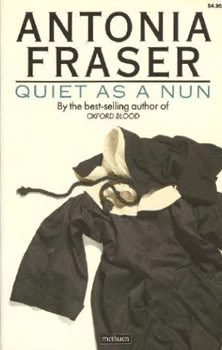
Royalty and treachery both turn up in Fraser’s first mystery novel in a series of ten Jemima Shore books, which is set at a convent school where the Mother Superior is particularly proud of the Italian principessas and other minor nobility who have been educated by her order.
In some ways, this 1977 book is a rather curious mystery novel by contemporary standards, grappling as it does with aspects of Catholic doctrine and the status of nuns in the modern world at significant length.
The mystery centres around the grim and largely self-imposed death of Sister Miriam, a nun who was Jemima’s schoolmate and close friend two decades earlier. As the former Rosabelle Powerstock, she was also an heiress to an enormous fortune, most of it transferred to the convent as her dowry. A legal technicality prevented her from transferring one deed of property during her lifetime, leaving her the owner of the substantial plot of land surrounding the Convent of the Blessed Eleanor.
It was understood that she would leave the land to the Convent in her will. That initially appears to be the case, to the nuns’ great relief, but then rumours of a second hidden will surface. A poverty right activist from London, who is also a thorn in the side of Jemima’s married and left-leaning lover, a Member of Parliament, may have been exercising undue influence over some members of the religious order.
At the request of the Mother Superior, of whom she remains fond, Jemima returns to the school she attended as a young Protestant girl unable to fully suspend her disbelief about miracles performed by saints.
While her classmates have grown up to be mothers or joined religious orders, Jemima is resolutely childless, a professional journalist and the presenter of a television series, Jemima Shore Investigates. She has substantial experience uncovering secrets, but she finds it challenging to disentangle the mishmash of rumours surrounding both Sister Miriam’s will and the students’ claims of a mysterious Black Nun who haunts the convent.
Jemima is a likeable protagonist: confident, independent-minded, and bold. The cluster of schoolgirls who are central to the plot are depicted vividly, and the nuns’ choices are accorded respectful consideration, as well as some gentle critique.
The depiction of the passionate but unsatisfying affair which preoccupies Jemima throughout Quiet as a Nun is intriguing in the biographical context of Fraser’s own famous 1970s dilemma: whether to remain with the father of her children or build a new life with playwright Harold Pinter, who also had to disentangle marital bonds. Their decades-long love story is told in Fraser’s wonderful memoir, Must You Go? My Life with Harold Pinter.


Leave a Reply