
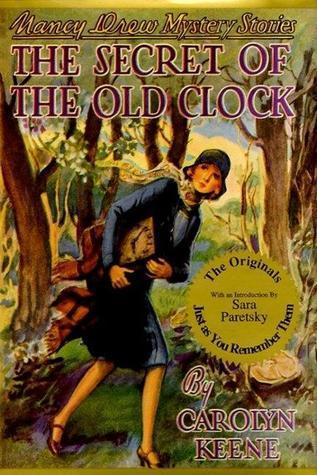
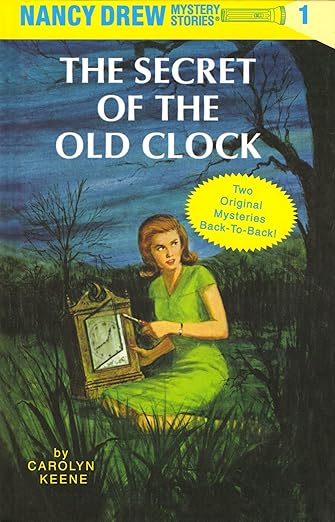
Many readers who have long since forgotten plots and even titles can still conjure up the distinctive branded covers of the most famous Stratemeyer Syndicate series: pale lavender for the Bobbsey Twins, a deep vivid blue for the Hardy Boys, and bright yellow for Nancy Drew.
None of these, however, are the original 1920s to 1940s covers; they are the product of a wholesale modernization of all three series in the late 1950s and early 1960s that saw the Nancy Drew books shrink to 200 pages each to reduce publication costs.
As this economizing suggest, from the start, the Stratemeyer books were as much—or more—about commerce as about vivid and engaging stories for young readers.
Edward Stratemeyer grew up in a German-American immigrant family, a gifted storyteller with a practical bent. After some early writing successes, he discovered that it was more profitable to sketch out story ideas for other authors to compose. He developed the Stratemeyer Syndicate, created in 1905, which contracted with writers to draft novels to his specifications for a number of series; the authors were paid a set amount while Stratemeyer negotiated agreements with publishers and held the copyright.
The year before he started the Syndicate, the first Bobbsey Twins book, featuring two young sets of fraternal twins, appeared in print. Stratemeyer is believed to have authored the initial volume in the series, although all were published under the pen name Laura Lee Hope. The gentle children’s adventures mixed bucolic family frolics with mild mysteries.
In 1927, Franklin Stratemayer created the Hardy Boys series under the pen name Franklin M. Dixon, with the books initially authored by Canadian author Leslie McFarlane (who also wrote several Nancy Drew mysteries and the first four Dana Girls books, which feature investigator sisters).
The popular Hardy Boys stories drew on the boy’s adventure tradition to recount the exploits of two brothers who combine a commitment to community and selflessness with physical bravery and a knack for solving puzzles. Their private investigator father often invites them to participate in his work, just as Nancy Drew would later learn investigative techniques from her own father, a prominent criminal defence attorney. The Hardy Boys investigations quickly became popular. Since the series début, fifty-seven other “canon” novels were added between 1927 and 1979.
These popular books eschewed much of the explicit didacticism and religious moralizing of nineteenth-century children’s literature, focusing instead on characters who modelled respect for elders and parents and deference to the law. They also demonstrated care and concern for the less fortunate members of their communities.
Nancy Drew, envisioned by Stratemayer in 1929, would also prove to be a powerful role model, albeit one whose contours were substantially altered when the early novels were refashioned in the late 1950s to suit contemporary needs.
This was closer to the Nancy I first encountered in the late 1970s: a row of yellow spines with blue print and compelling colour images imprinted directly on the hard covers.
Nancy had also been given a glow-up, with her age raised from sixteen to eighteen, her beauty more accentuated, and her spunky nature played down in favour of emphasizing her social poise and charm.
Along with her two close friends, George, always described as a tomboy, and her cousin Bess, pleasantly plump and a bit high-strung, Nancy sought justice for the disenfranchised. (Notably, the first several novels featured a different friend, Helen, who disappears after George and Bess are introduced to the series.)
The early Nancy Drew novels were written by Mildred Benson, who had contacted Stratemeyer in response to his advertisement seeking ghost writers for the Syndicate’s various series. Benson had already amassed a significant number of publications, including for children’s magazines.
He didn’t hire her immediately, but after she completed her graduate degree in journalism he asked her to write three novels featuring a young female sleuth.
Stratemeyer toyed with several names for the character, including Nan Drew; the publishers settled on a slightly longer version of the protagonist’s name.
This first volume provides a helpful introduction to the series and its protagonist, who in these early books is described as blonde rather than as Titian-haired, as she is later in the series, in what has become the iconic image of the character.
Carson Drew, Nancy’s fond father, gazes at his daughter appreciatively while reflecting in the 1930 original text that her golden bob is “Not at all the sort of head which one expected to indulge in serious thoughts.” Ouch.
Fortunately, his old-fashioned sexism is accompanied by his staunch belief in his sixteen-year-old’s abilities: we learn that she has frequently assisted him with knotty problems in his legal cases.
In this opening novel in the series, the former DA turned defence and “mystery-case lawyer” indulges Nancy’s indignation that a rich elderly man’s recent death may increase the fortune of a snobbish local family.
Unlike her older and more circumspect post-1959 version, the original Nancy is capable of scathing criticism, as when she notes that “Richard Topham is an old skinflint who made his money by gambling on the stock exchange. And Cora, his wife, is nothing but a vapid social climber. The two girls, Isabel and Ada, are even worse. I went to school with them, and I never saw such stuck-up creatures in all my life.” As a range of commentators have observed (among them some of the most noted feminist critics of the 1970s and 1980s), although the novels appear to be set in the present, they rarely demonstrate any inkling of the economic hard time that followed the market crash, so Nancy’s critique here is of particular interest.
Nancy herself, however, appears not to have any money woes. Her range of skills demonstrates that she’s profited from lessons in everything from dance and music to French, and her wardrobe is treated with keen interest in the novels.
Despite her own affluence, throughout the series Nancy’s sympathies are always with the honest and hardworking, which is why she can’t bear the thought of the Tophams inheriting. During the elderly man’s declining years, the Tophams took him in and they’ve presented a will that leaves them his entire estate, while disinheriting his other poorer (and more worthy) relatives.
But Carson Drew has an inkling that there may be a second will that the Tophams are deliberately suppressing.
The 1959 edition, cut down from 27 to the standardized 20 chapters that also saw all volumes slimmed to 200 pages, has a more dramatic and less cozily domestic opening scene, and one that spares readers Carson Drew’s paternalism.
Nancy is driving home from delivering legal papers on her father’s behalf when she spots a young child who, after narrowly escaping being hit by a truck, takes a tumble and is knocked unconscious. Nancy, of course, rushes to her rescue. She returns the child to her two aunts, who have been her guardians since the child lost her parents a few years earlier; there is an echo of Nancy’s own state, since Nancy, too, lost her mother some years earlier.
After this engaging opening, the next few chapters follow the first few chapters of the original edition, but with descriptive passages significantly reduced in both length and number.
The earlier Nancy, with her “impetuosity” and her slight edge of malice, is less perfectly circumspect than the later incarnation. The 1959 Nancy is excited when she learns about the location of the dead man’s family clock: “With soaring spirits, Nancy walked homeward. “I wonder,” she thought, “how the Tophams will feel about Josiah Crowley’s old clock if it costs them the inheritance they’re counting on.”
But the earlier and younger version pauses for a moment to relish the family’s potential defeat: “The Tophams may be old schemers, but this time they weren’t so clever! Unless I am mistaken those tickets will prove the most expensive ones they ever bought! Before they get through it may cost them the Crowley fortune!”
When Nancy successfully locates a more recent and binding will, the snotty sisters are disinherited and their father receive only a small amount, with the rest of the estate disbursed to meritorious relatives and close friends. The Tophams are disgraced and bankrupt, having just lost their home, as the novel ends.
Another major difference between the two versions is how the speech of Jeff, the caretaker of the Tophams’ cottage, is caricatured in the original. He is portrayed as less educated than the well-spoken Nancy through the deployment of pseudo-vernacular diction that will make contemporary readers cringe: “Say, white gu’l, you tell me wheah all dis heah fu’niture is at!” This is expunged from the revised 1959 edition, but so too is Jeff Tucker’s race, which is not mentioned; instead he is portrayed as tall and thin, with blue eyes.
But perhaps the most significant of all of the changes concerns the novel’s dénouement and the titular clock.
In the earlier version, after initially demurring when she’s offered a reward, Nancy asks outright for the clock, “a trophy of my first venture as a detective.”
But by 1959, Nancy is too retiring to request a particular reward. Instead, the Horner sisters, who are among the new beneficiaries of the will, insist that she take the clock as a memento. Rather than being wordless merely because she can’t put her feelings into speech, Nancy is described as “too modest to explain to Allison and Grace why she would prize the heirloom” as a reminder of her first investigative triumph.
The first Nancy Drew novel appeared just weeks before Edward Stratemeyer’s death. But the formula he had created was retained by his daughter. In significant part because the 1929 crash and subsequent great Depression (as well as the peculiarities of the Syndicate’s legal structure), the company was impossible to sell for a decent price after Stratemeyer’s death. Instead, Stratemeyer Adams (who had thrived during her college years at Wellesley, and who had ambitions for a professional career before she gave in to her era’s expectations, marrying and producing four children) steered the company for five decades.
She also began to write her own Nancy Drew stories, along with books in the Hardy Boys and Bobbsey Twins series; she is credited with the (pseudonymous) authorship of nearly two hundred children’s books.
On the day she died, aged 89, reported the New York Times, she “was working on a new ghost-story series.”
This year, the original edition of the first Nancy Drew novel, The Secret of the Old Clock, entered the public domain in the U.S., while the revised edition will remain under copyright for another three decades.


Leave a comment