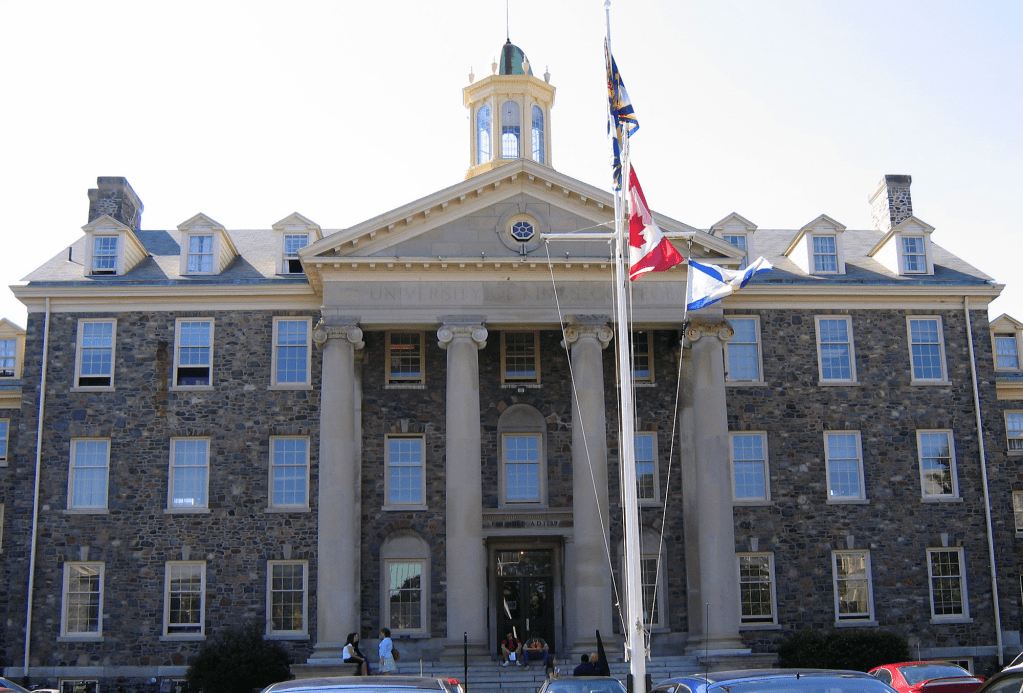
Photo of the University of King’s College Arts and Administrative Building by Robert Alfers, used with permission under CC license.
I’ve recently returned from an intense (exhausting, exhilarating) 10-day MFA residency in Creative Nonfiction. I spent my evenings and our one day off keeping up with my online students, who quite reasonably still needed timely email responses and detailed feedback about their writing. The experience of being a full-time student while teaching this term has been a lot.
Looking forward over the summer and fall, there is the welcome prospect of time to read and write, some of it funded.
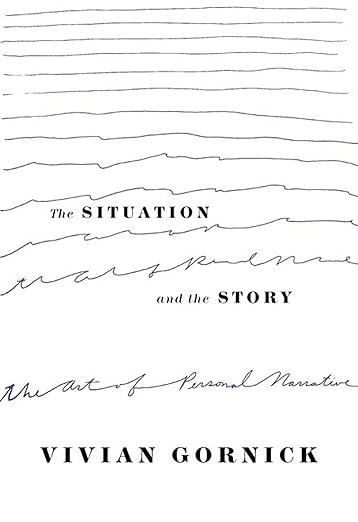
I’m reading Vivian Gornick’s wonderful The Situation and the Story while wishing I’d encountered this book much earlier in my reading life. I read her Fierce Attachments decades ago, and it remains a touchstone for me.
But Gornick was also a gifted (and sometimes precariously employed) teacher of what we now call creative nonfiction, and this book provides her careful examination of how good CNF works. She offers insightful commentary about Didion and Naipaul, among many others, and provides a crucial explanation of the need for emotional distance and objectivity in effective personal narrative.
Using her own work, she points to the way in which there must be a gap between the original situation and the author’s use of it in story. For the reader to care, in short, the narrator must be an authorial persona, a character who is treated as critically as any other in the story.
This is not an easy thing to do. But it’s absolutely necessary, and I’ll be spending the next year or so working on this challenge while reading dozens of recommended texts in creative nonfiction. My MFA involves, outside of the residency lectures and monthly online events, an immersion in reading and writing for two years. A staggering luxury (albeit one that I now have to work a bit more consciously to finance).
Huge thanks to the Camosun College Faculty Association Professional Development Funding which is covering the whole of my first year of this program, and to the College for supplying the money that the fund disburses. I’m only sorry that the College’s ROI will be so limited, given the circumstances.
Writers start, of course, as readers. As I draft my book proposal, I’m reading other memoirs-in-books, including the delightful Bookish: How Reading Shapes Our Lives, by Guardian writer Lucy Mangan.
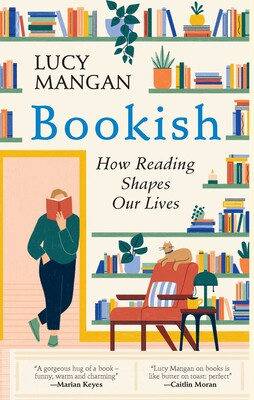
It’s a sequel, of sorts, to her book about childhood reading, which is in my TBR pile.
Mangan does cover a substantial amount of children’s lit here, too, via her experiences of rediscovering old favourites during her twenties, when she finally has a decent book-acquisition budget, as well as a decade or so later, when she begins to introduce books to her newborn son.
Along the way, we learn about Mangan’s post-partum passion for Lee Child’s Jack Reacher, and we’re introduced to a range of authors, from Norah Lofts to the canonical writers featured in Mangan’s Cambridge lit study course.
My reading tastes overlap with Mangan’s in some regards (including my teenage passion for historical fiction and nonfiction about powerful female monarchs), but they also diverge. She comes rather late to crime fiction, and it’s only during COVID lockdown that she devours thrillers.
She’s also much more of a collector and curator of a book collection than I am, and in this regard she more closely resembles other members of my family. I part with the books I’ve bought with no regret, and most of what I read comes from libraries. Only a select number of volumes remain on my shelves. Nonetheless, Mangan’s description of her creation of a dedicated library space was a thrill to read. This is a warm hug of a book.


Leave a comment