I love this book. I’ve had a lucky streak of wonderful books: fiction and nonfiction, crime and suspense but also domestic/romantic “women’s fiction,” like Kerry Clare’s new novel, Definitely Thriving.
Clare has a lot of fun with the idea of a segregated women’s literature: her protagonist, Clemence, fresh out of a marriage that she blew up by arranging to be caught in flagrante with the neighbours, takes on a job at a local second-hand bookstore. The owner is blissfully indifferent about whether any patrons actually purchase books, but at some mysterious point in the past the store has been divided between Literature, where Ackroyd to Waugh are shelved, and Women’s Fiction, where Atwood and Woolf are keeping company. Clemence is determined to undo this divide.
Crime fiction can also invoke strict gender distinctions, with women’s domestic suspense contrasted with spy novels, for instance.
Increasingly, however, in Scandi-Noir crime, the women writers’ use of graphic violence is keeping pace with Jo Nesbø, et al.; I have found novels by a range of female crime writers in Sweden, Denmark, and Finland to be too chillingly violent and sadistic for my tastes, since I eschew serial killer fiction, in particular.
I won’t be watching the new Detective Hole adaptation of Nesbø’s fiction, and even Henning Mankell was a bit much for me.
But some writers I do really enjoy who hail from Scandinavia include Sara Blædel (Denmark), Anne Holt (Norway), and Camilla Läckberg (Sweden); I’m on the fence about Karin Fossum, who’s a wonderful writer, but not quite my thing. I’ve just started reading Heidi Amsinck’s Copenhagen-set series, and it has an exceptional sense of place.
Then there are the Icelandic writers.
Iceland, of course, has a famous book culture. A tradition of exchanging books for Christmas. Long, dark winters that lend themselves to cozy fireside evenings, a book or a cat on one’s lap. A writers’ festival, which is so very enticing that I may apply next year.
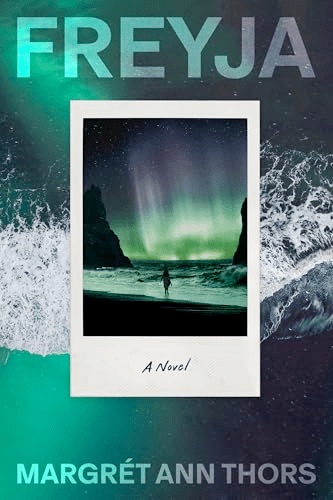
I’ve been reading Yrsa Sigurðardóttir, and I’ll have more to say about her soon; today I want to introduce you to a not-quite-yet-published author now based in Iceland, Margrét Ann Thors, whose first novel, Freyja, is exceptional. It’s due out in early August, so many thanks to NetGalley and the publisher, Spiegel & Grau, for this preview.
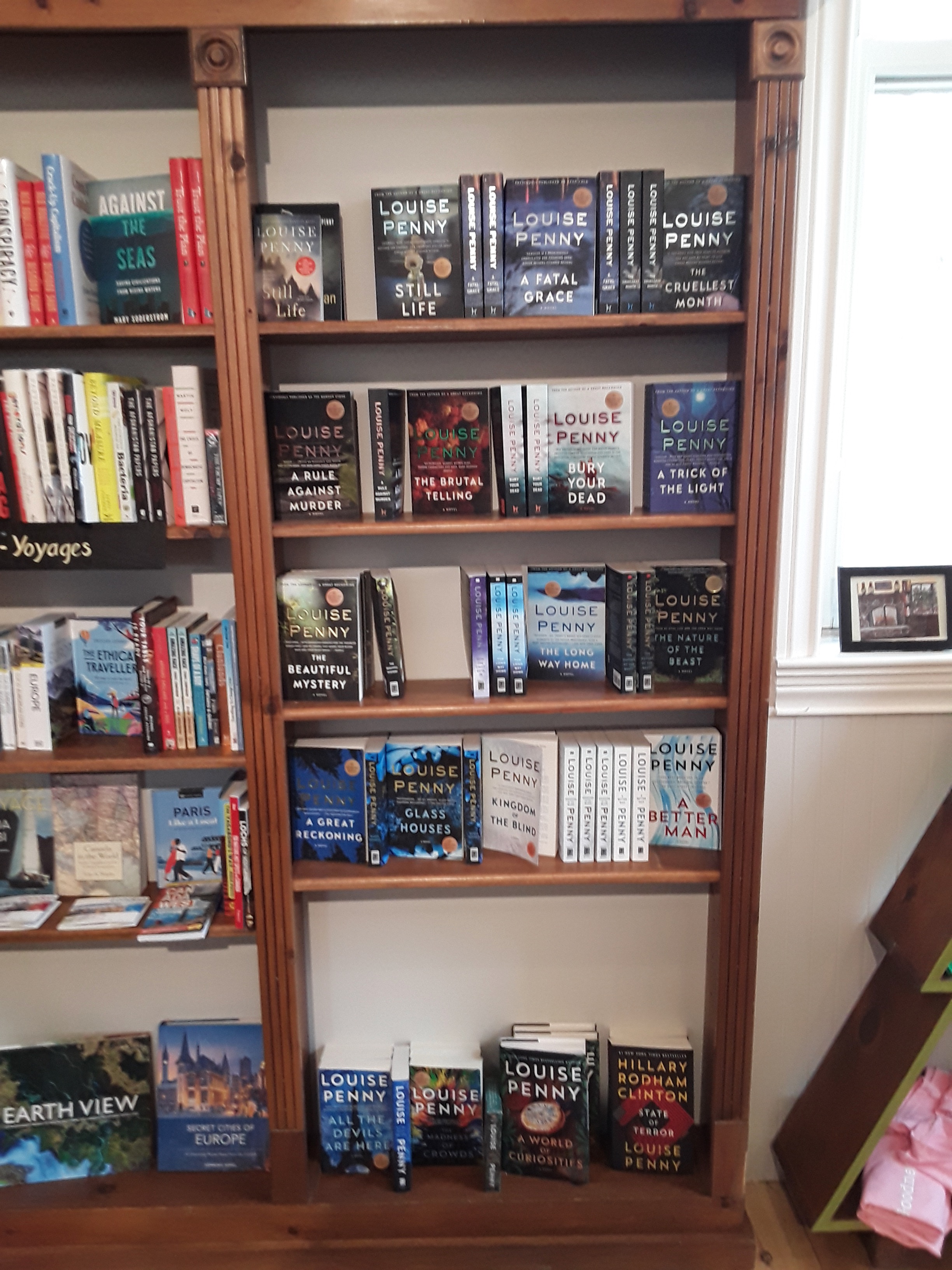
Freyja doesn’t at all feel like a début novel. Like Louise Penny, with Still Life, there’s a confident new voice here in a story that blends mystical and folklore/fairy tale elements with a gritty story about a woman who lives with the trauma and guilt of her losing her childhood best friend.
This is a book about memory and motherhood, friendship and fear and fatalism.
I’m not sure a synopsis will convey the flavour of the author’s prose, which has an oddly hypnotic quality, but this is from the publisher’s website:
“Unnur has secrets. A single mother to a beloved daughter, she lives a deliberately quiet life in Reykjavík, where she works at a bakery under an assumed last name. She has spent years pushing away haunting half remembrances of the last summer of her childhood, when her otherworldly friend Freyja disappeared from a black-sand beach in the remote Dark Valley. Unnur’s safety—and her daughter’s—now hinges on discretion. Yet when her ex-husband returns to Iceland and brings with him a new girlfriend who seems to know more about Unnur than she’s letting on, Unnur may finally have to face the chilling possibility that she is responsible for her friend’s presumed death.
As a cold case investigation reopens and the intricate threads of past and present begin to tangle, Unnur must race to recover the broken memory of what happened all those years ago, or risk losing her daughter.”
In the novel’s opening chapter, unloved and uncared-for Unnur is dumped with a gruff man and his daughter, Freyja, at their home in the spooky Dark Valley. Her aunt can’t be bothered to even pretend to look after her any more.
The conjuring up of the 1990 setting is achieved remarkably well and the growing tenderness of the girls’ friendship is recalled by Unnur, decades later, with stark honesty. All of her memories are tainted by loss.
In the present-tense time-frame of the story, Unnur is an avid reader with a young daughter she is raising on her own while her careless ex travels and dabbles.
The owner of the bakery where she works offers to pass along a new novel that’s getting a lot of attention: it tells the story of Freyja’s disappearance, decades ago. Unnur is unnerved.
When her ex arrives for an impromptu visit, bringing with him a new and surprising girlfriend and her daughter, who strongly reminds Unnur of her lost friend, the past threatens to engulf her.
And then another girl goes missing.
This merits pre-ordering. The author, an American who lives and teaches in Iceland, is a compelling new voice.


Leave a Reply