A quick Mother’s Day post, before I return to editing.
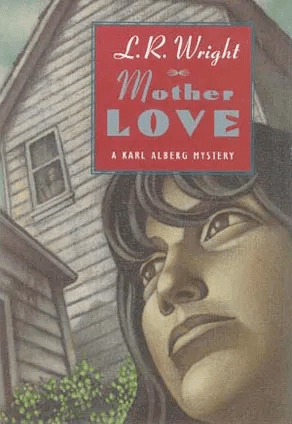
L.R. Wright’s Mother Love
Mothers appear in many of Wright’s psychological suspense novels, which are also police procedurals that use two RCMP protagonists: middle-aged-and-aging Karl Alberg, in a multiple-book series set in Sechelt, and the younger Edwina “Eddie” Henderson, who is featured in just two novels, the series cut short by L.R. Wright’s untimely death.
It’s in Mother Love, however, an Alberg novel, that mothering and the withdrawal of mothering receive the most attention.
Maria Buscombe returns to the area where her husband and daughter live after a seven-year-long absence .She hasn’t been back in town long when she’s bludgeoned to death. Her now-adult daughter, Belinda, is pregnant, and she’s furious with the mother who abandoned her. This is a powerfully told and circuitous story. Highly recommended.
Gail Bowen’s Joanne Kilbourn Novels: Masterful Mothering
Joanne Kilbourn is a widowed mother of three when the series opens; she’s caring for Mieka, who prefers cooking to university; quiet and reliable Peter, who become a veterinarian; and Angus, sporty and popular.
After the events of Murder at the Mendel, which is one of my favourites, Jo also takes on an adoptive daughter, Taylor Love.
Throughout the series, additional young people become temporary household members or adjuncts, with Jo’s warm manner encouraging her children’s friends and partners to seek her out as a surrogate parent.
Between the child care and the dog care, as well as Joanne’s demanding full-time university teaching and part-time journalism and political activism, it’s hard to see where she finds the house in the day to bake banana bread and prepare chili to take to the cottage. This is idealized domesticity, and it’s a lovely fantasy of matter-of-fact mothering carried out with love and practicality.
In an interview with a blogger, Bowen noted that when she began writing the Joanne Kilbourn books, she was equally busy: “When I started the series, I had three children at home; I was teaching full-time at the university; I was very involved in politics and I was teaching Sunday School.”
And yet she found the time to write a twenty-book series over the last decades that is one of the most acclaimed in Canada.
And some of her grandchildren are honoured in Bowen’s novels, their names attached to Mieka’s children.
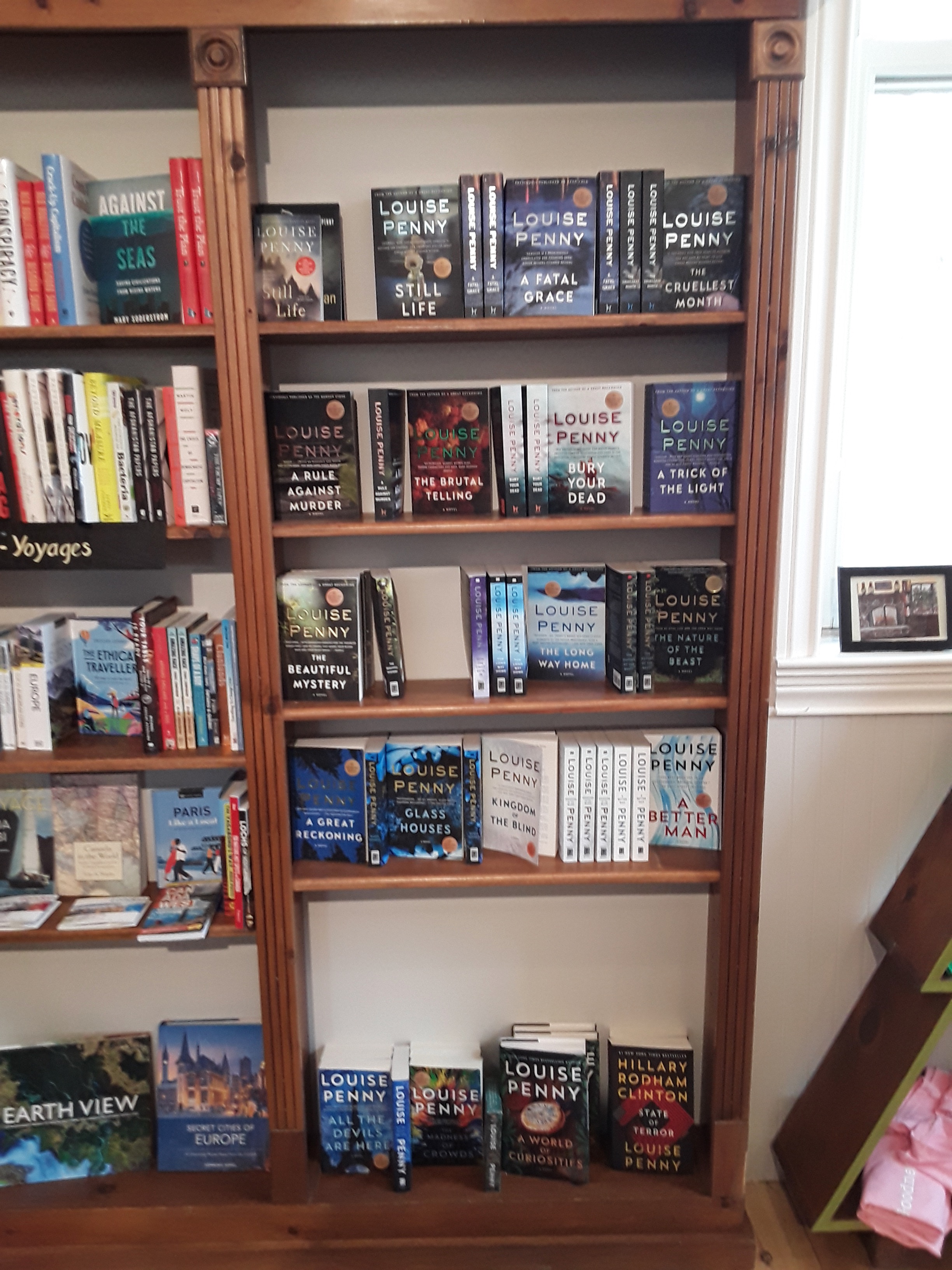
Louise Penny: The Option Not to Mother
One of the intriguing aspects of Louise Penny’s Three Pines/Gamache series is that many of the female characters are not mothers.
While Reine-Marie and Armand Gamache have two beloved adult children, and later delight in their grandchildren, including Adora, who has Down’s Syndrome and requires some additional protection, things look different in Three Pines.
Myrna Landers, acclaimed forensic psychologist and bookstore owner, never had children.
Neither did Clara Morrow, who struggles for decades as an unknown and sometimes even despised visual artist before her work is finally accorded the serious critical attention and popular acclaim that it deserves.
Crucially, the first breakthrough painting is of her dear friend, irascible alcoholic poet Ruth, but in the work Ruth (also not a mother) is portrayed as Jesus’ mother, Mary. And this is the most prominent mother in the series: Mary turns up, grieving and forlorn, throughout the novels.
In the series’ opening novel, Still Life, we also meet the murder victim, a teacher and later artist, Jane Neal. She, too, never had children. But with Jane, Penny makes a more pointed commentary about how care for children does not equate with motherhood: Jane is a shrewd observer of young people, and her joyous work is rooted in a childlike sense of wonder.
Mothers in Contemporary Psychological Suspense and Domestic Thrillers
I see that Ashley Audain has a new novel out soon; I requested a preview copy because I’ve really enjoyed her books so far, including her first novel,The Push, where a mother struggles with parenting a difficult daughter and putting on a party, leading to tragedy.
Many of Joy Fielding’s novels, while not set in Canada, feature mothers and sometimes mother-daughter pairs in women-in-peril situations.
And both Shari Lapena and Samantha Bailey have been producing terrifically plotted books in which mothering is a source of panic as well as pleasure.
Domestic Noir in Canada is thriving, and much of the tension is rooted in mother-child relationships.
Detective Aunty
A wonderful recent Canadian mystery novelist is Uzma Jalaluddin. Her first novel, Detective Aunty, explores a Muslim Canadian woman’s attempt to clear her adult daughter of murder; she is also mourning the loss of her son, in a hit-and-run accident, when he was still a teenager. This was a wonderful first novel in a series; the new one, Moonlight Murder, has just been published. The increasing diversity in Canadian crime fiction is welcome.
A Quick Nod to the U.S.
When I started thinking about mothers in crime fiction, I was reminded of a fun series of books by Ayelet Waldman, which are (cringingly) dubbed The Mommy-Track Mysteries. An energetic former public defender turned stay-at-home mom fits investigating in between nursery school pick-ups and playdates. This goes about as smoothly as you might imagine, given that parents of young children are invited to carve their lives into two- or three-hour segments. Grade 1 was a revelation to me: six hours of time, five days a week, funded by the government! Today’s parents may have more child care options than I did, but many still struggle.
So on this Mother’s Day, many years after we (thankfully) stopped spilling ink about the so-called “Mommy Wars” between parents with and without jobs outside the home, best wishes to all who mother and who have been mothered, more or less well.


Leave a comment