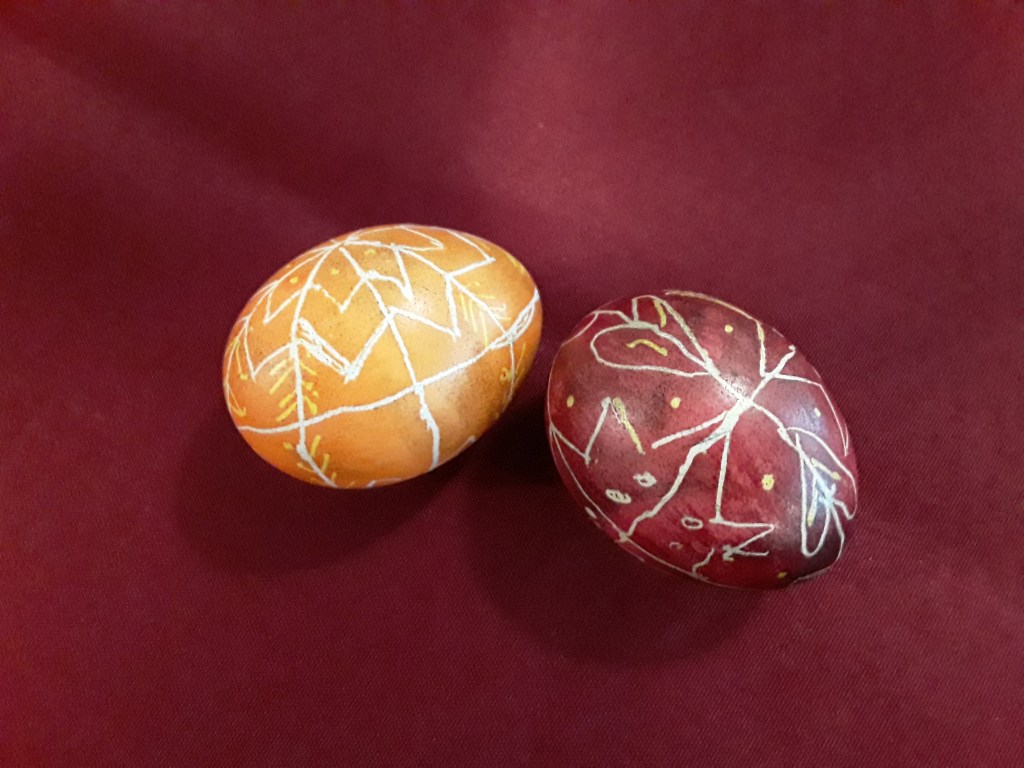
Between braising brisket and planning decorative Easter bushes under which the baskets of chocolate eggs can sit, I’ve been thinking about joy.
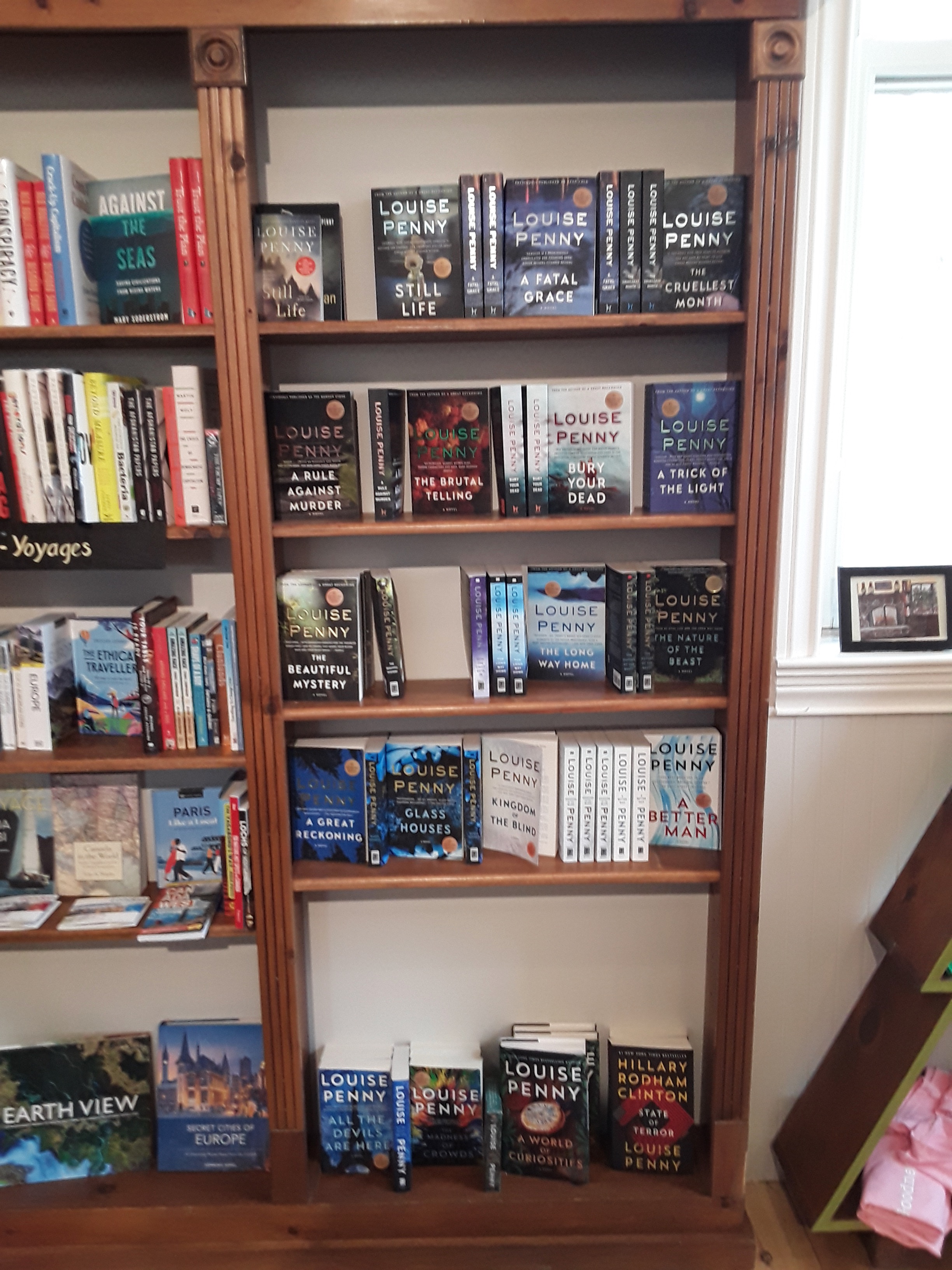
This is prompted, in part, by re-reading Louise Penny’s April-themed The Cruellest Month and The Long Way Home while watching David Mitchell and the wonderful Anna Maxwell Martin in Season 1 of Ludwig.
Maxwell Martin brings me joy. Since seeing her as Esther Summerson in Bleak House (2005, with Gillian Anderson as a joyless Lady Deadlock), I have avidly consumed all Maxwell Martin content.
She’s excellent in Ludwig, as the worried but highly capable wife of a police officer. James disappeared without a trace, leaving a disquieting note telling her to take their teenage son and get out of town.
She calls in his identical twin brother, John, for help, and the puzzle-creator genius/awkward geek discovers that he has a flair for solving murders. (British Columbia political life has a version of this; I initially thought this was an April Fool’s Day story.)
Collectively, mother, son, and uncle are hoping to find their missing loved one, who may have left them some clues.
It’s a lot of fun, with occasional serious notes. But the joy is in the performances: Maxwell Martin’s, in particular, but as part of a tremendous ensemble cast.
Surprised by Joy (Even in Grief)
“Surprised by joy” is etched into a bench in the fictional village of Three Pines.
The bench is most significant in The Long Way Home, when Clara Morrow asks for Gamache’s help. He sits there each day, reading, and she joins him.
Her artist-husband Peter left for a year, as they agreed, so that they could both have an extended period to be on their own while reflecting on their crumbled marriage.
Clara’s commercial and critical success has soured Peter: he was accustomed to being the more successful painter and he has coped poorly with her belated and joyful success. For their relationship to continue, and heal, Clara needs him to confront his own jealousy and envy.
But now a year has passed, and Peter didn’t return on the day he was due back, for a momentous conversation about their relationship.
Clara is worried.
The words are drawn from the famous opening line of a Wordsworth sonnet:
Surprised by joy—impatient as the Wind
I turned to share the transport—Oh! with whom
But Thee, long buried in the silent Tomb,
That spot which no vicissitude can find?
Love, faithful love, recalled thee to my mind—
But how could I forget thee?—Through what power,
Even for the least division of an hour,
Have I been so beguiled as to be blind
To my most grievous loss!—That thought’s return
Was the worst pang that sorrow ever bore,
Save one, one only, when I stood forlorn,
Knowing my heart’s best treasure was no more;
That neither present time, nor years unborn
Could to my sight that heavenly face restore.
The poem takes a turn, from being surprised by joy to being plunged back into grief and loss, which function as a rebuke to the fleeting experience of joy.
Wordsworth wrote it after the death of his three-year-old daughter. British poet Carol Rumens published an insightful discussion in The Guardian:
“This sonnet activates a series of “pangs”: the moment of delight, the desolate realisation that the one person with whom the speaker wants to share it is irrecoverable, the pang of guilt that the beloved child could have been forgotten, and, finally, the remembered moment of desolation. The natural event, the source of the joy, un-described but beautifully left to our imaginations, is quickly erased. Nature, for once, fails the poet.”
April is a season, it seems to me, of both mourning the dark and embracing the light.
As we do during Easter.
Surprised by Joy was adopted as the title of children’s author and Christian theologian C.S. Lewis’s early life and his development of a profound commitment to his religion. If you’ve re-read the Narnia books as an adult, you won’t have missed the way Lewis grafts religion themes, symbols, and figures onto his stories, with Aslan as the Christ figure.
Late in life, Lewis married a poet, Joy Gresham. But at the time of his memoir’s publication, they were not yet married, and the book’s title is apparently not a tribute to her. Just lovely synchronicity. Or perhaps Lewis was prepared to invite Joy into his life.
Louise Penny’s own later-in-life marriage, to physician Michael Whiteside, was a surprise and a delight. He supported her writing and was her first and best reader.
There’s fun coverage of some of Penny’s early events, with Whiteside beaming at her as she speaks to audiences a fraction of the size of the ones she now commands.
Penny modelled her protagonist Armand Gamache on her husband’s own strength and moral courage. She has paid tribute to him in her books and in the world:
“Louise . . . had a bench made and adorned with a “Surprised by Joy” plaque for her husband, Michael’s birthday in 2007. . . . As she says, “When I met and fell in love with him I was, indeed, surprised by joy. And he was the most joyous person I’d ever met.”
In her April 1, 2026 Newsletter this week, Penny returned to the theme of joy, writing “Joy is a revolutionary act. An act of rebellion.” Even in dark times, she insists, we need to claim joy.
But some seasons in life are less joyful than others.
In those times, I listen to Lucinda Williams’s “Joy.”
Her lyrics describe losing and wanting to get back joy: “I don’t want you anymore / Because you took my joy.” This is a pointed complaint, with blame attached.
And for Williams, the song had a specific autobiographical impetus: an unfaithful lover. Where would music be, without the betrayals that have prompted most of my favourite songs?
But the “you” here, it seems to me, is not necessarily a person but rather a set of circumstances that have become insupportable.
We slide into those, sometimes. And it’s often not anyone’s fault. Or (ouch), mostly our own.
My joy is commingled with grief, this week: like Bishop’s speaker in “One Art,” I’ve lost a few too many things of late, but it isn’t, pace Bishop, a disaster.
But a whole chapter finally gelled this week: that was joy. The plum tree in the backyard of our borrowed house is starting to bloom: more joy. I’m trying to notice these moments.
Louise Penny’s New Book Trailer!
This looks like a lot of fun. Miss Wollcott’s Ghost is out on October 20th.
 The Landscape of Canadian Women's Crime Fiction
Leave a comment