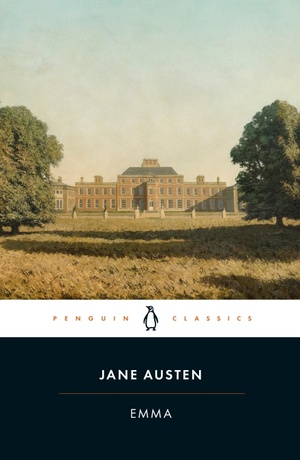
As we shift into the New Year (happy January 1!), a reminder that 2025 was a year of Austen tributes. Here’s my own belated contribution.
Austen has been of central importance in my life. My closest friend from high school and I remain united in significant part through our love of Austen, a passion which she has turned into wonderful plays.
On New Year’s Eve of 1995 I fell for a man who adored Austen and had interesting things to say about Sense and Sensibility. The film adaptation had just come out, and we planned to see it, as a first date. To that New Year’s Eve party, which I attended only reluctantly, and while taking a graduate seminar in Austen, of all things, I owe much of my life, including a beloved adult daughter.
Austen appeals, of course, to a broad range of readers, although my guess is that male readers are in the minority. My Austen course, taught by the formidably brilliant Jane Millgate, had a lone male student, and that’s been roughly my experience of every Austen-linked event I’ve ever attended.
There are exceptions, of course. British philosopher Gilbert Ryle, when asked if he read novels, purportedly replied, “Oh, yes—all six, every year.”
But Austen has also been derided by male critics for the small size of her canvas, the narrow slice of Regency landed gentry life that she portrays in her books.
And it’s a pity when people miss that the point of Austen’s fiction is not the provincial setting but the deep, rich characterizations of her protagonists–and especially her heroines. Their interior lives, their minute interactions, those are the point of the books.
It’s why I cringe just thinking of Emma at the picnic, about to launch into a witty but mean-spirited attack on her social inferior, Miss Bates; or why the prospect of Marianne confronting Willoughby at a London ball, where he is icily polite and distant, is so appalling to contemplate when he has been courting her (but can’t afford to marry her). I like the moment in Ang Lee’s film adaptation when Willoughby on horseback looks longingly towards Marianne’s home, having married for money but not happiness.
Austen is also a favourite of mystery writers. It is a truth universally acknowledged that Jane Austen’s novels are frequently about interpretive challenges: how to put together clues to solve puzzles.
Most often, of course, these mysteries are about the human heart. The heroine, whether she is Elizabeth Bennett or Emma Woodhouse or Anne Elliott, must learn how to decode the signs and symptoms of both her own romantic longings and the feelings of the man who loves her, but she cannot speak up in a forthright manner. This causes no end of complications.
In “Emma Considered as a Detective Story,” P.D. James posits that Austen has composed “a mainstream novel which is also a detective story.” And, of course, James created her own Austen fan-fic, Death Comes to Pemberley, in which, alas, Wickham is not killed off, although he does suffer (a bit, but not nearly enough) while in police custody, accused of murder.
James outlines why Emma might qualify, noting that a detective novel “does not require murder; Dorothy Sayers’s Gaudy Night is an example. What it does require is a mystery, facts which are hidden from the reader but which he or she should be able to discover by logical deduction from clues inserted in the novel with deceptive cunning but essential fairness” (243-44). She goes on to sketch out (in what was originally a talk, and then published as an appendix to Time to Be in Earnest) a few key aspects.
More notoriously, literary critic Leland Monk posited that a murder mystery may be hidden in plain sight in Emma. “I believe that Frank Churchill,” he declares with bravado, “murdered his aunt.” Now, the timing of the death of this termagant aunt/adoptive mother is certainly convenient for Frank. It frees him up to marry the much put-upon and largely silent Jane Fairfax, a governess with no money of her own.
But murder?
For me, a more persuasive incident of mystery is linked to the unexpected anonymous gift of Jane Fairfax’s piano.
Like the later Jane of Jane Eyre, Jane Fairfax’s status as a governess determines her life and prospects. Governesses were highly educated “surplus women” (Mary Poovey’s brilliant on this) who earned their keep in the home of wealthier families of less taste and talent, and often less education.
Nineteenth-century governesses, who were disproportionately the daughters of clergymen, had to have a smattering of everything: some French and Italian or German; music and art skills, including crafts like needlepoint, as well as piano, singing, and drawing; add to that some elementary math and natural sciences. On top of this, they had to be firm but kindly in their treatment of their privileged charges and tolerate what was no doubt an infuriating degree of condescension. Abuse and exploitation were rife.
Charlotte Brontë tried out governessing life, and it was emphatically not for her. Writing to her dear friend, Ellen Nussey, she is devastatingly to the point: “I said in my last letter that Mrs. Sidgwick did not know me. I now begin to find that she does not intend to know me, that she cares nothing in the world about me except to contrive how the greatest possible quantity of labour may be squeezed out of me” (Brontë, Letters 190-191 [8 June 1839]).
Jane Fairfax is a fascinating cipher in Emma.
Because her relationship with Frank Churchill must be concealed, they both behave badly by deliberately misleading those around them. Most of the fault is Frank’s, and the deception is making Jane sickly to the point where her life seems seriously at risk.
She’s a beautiful, intelligent, gifted young woman with a great deal of sensitivity, and she’s been led into a secret romantic entanglement that could ruin several lives.
Even her piano, the symbol of her freedom and creativity, is tainted due to its origins. Rumours abound: is it a gift from her employers, from an admirer–perhaps even Mr. Knightley?
Emma is not and never has been a fan of Jane Fairfax:
“Do you know Miss Bates’s niece? That is, I know you must have seen her a hundred times—but are you acquainted?”
“Oh! yes; we are always forced to be acquainted whenever she comes to Highbury. By the bye, that is almost enough to put one out of conceit with a niece. Heaven forbid! at least, that I should ever bore people half so much about all the Knightleys together, as she does about Jane Fairfax. One is sick of the very name of Jane Fairfax. Every letter from her is read forty times over; her compliments to all friends go round and round again; and if she does but send her aunt the pattern of a stomacher, or knit a pair of garters for her grandmother, one hears of nothing else for a month. I wish Jane Fairfax very well; but she tires me to death.”
Emma’s older sister, conversely, would prefer her as a companion for Emma:
“That sweet, amiable Jane Fairfax!” said Mrs. John Knightley.—“It is so long since I have seen her, except now and then for a moment accidentally in town! What happiness it must be to her good old grandmother and excellent aunt, when she comes to visit them! I always regret excessively on dear Emma’s account that she cannot be more at Highbury; but now their daughter is married, I suppose Colonel and Mrs. Campbell will not be able to part with her at all. She would be such a delightful companion for Emma.”
Foolish Mr. Woodhouse can’t perceive the major differences of character between Jane and Emma’s chosen pet, Harriet Smith, but Emma’s sister is insistent: “only Jane Fairfax one knows to be so very accomplished and superior!”
And she’s not wrong, but Emma is so very tired of hearing about this paragon.
Nor does the fact that Jane is languishing move Emma, in particular. She’s too busy plotting love affairs for other people and fantasizing about Frank Churchill, whose chief virtue is that he’s an interesting newcomer to a very small locale with few romantic prospects for the wealthiest young woman in town.
The mystery of Jane Fairfax’s piano is eventually revealed, and Jane recovers from her illness and can marry Frank after his aunt’s death frees him and enriches him.
But other possibilities loom in the background. Hers is a near-tragic story, and while I’m not convinced that Frank murdered his aunt, I do think Austen is drawing our attention to how social and economic conditions nearly killed Jane Fairfax.


Leave a comment