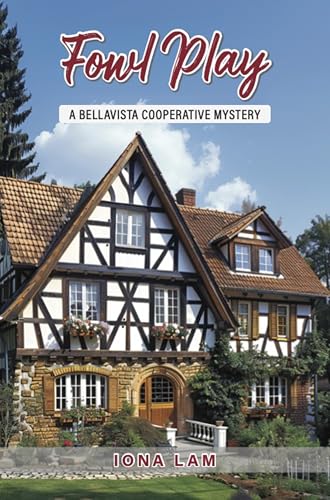
Spring is real estate and cherry blossom season in Victoria. Locals search in vain for affordable new homes, and tourists flood off the cruise ships and ferries in search of souvenirs on Government Street. Iona Lam’s recent novel, Fowl Play, brings these two together. The first in a series, it is a cozy mystery that revolves around plans for revitalizing a heritage house in Rockland, a rather tony neighbourhood near downtown and close to the seaside.
Many of the Rockland mansions date to an era of our local version of robber barons, primarily coal magnates who crushed unions and built fortunes. The most famous example is Craigdarroch Castle, built for Robert Dunsmuir’s family, which was a private home for a relatively brief part of its history. It was repurposed first as a military hospital and later as Victoria College, an outpost of McGill University, until 1946.
A number of the oversized Rockland houses have been carved up into apartments, or are now run as bed-and-breakfasts. The proximity to the Lieutenant-Governor’s estate and surrounding gardens is a nice perk. But inevitably, several of the larger homes are decaying in an alarming manner; it would be less expensive to knock them down than to rebuild.
Fowl Play presents one such heritage home designed by one of Victoria’s famous architects, Samuel Maclure. The other is Francis Rattenbury, who deserves his own post, since his murder tends to overshadow his work. Maclure houses are scattered across Victoria, and the dilapidated building near me is the subject of a contentious re-development proposal at the moment. Life meets art.
In Lam’s novel, a property developer wants to assume the financial burden of re-purposing an original Maclure as a luxury clubhouse, the centrepiece of a new housing development. The current residents prefer to operate as a female-driven cooperative. They have intense and varied perspectives about the change, even though they’ve been promised housing security if the proposal goes through.
The majority of them would prefer an arrangement that enables an ongoing cooperative model, with affordable housing for seniors, accompanied by kitchen space for an international food coop. And in reality, the latter is one of the loveliest small businesses in Victoria. The “fowl” of the title are the chickens kept on the property, where the developer’s body is found, the night of a controversial city hall hearing about his proposal.
The novel’s protagonist is something of an outsider. Mallory McKenzie-Chu has spent two decades out east, looking after a wealthy family, and finds herself in need of a job. She’s on a short-term contract to help project-manage the cooperative housing plan. As she’s been offered a room onsite, she’s able to witness the complex machinations and tensions, and is also keen to investigate when a friend comes under suspicion.
This book is a nice introduction to Victoria–tea at the Empress, a nod to the Butchart Gardens, and golf are among the local pleasures. But the author is addressing a local concern as well: how are older people on fixed incomes supposed to survive, in a city with some of Canada’s most expensive housing? The mystery component is brisk and gentle, and the novel is a welcome addition to Canadian crime fiction. I hope Lam elects to continue her self-published series.


 The Landscape of Canadian Women's Crime Fiction
Leave a reply to My 2025 Crime Fiction Highlights – The Landscape of Canadian Women's Crime Fiction Cancel reply