
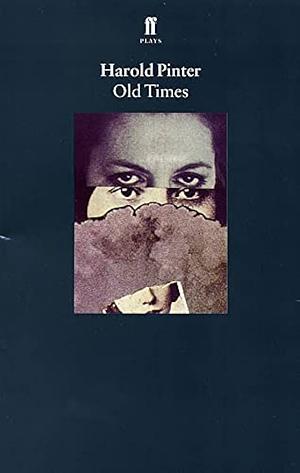
Does Harold Pinter’s Old Times deal with a murder? Or perhaps two?
Does it describe a long fantasy, or perhaps a delusion, played out in the mind of an unstable woman who killed her friend two decades earlier?
That’s one of the more intriguing explanations I’ve been reading for the enigmatic play, with its famously uncertain ending. During rehearsal, actor Anthony Hopkins sought an explanation of this ending from the playwright, who curtly informed him he had no idea and to just do the thing.
***
I had unfortunate news today. Not terrible news, and not unexpected. But it means I need to hurry up my job search, and there’s precious little to apply for this year in English. In all of Canada.
It’s not-terrible only because I’ve been working on an exit strategy, and I’m closer to the end than the beginning of my time in academia. I’m not a shiny new PhD who has published six academic articles while writing a dissertation, and also secured a book contract for a revised dissertation, in the hope of being interviewed for the vanishingly small number of tenure-track jobs. The current expectations at Canada’s universities are outrageous. Multiple candidates, for every position in English Literature, have jumped through more hoops than some of the most senior tenured professors.
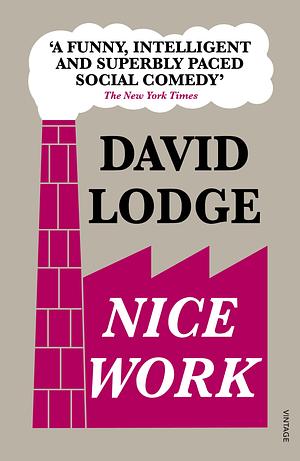
Against this backdrop of academic despair and nostalgia for the good old days–really the brief halcyon period c. 1960-70, when the Baby Boomers went to college–I’m re-reading Old Times, which has a BBC radio adaptation here. Alongside it I’m reading David Lodge’s Nice Work, the third volume in his academic trilogy. Like Château Margaux and an aged Comté, this is a lovely pairing. The acidity of Pinter and the scholarly comedy of Lodge, who were contemporaries but not friends, as far as I can discern.
Incidentally, Lodge believed people are most creative during their 40s and 50s, at least if they start young. Mind you, that interview took place when he was 80 and had published several books over the previous decade. It was just more effortful, he explained.
But I was intrigued that the journalist went on to cite Pinter’s brilliant second wife, better known as Lady Antonia Fraser. At 82, she “said that while she had changed as a writer over the years, she felt she had also become more efficient.”
“‘I think when you are young, you are creative in a totally different way. I think I’m more economical with age. I know more what I am and what I can do’ . . . Her late husband, the playwright Harold Pinter, produced some great work towards the end of his life . . . ‘Harold continued to write wonderful poetry very late on actually,’ she said. ‘One of his poems, ‘I’ll Miss You So Much When I’m Dead’, . . . I don’t think I can quote it any more because I find it very moving. Perhaps death knocking on the door does bring creativity.’”
I like that. “Death knocking on the door” as a spur to creative output.
***
Old Times (1971), if you haven’t had the pleasure, is about a long-married couple. And the visit to their county home by the wife’s provocative old friend and one-time roommate. Her best friend, husband Deeley suggests.
No, Anna corrects. Her only friend.
In the original production, Anna was played by Pinter’s first wife, Vivien Merchant. She’d been doing professional acting since her early teens, so she was already three decades into an accomplished theatre and film career. Several years earlier she’d been nominated for a Tony, for her performance in the Broadway production of Pinter’s The Homecoming.
But then Pinter met Antonia Fraser, and two marriages smashed up: the Frasers’ by 1977, and the Pinters’ by 1980, when Antonia and Harold promptly married and had a loving union until his death. I’m partial to Fraser’s Must You Go?, her memoir of her life with Pinter, which started in scandal but endured as a committed partnership. Still, the consequences for Merchant were wretched. She developed alcohol issues and depression, and died in 1982 of alcohol-related causes.
I hope this doesn’t come across as gossip, since it feels relevant to the plays Pinter was writing during the 1970s. He’d had a long affair through the ’60s, which produced his very interesting and very depressing play Betrayal (1978). Merchant mistakenly attributed the inspiration for the play to Fraser, not knowing about his previous relationship. How does one conceal a decade-long affair?
So for me, part of the fascination of Old Times is that it dramatizes a married man, jealous of the intimacy shared by his wife with another woman. Not a present-day closeness, but one that took place two decades earlier. The erotics of this play are fascinating, with the ritual of Anna’s bath spun into a sexier episode than far more overt incidents in other theatrical works.
I saw a production in Toronto back in the 1990s, and I recently listened to the BBC radio adaptation. The actors’ words tumble so rapidly that what is, on stage, a brisk 70- or 80-minute production is trimmed down to under an hour. In order to do that, the production shrinks the silences, which is perhaps inevitable in a radio adaptation. What are listeners to do when there’s nothing to look at?
But as my undergrad Pinter seminar professor (the distinguished modern and contemporary drama critic Fred Marker) insisted, Pinter is all about the pauses, the spaces between the lines. To rush through Pinter at a breakneck pace is to miss some of the significance of the play, contained between words and silence.
The radio drama does, of course, convey the play’s essence. Back in the days of “lovely London”, when Anna and Kate were “girls together” and their evenings were full of romantic promise, they had an intimate friendship. Decades later, watched over by Anna’s possessive and suspicious husband, they recall this oddly intense history.
Their battle takes place through nostalgic song lyrics, competing and incommensurate memories of the past, and claims on Anna’s attention and affection. As in much of Pinter, the stakes are high but never fully articulated, and the drama is intense and painful.
Pinter, I suggested above, works as an unexpected pairing with David Lodge. He of the academic romp, whose characters jet off to the MLA and have romantic idylls . . . said no one ever, after a cheap red-eye spent hastily revising a paper, only to land in a grim hotel room shared with a friend.
Pinter was born in 1930, Lodge five years later. Both were of an age to be London evacuees, an experience that scarred Pinter far more than Lodge, who was evacuated in the company of his mother. Lodge’s childhood and personal life were generally less turbulent than Pinter’s, but both drew extensively on their own experiences in their writing, and achieved a degree of success at an early age. And it seems to me that both wrote with an acute awareness of the gap between then and now, the imagined/re-created past and the current self.
Lodge’s academic trilogy (Changing Places, Small Worlds, Nice Work) is perhaps his best-known work, but he wrote countless more, including plays. Pinter stuck to theatre and screenplays, but he was an extraordinarily adept adapter of other writers’ novels. He sometimes tried to take his name off the product, which he achieved with Remains of the Day but not with The Handmaid’s Tale.
In this biographical context, one feels that the adultery in Pinter is on a rather more serious and contemplative level than in Lodge. But the latter’s Thinks may be an exception.
Lodge’s novels capture a moment of academia, especially American academia, that was celebrated in the pages of newspapers and magazines when I was an undergraduate. The Theory Wars and Culture Wars received many column inches. The New Yorker cared, and published a short story by Tama Janowitz about a kerfuffle during a feminist criticism grad seminar. Harper’s and The Atlantic weighed in about the turmoil in Duke’s English Department.
Imagine! There was a moment in academic English where the professional preoccupations were not focused on the precariat, dwindling enrolments, and state government oversight of course syllabi.
I was seduced into academia by visions of a “life of the mind” that were nearly entirely illusory. Fictional, in fact. The book-lined study. The eager students. This is reproduced beautifully in the office of Professor T., in the British adaptation. His enormous desk placed on a gorgeous rug, square in the middle of an expansive, wood-panelled Cambridge University office.
The closest I came to that was the years I spent teaching at U of T, wending my way up a spiral staircase to a third-floor aerie. With an infant/toddler who needed picking up from campus daycare on a strict schedule, I didn’t linger for dinners at the high table, or attend evening book launches. Few of us who were young parents did, but it was rumoured that some of the dads took parental leave to write furiously in their offices.
David Lodge’s MLA was not my MLA. I didn’t even attend until it came to Toronto. Since it was also the week of my wedding, I dropped in to a handful of panels to cheer on my grad school friends, but mostly I checked on the comfort of visiting guests and worried that we hadn’t ordered enough cake. As it turns out, I was correct about the cake, which I never tasted. I hope it was okay.
My other MLAs have been Seattle; Austin, Texas, where I spent a frantic 36-hour stretch chairing two panels before rushing back to Canada to teach; Seattle, again, where I picked up a virus I couldn’t shake for months. Just before COVID was really a thing, but otherwise they have each been uneventful. Pleasant. Filled with good meals and yawning participants at 8AM sessions. Stale pastries at the multinational coffee bars, where the line-ups are always too long.
There has been no real drama, intellectual or psycho-sexual. Only the anxiety of job-seekers in newly purchased suits, hoping they won’t be asked to perch on the edge of a hotel bed for their interviews. Now that there is no job interviewing at MLA, the pervasive despair in the atmosphere is more muted. But I would very much like to attend David Lodge’s fictional MLA.
And I wish, both for recent PhDs and those labouring mightily to complete their dissertations, for a better use of their talents and brighter prospects for their economic futures. Shame on all of us for not creating that, and for perpetuating a wretched system. I won’t quote Marc Bosquet, as it’s too early in the day for his grad-schools-to-precariat metaphor, but I’m just so sorry.


Leave a comment