Agatha Christie’s Evil Under the Sun (1941) has a wonderful series of final revelations. Poirot untangles the various threads that have complicated his investigation of Arlena Stuart’s mystery, for a rapt audience of suspects and bystanders. While the crime was rather convoluted in its execution, the motives were straightforward.
Then there are the last several pages, where my feminist hackles rise. Rosamund, who runs a successful clothing design business, has known Ken since childhood. She teases him into proposing to her mere days after his second wife’s murder. He’s keen, but he has firm ideas about the future of her work life:
“You’re going to give up that damned dress-making business of yours and we’re going to live in the country.”
“Don’t you know I make a very handsome income out of my business,” she retorts, and readers of 2025 applaud. “Don’t you realize that it’s my business?”
And yet Rosamund, a few lines later, capitulates. He’ll only have her on his own, rigidly domestic terms. She will embrace a life in the country with Ken and her complicated stepdaughter, Linda, because it’s her life-long dream. Since her words are the closing ones of the novel, we don’t find out how Poirot–who had admired her person and her character–feels about this embrace of the domestic realm and rejection of worldly ambition.
Well, it was 1941. Britain was three years into World War II by this point, and the U.S. was going to join any day now. Gender politics had been complicated by all kinds of factors, ably discussed in Megan Hoffman’s book Gender and Representation in British ‘Golden Age’ Crime Fiction. I’m finding her work tremendously helpful, for thinking through gender in the novels I’m analyzing.
My project starts with L.R. Wright’s The Suspect (which was published in 1985, but has benefited from a recent revival of interest because of Fox’s serial adaptation) and continues to Louise Penny’s forthcoming novel, due out in late October 2025. This gives me a 40-year span of tremendous cultural and social change in Canada. Conveniently, I was reading crime fiction voraciously through this period.
But compare Rosamund to Dorothy L. Sayers’s Harriet Vane, for a moment. You may recall that Harriet is Lord Peter Wimsey’s love interest and eventually his wife, but she resists this status for a time.
He first meets her when she is on trial for the murder of her lover. Given the era, it’s not clear what’s most scandalous: that they were living together outside of marriage; that she supported herself comfortably by writing mystery fiction; or that she is alleged to have poisoned him to death, out of jealousy. Wimsey’s intrigued and begins a campaign to clear Harriet’s name, and save her from the gallows.
An aside: Ruth Ellis was the last woman hanged in Britain, in 1955. She has been much written about, and there’s a new mini-series about her life and crime that’s not bad.
Hoffman writes about the figure of the “spinster detective” in a thoughtful manner. She has interesting things to say about Harriet, too, and her unconventional love life. As Hoffman describes in some detail, Harriet’s struggle is to find a way to achieve equality in marriage with someone who is a great deal richer than she is, as well as being a man c. 1930.
Not all reviewers enjoy Strong Poison as much as I do. Sayers’s books can feel dated, given the class and race prejudices, although I prefer them to the openly expressed racism of many of Christie’s characters. But with Sayers’s background and education, the idea that Rosamund would stoop to marrying the rather undistinguished friend of her youth, and give up her thriving enterprise . . . That would be preposterous.
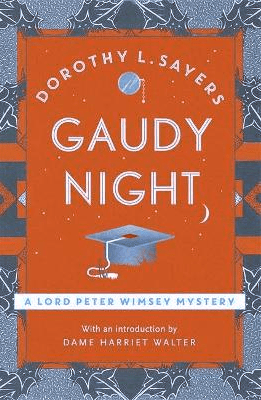
Intriguing to think how the decade between 1930 and 1940 may have halted or reversed women’s progress towards equality, especially in this moment, where we’re seeing a wholesale attack on women’s rights in the U.S. More about Gaudy Night tomorrow, and here’s a fun open-access article about the significance of Latin in the novel.
Rest of the weekend will be spent glorying in the new growth and labour of the yard, where my thoughts inevitably turn to the viability of creating my own poison garden.
 The Landscape of Canadian Women's Crime Fiction
Leave a comment