I awoke with a keen sense of excitement and anxiety this morning, the first day of the year. Per Louise Penny’s novels, I quickly murmured “rabbit, rabbit, rabbit” before getting out of bed to feed our rabbit-like cat, who was already making soft cooing noises. She appreciates my early wake-ups.
The question on my mind was whether I’d still be able to log into the Magnificent Research Library’s collection. For non-researchers, there are likely other pleasures to anticipate as the year begins. For someone teaching at a community college, where our librarians do an extraordinary job of stretching resources, this is a big question.
I’ve been teaching, off and on, at a much larger institution than my own permanent academic home. That comes with privileges–chiefly, library privileges. But there’s been inconsistency about whether they continue past my teaching terms, when I am frantically busy prepping and teaching all-new classes each time, and disinclined to do research.
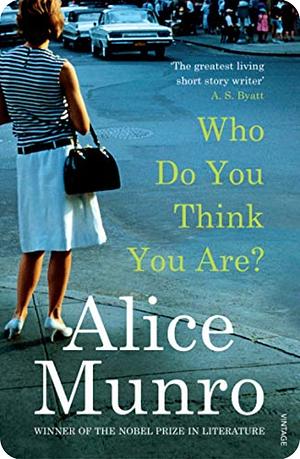
Here I am deliberately referencing the title of an Alice Munro short story, one that appears in the story cycle/sequence Who Do You Think You Are? Throughout the book, working-class Rose clambers up the social class ladder from the wrong end of Hanratty, Munro’s stand-in for Wingham. She attains a relatively secure professional, if not always financial, status as an actor and television personality.
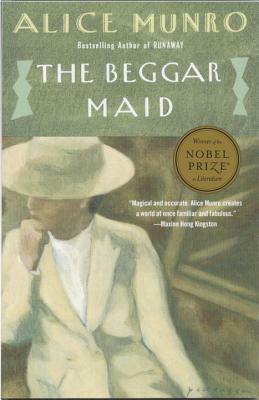
Of course, the salient story for talking about library privileges is “The Beggar Maid.” I have an American hard-cover edition of the book, a gift from a friend some decades ago, and The Beggar Maid is the title of that edition. Americans were deemed unlikely to understand the Canadian question/accusation “Who do you think you are?” Perhaps that has abated in recent years, because the American version of a popular UK genealogy show uses the original title.
In “The Beggar Maid,” Rose is now a scholarship student at university; she has been upgraded from her job in the cafeteria to a genteel position at the campus library. She is also contemplating the romantic overtures of the well-heeled and head-over-heels Patrick.
Patrick is rather ridiculous, I’m afraid, to Rose and to readers. There is little in him of the possible real-life model, Alice Munro’s first husband Jim Munro. His marriage proposal during her second year of university, the last one for which she had funding, offered a prospect more appealing than moving home to Wingham to look after her sick mother.
She left her younger sister to do that. I’ve been re-reading Munro’s biography by Thacker and making note of the array of instances where she chooses, literally, not to care. I’ll refer you to Amelia DeFalco’s brilliant book on care work and Canadian literature, for searching and sustained analysis of Munro’s depictions of caregivers in her fiction.
So Patrick is not the urbane, chatty, genial Jim Munro that Alice encountered as a young undergrad, and that I encountered as the elderly and charming-with-an-edge proprietor of Munro’s Books in Victoria. Comment from Jim to me once, after I’d been burbling on about my chapter on sex, violence, and food in Munro’s work: “You may be missing the point.” And he was in a good mood that day. I’ve been having interesting conversations with people who knew him a lot better than I did, and I am forming a stronger impression. He is even less like Patrick, I think, than I previously believed.
Must dash to write emails about a project idea, and then I will download a few of the gloriously accessible articles from the Research Library. On occasion, I’ve been so profligate that a database flags me as a bot and makes me prove my humanity. So far, I’ve squeaked through. I leave you with the “Beggar Maid” quotations that I’m chewing over as 2025 launches.
“It was a miracle; it was a mistake. It was what she had dreamed of; it was not what she wanted.”
“They could not separate until enough damage had been done, until nearly mortal damage had been done to keep them apart.”
“Patrick had a trick–no, it was not a trick, Patrick had no tricks–Patrick had a way of expressing surprise, fairly scornful surprise, when people did not know something he knew, and similar scorn, similar surprise, whenever they had bothered to know something he did not. His arrogance and humility were both oddly exaggerated.”
Keep your eye on Munro characters who have or play tricks. “Lovely tricks,” like writing, in “Material.” Or circus tricks, like Flo rotating herself (no hands!) while lying down across two chairs. Munro is tricky. Many thanks, Massive Research University, for the New Year’s library blessings.


Leave a comment