
I have never liked New Year’s Eve parties, but 29 years ago I went to a friend’s party, under protest–literally dropped off at the door by another friend, with whom I’d had dinner, and ordered to stay for at least half an hour.
And I met somebody quite lovely, and talked about Jane Austen for hours, and then we spent 20 years together.
We wanted to get married on New Year’s Eve, to mark our first meeting, but vendors and venues double their prices, so we settled for December 30th.
And then spent two decades turning down invites for the entire xmas-New Year period on the basis that it was our extended anniversary. We read our Christmas books and played with our kid and put together elaborate lego sets.
But if you’re adept at math, you’ll notice some missing years in there.
So in recent years I’m both avoiding large New Year’s celebrations and sometimes dreading this after Christmas period entirely, since I was rather more solo than at most times of the year.
This year, time being healing (eventually), the three of us, plus cat, will have dinner by the fire–the other half of the Christmas Eve tourtière that was our Quebec-tribute Christmas Eve dinner (it’s been frozen; perfectly safe).
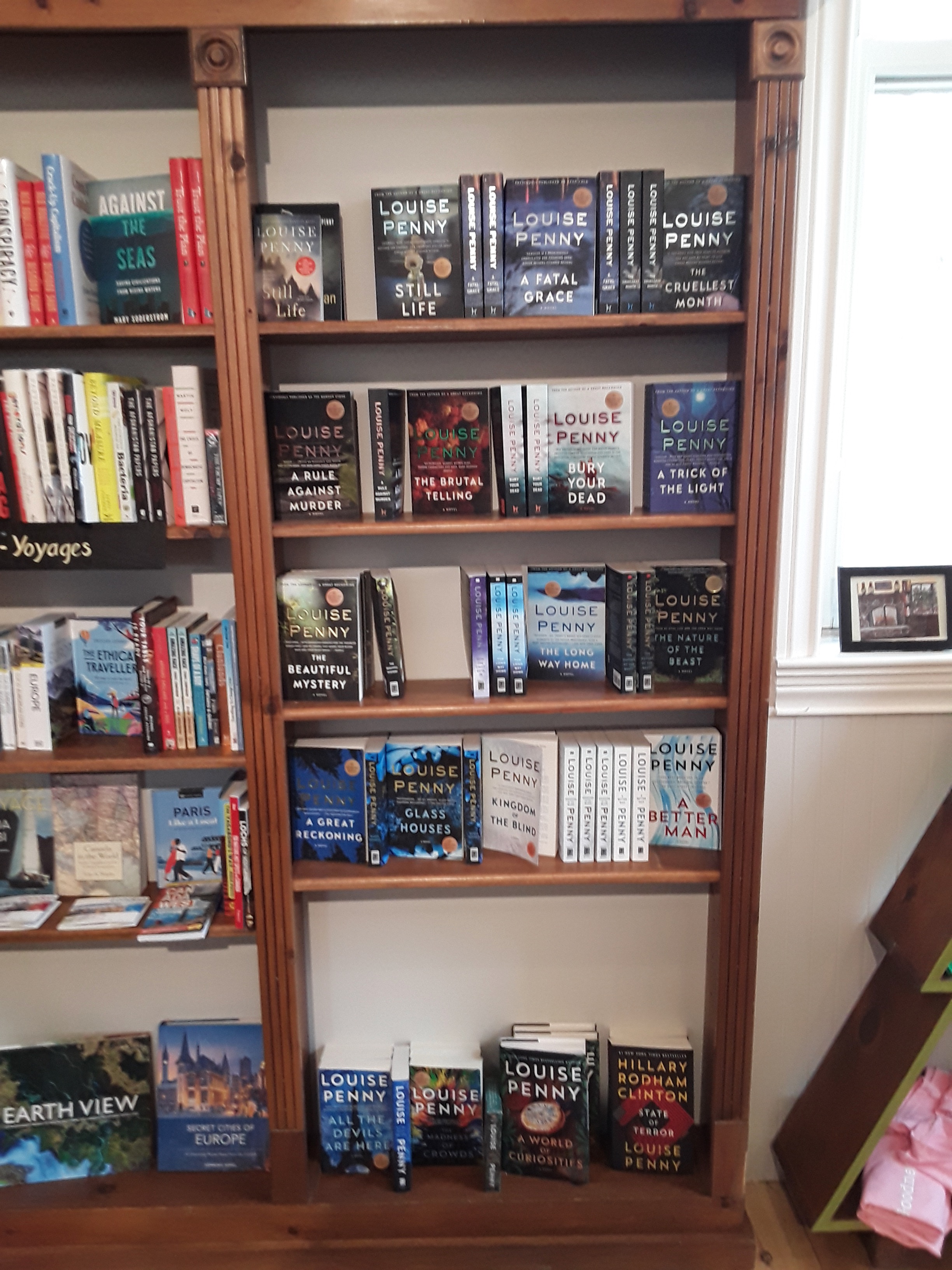
And so I’m thinking about epically bad New Year’s Eve parties in fiction and particularly in murder mysteries. And my favourite appears in Louise Penny’s relatively recent novel, The Madness of Crowds.
I really like this book, even though a few aspects raise questions about the depiction of, in particular, the new “asshole saint” who joins Penny’s pantheon: Haniya Daoud, a Sudanese activist who has experienced horrifying trauma yet, while still in her early 20s, has become “the Hero of the Sudan” for her chilling and necessary work.
Like another asshole saint in the book, Dr. Vincent Gilbert, who lived and worked with people who have Down’s Syndrome–but also has a more disquieting past medical professional history–Haniya is not here to make friends.
Even at a New Year’s Eve party where she is a celebrated and welcome guest.
Her pronouncements about the Three Pines regulars are sneering and scathing, in turn, and she is thoroughly unlikable. She even frightens Reine-Marie.
But she is heroic: brave, and bold, and absolutely determined to save the most vulnerable.
And she is only one of the difficult guests at the New Year’s Eve party held at the renovated Hadley House, the now-luxe Auberge.
Another disquieting (and even more polarizing) figure is Professor Abigail Robinson, who has been popularizing a theory, grounded in her statistical analysis, that preserving the standard of living of the majority in Canada may require some sacrifices–of the elderly and the infirm. Robinson’s post-COVID analysis is grounded in the numbers pointing to reduced health-care costs when the most susceptible die off more quickly–or are dispensed with through euthanasia. (I do wish it didn’t take quite so long for reader to figure out the brass tacks of Robinson’s contentious academic work, since sustaining the mystery about it becomes rather irritating.)
This is a fascinating book about disability and I love Penny’s decision to have Idole, the infant daughter of Beauvoir and Annie–Gamache’s own daughter–be born with Down’s Syndrome, and have that reality be explored in a nuanced and sensitive manner. We need more representations like this. (And if you’d like to read more on this topic, Adelle Purdham has a brand new and brilliant book out.)
I’ll avoid spoilers because this is a relatively recent mystery and some of you may just have plucked it out of a Christmas stocking or received it on the first night of Hanukkah, but there are lots of potential murder victims and suspects here.
And the murder takes place in the midst of the raucous New Year’s Eve party, to the regret of relatively few of the guests. Highly recommended. (And at some point, I’ll get back to Penny’s depictions of non-white women, because there are some things to unpack here, and I need the help of critical race theory to do this.)
Wishing all readers a wonderful 2025 free of mayhem (except between the covers of a book).
 The Landscape of Canadian Women's Crime Fiction
Leave a comment