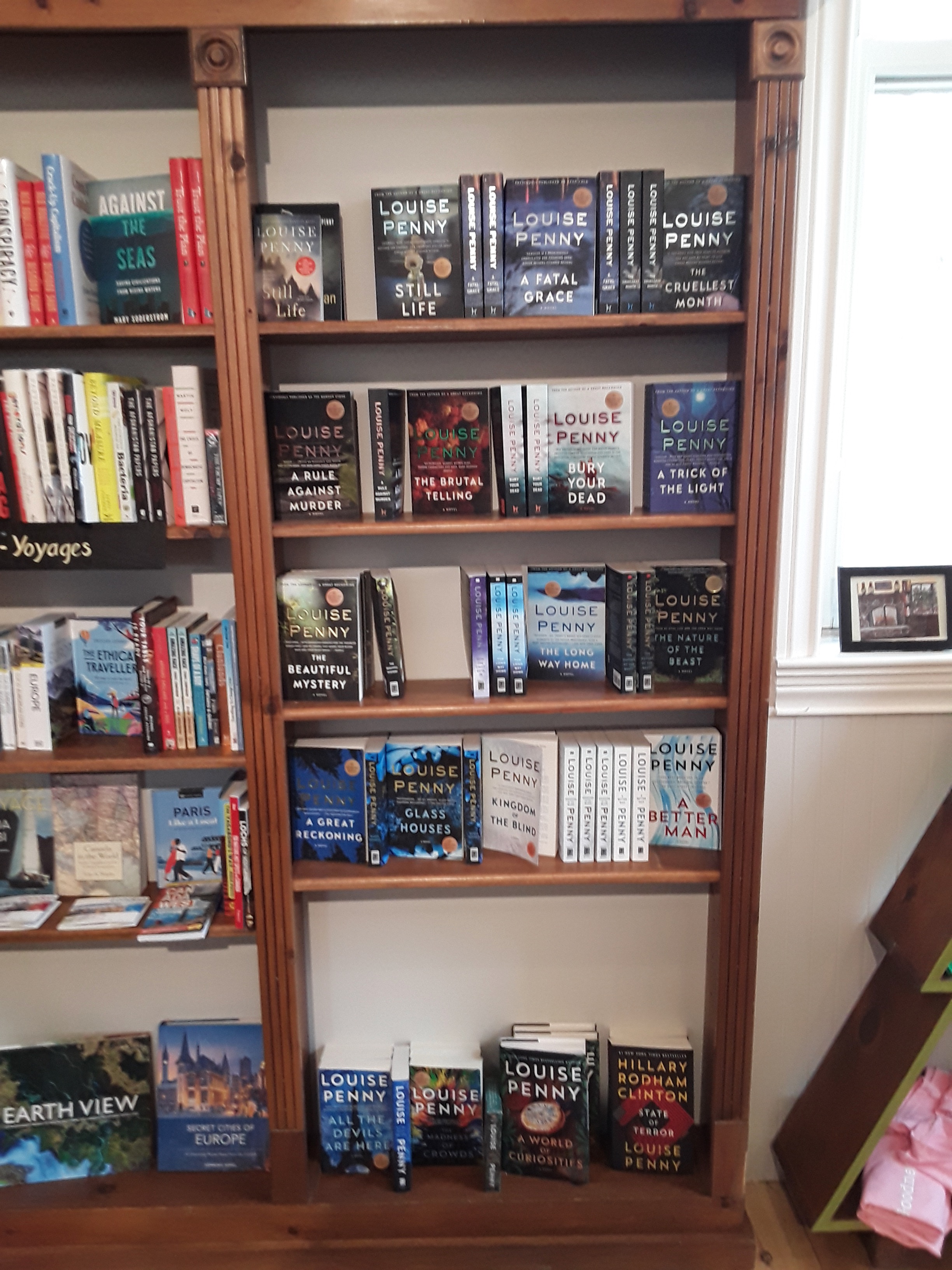

Louise Penny’s novels are filled with love–between Armand Gamache and his wife Reine-Marie, the solace for his profound early losses; between Gamache and his close-knit team members, Jean-Guy Beauvoir and Isabelle Lacoste; and between the friends in Three Pines, who eventually welcome Armand and Reine-Marie into their circle.
But the relationships I’ve been thinking about (alongside Peter and Clara Morrow’s increasingly troubled marriage, which is portrayed beautifully) are the friendships of the female characters.
Clara is the still point here. She’s closely connected to Jane Neal in the first novel, Still Life, and losing Jane is devastating for the artist who awaits public and critical acclaim. Jane has been her cheerleader and confidante, and in a very moving scene early in the novel, Clara recollects Jane’s tears over coffee. Uncertain how to react, she realized that the solution was to do as Jane would: wait out the tears, keeping Jane company in her intense feelings, and then wrap her arms around her friend.
There are griefs that challenge friendships. In my own life, friendships have been reconfigured in the wake of my diagnosis with a chronic health condition that is manageable, but permanent. After nearly dying in hospital, I realized that some friends keenly wanted me to be better, and the same as I was before I became ill. And I couldn’t do it. There were necessary but painful losses. Penny’s novels don’t shy away from the ways that friendships break, and don’t always mend.
In Penny’s novels, friendships between women shift and re-form over time. A handful of her female characters are impervious to overtures of friendship, even contemptuous of other women, including the unpleasant murder victim in Dead Cold/A Fatal Grace (the title varies by country). C.C. de Poitiers is a narcissistic would-be influencer who’s electrocuted while watching a curling game. She has no friends, and treats her husband and daughter abusively.
Far more often, Penny’s female characters exude warmth and care. After Jane’s death, for instance, Clara’s closest connection is to Myrna. The latter is one of my favourite characters, given that she shares my love of books and eating, and also a portrait that merits some criticism. Myrna, a former psychologist, left a demanding career due to overwhelm and burnout. When she comes across Three Pines, she is home. Her embedded-ness in the community is in part because she and Clara forge an intense, trusting connection. It’s not a jealous or exclusive one, and in turn, Ruth, Reine-Marie, and several others are invited to be part of their loving community of women.
There is an odd absence of queer women in Penny’s novels, and I hope that’s changing. And to digress, the depiction of Olivier and Gabri’s loving and passionate same-sex relationship often verges on parody. A friend has confessed to being unable to read the mysteries, which he otherwise enjoyed, because he couldn’t tolerate the campy behaviour and liberal use of the other, more objectionable F word.
But in portraying women loving women in the context of non-sexual friendships, Penny excels.
 The Landscape of Canadian Women's Crime Fiction