I’ve been thinking about the comforting words Shelagh Rogers would often repeat at Truth and Reconciliation gatherings, quoting (if the internet is to be believed) Ram Dass: “We’re all just here to walk each other home.”
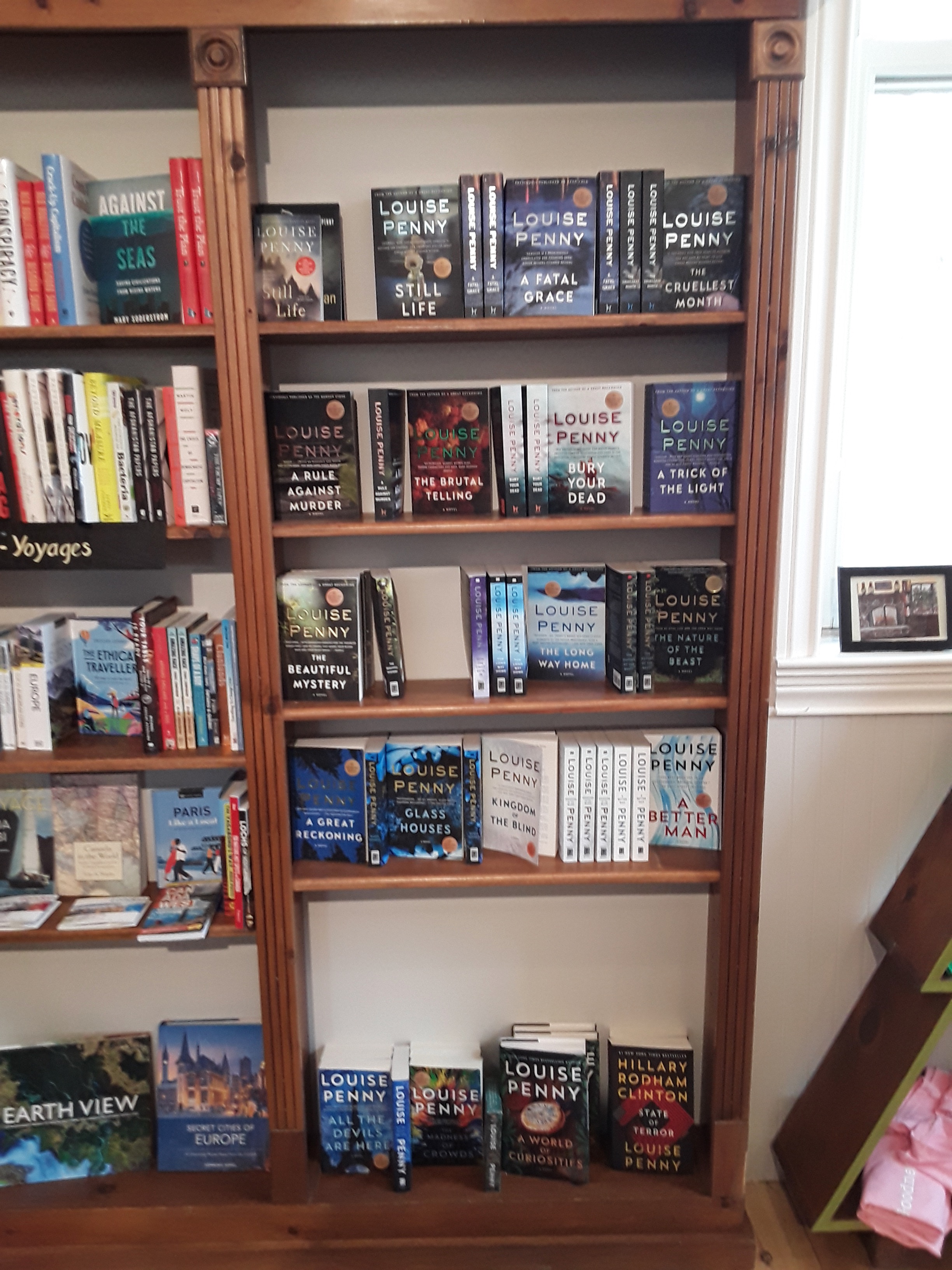
Louise Penny’s The Long Way Home is about Clara’s terrible anxiety about what has befallen her husband, Peter Morrow.
A year earlier, they separated, torn asunder by Peter’s jealousy and resentment of Clara’s growing artistic success, his inability to love her with the generosity that Clara has always shown him, when he was the more successful painter in the family. Clara’s career has exploded and Peter is tearing her down instead of building her up.
His childhood in a deeply dysfunctional family plays a significant role, Penny makes clear, in his inability to glory in her achievement. He was raised to believe that there could never be enough to go around: not enough of his acidic mother’s praise, or his restrained father’s attention. Peter is deeply threatened by Clara’s growth, because it points to his own static repetition of the same motif over and over again in his own art, his fixation on technique and impression at the expense of depth.
Clara begs Gamache, who is settled in Three Pines and resting, to help her investigate Peter’s whereabouts. The couple had agreed that they would have no contact for one year, and then on the anniversary of their separation Peter would return to Clara so that they could talk about their marriage. She prepared for his arrival–but he didn’t turn up, or send word. And Clara is tormented by thoughts about what may have befallen him.
This is a divisive book, in the Three Pines/Gamache series. The GoodReads reviews, in particular, suggest polarized positions: either this novel is a disappointment, failing to provide much in the way of mystery and intrigue, or it’s among Penny’s best, delving deeply into marriage, friendship, and art.
My view is somewhere in the middle. There are sections of the novel that feel digressive and repetitive, but there’s also a fascinating way that Penny is working with the rhythms of return and departure, and not in a linear manner. This is a very carefully crafted book, and readers who think it wanders off in too many thematic and geographical directions may re-consider their views on a second read.
The other aspect of The Long Way Home that provokes Penny’s fans (SPOILERS AHEAD) is that the novel ends with Peter becoming the brave man in a brave land that Clara had believed he could be. But this requires a significant sacrifice on Peter’s part, and some readers are outraged that Peter doesn’t survive his gallant effort to save Clara’s life.
There are some wonderful set pieces in this novel that illuminate Penny’s broader concerns: everyday magic, for instance, and the power of art to hurt as well as to heal. The deep mystery that is a long marriage. Friendship as solace against the world’s inevitable wounding.
 The Landscape of Canadian Women's Crime Fiction