American-Canadian crime writer Nora Kelly was born in the U.S. and completed a PhD at SFU, in British Columbia.
Her first mystery novel featuring amateur investigator/history professor Gillian Adams was In the Shadow of King’s, set at Cambridge University in the UK.
In Bad Chemistry, the third book in the series, Gillian is back at Cambridge for a sabbatical year and a reunion with her London-based lover, a Scotland Yard detective.
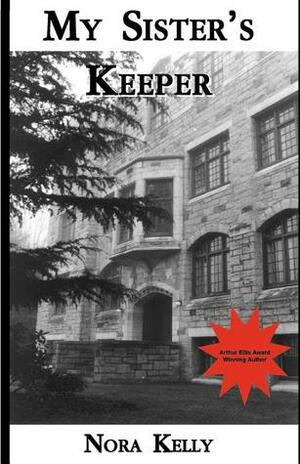
Bad Chemistry opens with Gillian in a state of exhaustion: the events of My Sister’s Keeper were traumatic. She is now pondering whether she wants to return to her tenured position in Vancouver, where she is also the head of the fractious History Department. Staying in London, even at a significant salary cut, would let her build a life with Edward.
And then there’s Cambridge, a city Gillian loves, and where she has close friends.
But murder and mayhem soon intrudes here, too, despite the bucolic city’s charms.
Wendy, a young chemist with a PhD and an ambitious research agenda, and the only woman in her department, is found dead from what initially looks like a tragic accident.
Edward, on a busman’s holiday to Cambridge, helps an old friend investigate what proves to be murder, while Gillian conducts her own inquiry by speaking to Wendy’s friends and feminist co-activists.
Wendy had been volunteering, although not very effectively, at a women’s centre that offered pregnancy testing and counselling. But providing an impartial listening ear, as the feminist advocacy approach required, did not come naturally to the young chemist, who preferred a more assertive approach to assisting her clients with their reproductive choices.
Ironically (and perhaps fatally), Wendy, too, was pregnant at the time of her death. And she was contemplating keeping the baby, even if this would upend her academic ambitions.
Kelly’s novel, first published in 1994, turned up in a Free Little Library near my house, and in excellent condition. It was a fortuitous find, because Kelly’s mystery fiction has not been re-printed, so I was intending to purchase a copy through Alibris.
As a mystery novel, it’s fairly solid, although the extensive technical detail about organic chemistry experiments was a bit of a slog for me.
Wendy works in an environment hostile to the presence of women, but she had learned to navigate her envious and competitive–and occasionally lovelorn–colleagues’ teasing with aplomb. She had a brilliant research career ahead of her–unless she had a baby.
I hope that academic women scientists face easier choices now than they did thirty years ago. I remember a friend in Pharmacy, who also acquainted me with the protocol for disposing of lab mice and rats (horrifying), planning to freeze her eggs.
She was all of twenty-five or so, but her plans were fixed: do 1-2 five-year postdocs and then get a good research university position where she would run her own lab. That timeline meant that having a baby would be pushed back to age 38 or 40; she’d done her fertility research and wasn’t confident that aging eggs would be up to the task.
Revisiting women’s crime fiction from earlier this century can be dismaying: so much has not changed.
 The Landscape of Canadian Women's Crime Fiction