
Lucy Foley’s new (authorized) Miss Marple novel will be out in late September and it’s just had its cover reveal:
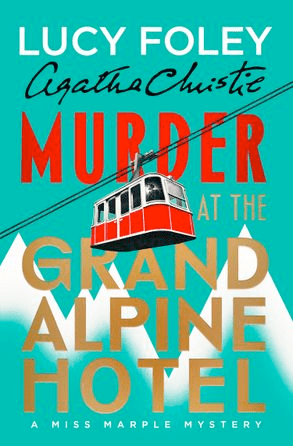
The book trailer is stylish but more coy than informative. I do think Foley was clever to set her first Christie novel outside of St. Mary Mead, and Christie’s Marple did travel to a a range of locales, typically due to her nephew Raymond’s largesse. Seeing Miss Marple detecting in Switzerland should be a lot of fun, and just about 100 years ago Christie must have been envisioning the character: the first Marple novel, The Murder at the Vicarage, appeared in 1930.
But I’ve been thinking about a different kind of travel: a fugue state. A century ago, Agatha Christie had multiple unpleasant shocks during a generally eventful year that included moving with her husband and daughter into their new home, Styles, named after Christie’s successful first novel.
Christie’s mother, to whom she had been close, died in April.
And then she learned that her husband, Archibald Christie, was having an affair. I must take exception to this interpretation, however:
“Some commentators argue that Agatha’s wish to keep a tight control on her own finances led to tensions in her relationship with Archie, so much so that he entered into an affair with his 25 year old secretary Nancy Neale.”
There are always reasons why older men might like their young and easily impressed assistants; must it always be the fault of the betrayed wife?
In early December, the couple’s fights had become frequent and vociferous; on the 3rd, Archie left to spend time with Nancy and other friends. Agatha, too, made preparation to leave that evening, their daughter having been consigned to the care of the domestic staff.
And then Agatha Christie disappeared. Her car was found the next day, off the road, in Guildford. But Christie herself was nowhere to be seen.
I have been fascinated by this story for decades.
There was concern that Christie had committed suicide–or perhaps even been murdered by her husband.
And then the police, who were conducting a national search, received information that a guest staying at a Yorkshire hotel might just be Christie, although both her name and nationality differed:
“In a dramatic unmasking which would have been at home in the pages of any Christie novel, Archie travelled with the police to Yorkshire and took a seat in the corner of the hotel’s dining room from where he watched his estranged wife walk in, take her place at another table and begin reading a newspaper which heralded her own disappearance as front page news. When approached by her husband, witnesses noted a general air of puzzlement and little recognition for the man to whom she had been married for nearly 12 years.”
That is either very good acting, or a fugue state. I took an interesting class with Ian Hacking some years ago about the wave of disappearances of men in France and a few other western European countries (but, crucially, not the UK), “mad travelers” who were victims of transient mental illnesses that included amnesia and an impulse to travel. Hacking traces this to a very specific historical epoch: 1887-1909. And he has national/cultural explanations for the disappearances that preclude the possibility of an effect on, say, a young-middle-aged British woman nearly twenty years later.
But it’s interesting, and suggestive. Christie seems to have absorbed information with extraordinary ease; did she somehow read of fugues and then enact one of her own?
As an article in Psychology Today notes, “Agatha never discussed this perplexing episode and excluded it from her biography. Perhaps she contrived it as an act of revenge, or, some said, as a publicity stunt, but a dissociative fugue is an equally likely explanation and also the one upheld by her then doctors.”
The hotel in Yorkshire where she was located is still in business. It could make for an interesting trip.
 The Landscape of Canadian Women's Crime Fiction
Leave a comment