
This piece is part of a collection of lyric essays that I wrote under the gentle and generous supervision of Becky Blake.
U of T has a terrific Creative Writing Program Certificate through Continuing Studies; it was a valuable introduction, for me, to providing and receiving writing workshop feedback. My MFA, starting in May, will be a ramped-up version, and I’m a bit nervous.
A decade ago, I left a job. And that may be as much (or more) than most readers, who are here for the hot crime fiction takes, want to know.
Some context: no one in this story is a bad person, but we were all dealing with bad circumstances. A writing program had become a political football, and an outgoing AVP and Dean tossed it in an unfortunate way. That garnered me a job that was not sustainable: a 4/4 teaching load, all in writing-intensive courses, with massive admin duties ladled on top. And in a new and separate writing division that was kinda in and kinda outside a department.
Intriguingly, the male colleague hired for the exact same job was told he was not required for most of the admin duties, because I had experience, I had talent, I had been hand-picked! He was there because he was a genius teacher (which was and is the case).
All of this is common in academia: service is provided by female faculty, and I was in a department where sessional instructors were not infrequently encouraged to provide free service work, sometimes with the prospect of a better job dangled in front of them.
But my woes started years earlier, really. I was part of a PhD cohort that expected to be showered with job offers. Or at least figure out a way to earn a living with our doctorates. But the academic job market never recovered, post-1970, and during my academic job searches I weathered two disastrously timed job searches, in 2001-02 and in 2008-10.
My sense of timing has always been just a bit off.
So here’s the essay, and if you recognize this story and have objections to how you are portrayed, do let me know. I recognize that my own story is likely incompatible with the experiences or memories of others. And I have left out of this story the most surprising turn, because it involved criminal behaviour (a bit of light stalking) linked to, in a very indirect way, my acceptance of this position.
For that, folks, you’ll need to buy the crime novel into which I’ve incorporated the series of unusual incidents and surprising coincidences.
Horror in the Hallowed Halls of the Academy
Several months after my dissertation defense, conducted on a hot day when I was nine months pregnant and hormonally teary, I was thrilled to secure a three-year contract at the University of Toronto. I’d completed all of my degrees at the downtown campus of the university, reveling in the leafy quads and the Oxbridgian pretension of Great Halls and Junior Common Rooms. The English department chair cautioned me to consider my job strictly temporary: every year I would need to plunge again into job applications alongside my teaching and research and service responsibilities.
I loved books and I dreamed of building a career around reading and writing. Conveniently, in the early 1990s, an influential research study predicted that a wave of retirements combined with increasing post-secondary enrollment meant professors would soon be in short supply. My grad school friends and I promised each other that our Friday nights labouring over bibliography exercises and Old English declensions would pay off in rewarding (if not especially remunerative) careers.
When I began teaching full time, my infant daughter was still nursing so enthusiastically that I had to check the front of my blouse before each class for telltale signs of leakage from my off-duty breasts.
It was hard, physically and emotionally, to spend more than five or six hours away from her each day, and I couldn’t resist picking her up early from daycare at least a couple of days a week.
I was squandering time that should be spent publishing frantically, and I also knew that I was relatively privileged. Colleagues who were single parents juggling contract work at three universities were racing back and forth across the city to try to make ends meet. Friends who had researched the Black Arts Movement or Indigenous humour were called on by all-white hiring committees to defend the significance of the authors they loved (and implicitly, their own communities).
I had always treated fiction as a guide to life, but now I searched in vain for models about how to be a feminist academic with a baby and not enough hours in the day.
The sexual and social mores of Kingsley Amis’s Lucky Jim were (fortunately) long expired. A.S. Byatt’s Possession, while sympathetic to the plight of lecturers on temporary contracts, posited the happiest of endings for its protagonist, who was rewarded with not just one but two permanent job offers in recognition of his serendipitous discovery of a cache of letters.
But he wasn’t juggling research with diaper-changing duties.
During my first year of parenting, my mother-in-law gave me a new British novel, I Don’t Know How She Does It, for Christmas. The heroine struggles to manage a big job, her children, her house, and her needy husband. At one point, she tells the hapless fellow that it would be easier if he left than if the nanny quit. By the end of the book, she leaves her job.
At least, I think that’s what happens.
I had no time to reach the ending of that novel—or any novel that I wasn’t teaching the next morning—for at least half a decade.
Decades later in my teaching career, I finally came across an academic novel, written in the mode of satiric horror, that resonated.
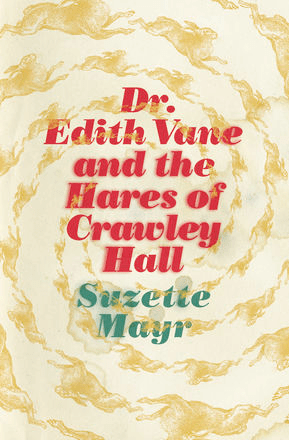
Dr. Edith Vane and the Hares of Crawley Hall is Canadian novelist-professor Suzette Mayr’s piercing critique of higher education’s enforced workaholism. Her protagonist is a recently tenured professor of literature at a prairie university that celebrates science and tech while marginalizing arts disciplines.
Isolated in her department as a Black lesbian, Edith had nonetheless anticipated plaudits for her hard-won achievement: a book contract! Instead, she encounters indifference and hostility: her students find the Canadian literature she loves tedious; her self-important colleagues ignore her.
But at least, she comforts herself, she hasn’t been turfed by academia—consigned ignominiously, like one former colleague, to a job in retail, or banished on administrative leave, like a department activist who brought unwelcome media attention to the asbestos-ridden humanities building.
And crucially, Edith isn’t precariously employed, and thus not consigned to the fate of the lecturer in her department who teaches while spiking a fever, because he’s worried about losing his job.
Edith’s first book, which explores the life and work of Beulah Crump-Withers, an under-appreciated Black “prairie poet, maven memoirist,” is about to be published. She’s confident that will make all the difference. But Edith’s high hopes for the new school year are soon dashed, as the decrepit building where she teaches begins turning against her. She hears alarming noises. Staircases disappear and reappear in unexpected places, making getting to class on time challenging. The decaying structure that houses the English Department is pest-ridden and sinking into the ground. And then her colleagues start dying at faculty meetings. Frantic, Edith reaches out to her campus work-life balance service, which coaches her to think positively and devote herself to daily stress-busting exercise by swimming laps in the campus pool.
Mayr has conjured up a familiar and deeply disquieting vision of contemporary academia.
Neoliberal austerity policies dominant in the 1980s and 90s reduced provincial funding to higher education, increasing tuition fees and student debt loads.
The composition of the faculty also transformed from the early 1970s on: the brief period in the late 60s when tenure-track positions multiplied at newly created or expanding universities was soon followed by a surge in poorly paid adjunct faculty.
And while the mass hiring of the late 1960s was dominated by white male faculty members, the contingent academic labour force of the early twenty-first century is disproportionately feminized and racialized (Navarro 2017).
Meanwhile, tenure-stream faculty members from underrepresented groups, like Edith, confront biases that jeopardize their professional success.
Extensive service expectations and students’ needs for mentorship cut into the time available to make scholarly contributions. Teaching evaluations, used for promotion and tenure decisions, are inflected by racial and gender biases (Chávez & Mitchell, 2020).
The consequence is a widespread crisis, especially in the academic humanities. Morale is poor and stress leaves are common.
To address faculty and staff challenges, university and college websites are now replete with the kind of “wellness” strategies that Edith’s EAP pedals. Faculty members and students are exhorted to strive for robust mental health, so that they can be more productive. Workshops on self-care have mushroomed, while workloads have increased. I once spent 90 minutes listening to a visiting guest speaker, a doctor from Toronto who was paid several thousand dollars to give one talk, exhort us all to drink more water.
Three years into my contractually-limited position, it became clear that the academic job market had contracted further. Law school offered a potential solution, and my husband and I decided to move our small family to a bucolic west coast city we’d been dreaming about for several years. I quickly discovered that I loved analyzing legal arguments but couldn’t imagine dividing my life into billable six-minute increments; my professors warned me that life-work balance in most legal services jobs was worse than in academia. I switched to teaching in the university’s English department, and several years later there was the prospect of a permanent job. I applied and then quaked through a full day of interviewing and job talks.
When I was offered the position, I was stunned and briefly thrilled, and then overwhelmingly anxious. The department swarmed with part-time temporary instructors, and more than two dozen of us had applied for two permanent roles. The colleague hired along with me was universally beloved and had taught in the department for nearly two decades, while I was a relative newcomer.
The interim program director, who didn’t teach the writing courses that she was now administering, assured me that my service contributions would help the university perceive the value of the new positions. If I just worked hard enough, more good jobs would be created for my part-time colleagues. That might assuage my guilt.
When I asked how to distribute service responsibilities with the colleague hired alongside me, I was told he was hired just to teach; I was hired because of my administrative acumen, my extensive service to the profession through two scholarly associations, and my research profile. It was only fair that I do more, because I had demonstrated myself to be so capable.
But we were both set to teach eight courses a year, and each term I would mark nearly a thousand assignments.
Tenure was not accompanied by the rewards Edith anticipated, the “spontaneously caroling students and her professor colleagues smiling at her and bestowing upon her bouquets of red and white flowers and pearly-bowed presents for no reason at all as she sailed down the halls, her healthy new self-possession shining a crystal-ball light.”
It did not even bring the job security and academic freedom Edith anticipated, since the new dean was threatening to cut under-performing faculty members who might detract from the fictional University of Inivea’s ambitious plan to be “in the top 1 percent in the country in terms of excellence and globalization.”
Through the fall and winter terms, Edith worked all the time, but it never seemed to be enough to keep up with the “pounds” of grading on her desk.
And the building’s thumps and clanging were increasingly alarming.
In Dr. Edith Vane and the Hares of Crawley Hall, Suzette Mayr, drawing on Shirley Jackson’s The Haunting of Hill House for inspiration, conjures up a haunted humanities faculty building. Mayr suggested to an interviewer that it was a reasonable transposition, since “all universities are to some extent gothic . . .. You just have to attend a university graduation ceremony and see all these academics marching around in hoods and capes and black velvet Tudor bonnets, hear the Latin phrases tossed around . . . and in general see that devotion to title, rank, and ritual to know that what you’re dealing with is old and a bit weird” (Grubisic).
In her monograph on the “Schoolhouse Gothic,” literary critic Sherry R. Truffin considers how “Gothic metaphors and themes” that date back to authors like Ann Radcliffe and Horace Walpole are often used to represent education. Triffin explains that gothic “traps take the form of school buildings, college campuses, classrooms, and/or offices, which function as analogues to the claustrophobic family mansions, monasteries, and convents of old” (5). School had always been my safe place, but Mayr and Tiffin are correct: campuses can also be profoundly threatening.
I struggled to do my best in my new job. I was at work all the time, and when I called each afternoon to check in with my daughter, I listened, helplessly; middle school was hard, and I was not there.
I spent ten hours a day at work each day, and even longer on the day when my first class started at 8:30 in the morning and my evening class ended at 9:30. I sandwiched meetings and grading between classes and over the weekends prepped new material to teach the following week. It was the only way to cram in all of my obligations. The program supervisor wanted to meet first thing each day, even requesting that my office be moved to be adjacent to her own, so that it would be easier to summon me.
I was sick all the time and taught through sniffles, stomach flu, and then strep. I was constantly grading, yet always behind, and struggling to keep track of students’ late work and accommodation needs.
But it was the program administration that was slowly wrecking me. There was a new curriculum committee, with frequent meetings and detailed agendas and minutes for me to prepare; a mentorship program for new instructors which gobbled up umpteen hours, because we had at least a half dozen new grad students each term who were in the classroom for the first time; a new textbook proposal; annual evaluations for instructors, which hadn’t been carried out in years.
I developed a recurring ear infection and then mysterious kidney problems that require me to drink litres of water each day.
Coming home in the dark from work, I tripped one evening, exhausted, and sprained my ankle in front of our house. For a moment, I just lay there.
And then I stopped sleeping. I would lie awake until nearly dawn and then get up to work.
One morning, I was standing at the corner waiting for the bus to campus and imagined myself falling in front of it. Shaken, I called and set up an appointment to talk to a psychologist who specialized in work issues. At the end of our first appointment, she leaned forward and gently tapped me on the knee. “I don’t say this lightly, but have you thought about quitting?”
When I went on medical leave, trying to stave off a resignation, my colleagues sent pleading emails asking me to rescue them. I couldn’t save them, but I could save myself.
By the end of Mayr’s novel, Edith Vane is a wreck; the academic work she once valued so highly has destroyed her health and happiness, and her promising new relationship has collapsed under the weight of her misery.
Before I resigned, I met with our new dean to ask for help at fending off work demands while I was on leave.
He expressed sympathy and then told me a story about answering urgent professional emails from his father’s funeral. “It’s the nature of the job.” He shrugged.
I had to go.
On a Sunday afternoon, I packed up my office and lugged boxes to the car. Despite several layers of packing tape along its seams, one box split open. I left a dozen books on teaching composition and rhetorical theory strewn on the sidewalk.
 The Landscape of Canadian Women's Crime Fiction
Leave a comment