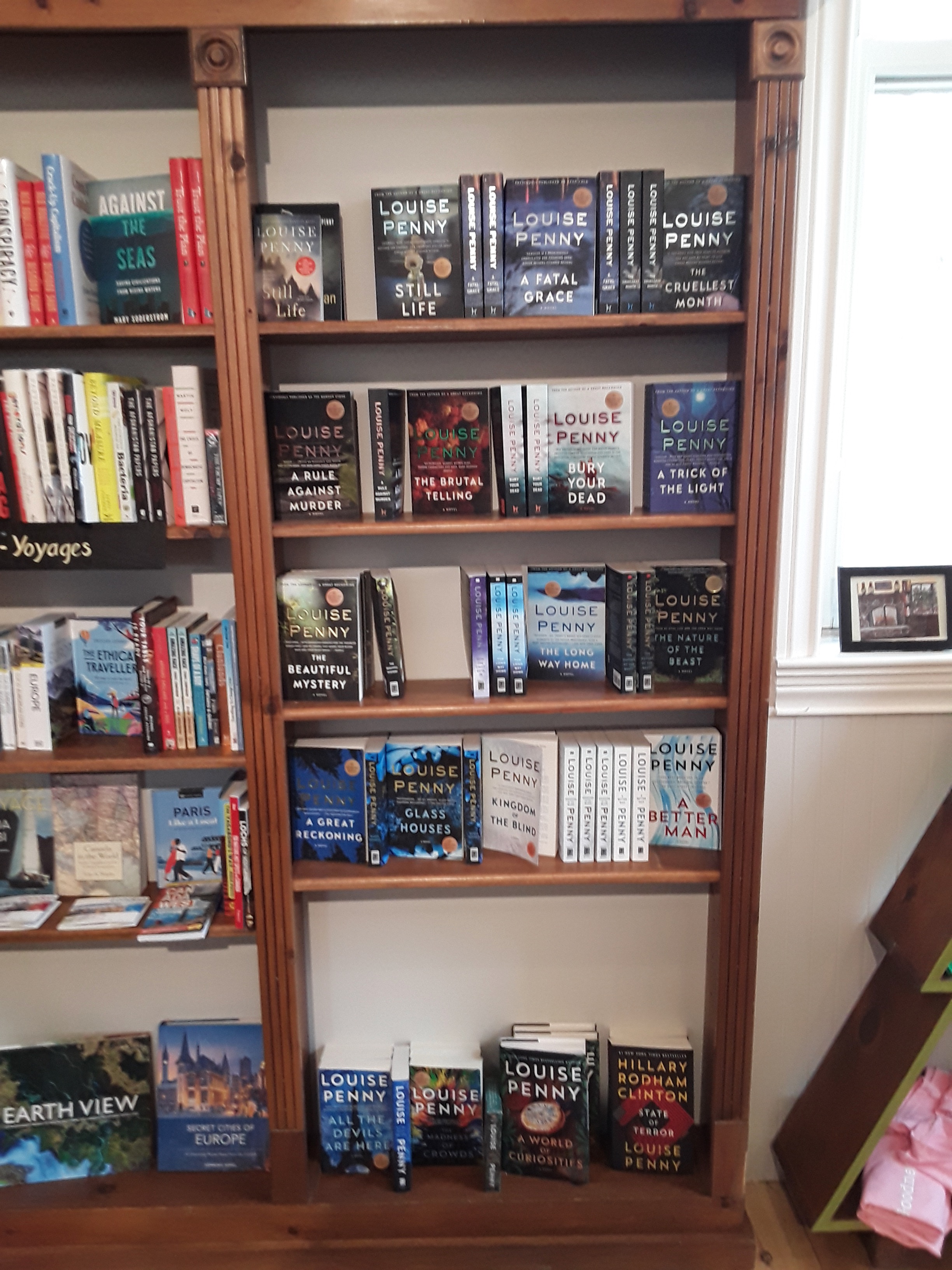
I’ve just ordered a niche item, Colin Dexter’s Cracking Cryptic Crosswords.
The late detective novelist, who spent his early career teaching Classics, was also a famed creator of crossword puzzles of a type that British audiences appreciate far more than American ones.
A recent New Yorker piece describes how Wordle creator Josh Wardle has created a new puzzle with an American audience in mind, “a way to introduce newcomers to the joys and agonies of the cryptic, whose curious but finally comforting logic had been, for him, a salve.”
And as this article notes, Broadway composer Stephen Sondheim also took a crack at this, vaunting the virtue of the cryptic in a 1968 article in New York magazine. Sondheim urged readers to abandon homegrown crosswords, which merely reward the mental accumulation of trivial facts, with the more sophisticated “test of wits” of the crossword:
“This kind of puzzle offers cryptic clues instead of bald definitions, and the pleasures involved in solving it are the deeply satisfactory ones of following and matching a devious mind (that of the puzzle’s author) rather than the transitory ones of an encyclopedic memory.”
In addition, Sondheim asserts, the individual authorship of cryptics matters, with distinctive literary styles developed by the various pseudonymous authors of the major newspaper cryptic crosswords.
Although he doesn’t specifically mention Colin Dexter’s dual passions, the reward of the puzzle-solver, Sondheim further suggests, is akin to that of the crime fiction reader:
“Bafflement, not information, is the keystone of a British puzzle. A good clue can give you all the pleasures of being duped that a mystery story can. It has surface innocence, surprise, the revelation of a concealed meaning, and the catharsis of solution.”
Sondheim was famously enamoured of puzzles, games, and murder mysteries. The Last of Sheila, his only screenplay, pays tribute to the fun of clever puzzle detection.
But a confession, in keeping with today’s theme: I can’t solve cryptic crosswords to save my life (or anyone else’s, should the situation call for it).
Presented with one, I will simply fold my hands and admit defeat.
I feel the same way about the baffling obscurantism of Victoria Coren Mitchell‘s Only Connect, a television quiz show which requires its teams of brainy contestants to decipher punning and otherwise disguised clues in visual and musical form.
Like doing a timed cryptic crossword in front of an audience. Horrifying.
Although I do appreciate how many of the contestants are wearing slightly nerdy spectacles. My people.
The question categories are presented as Egyptian hieroglyphs, which a reliable scholarly source suggests is an effort to assuage the critique of viewers:
“In earlier seasons the categories were letters from the Greek alphabet and someone wrote in to the BBC to complain that this was pretentious, so in response they changed them from pretentious Greek letters into even more pretentious Egyptian hieroglyphs purely out of spite towards the miserable git who wrote in and complained.”
I used to hear a friend sigh with romantic longing and profound intellectual appreciation over host Victoria Coren Mitchell. After some years of this I developed the kind of instinctual antipathy I have only otherwise felt while hearing a former flame praised to the hilt while the dinner I spent two hours prepping was slurped up without comment. One does like to feel that one’s own virtues are appreciated, every now and again.
But the more I read about VCM, the more I was intrigued by a new-to-me British celebrity who has tried her hand at everything from professional poker to magazine celebrity profiles and directing porn. She is rather a fascinating figure, although flipping through years of her newspaper columns left me a bit depressed about the shallowness of the issues that she and many women columnists in the UK are asked to opine about, while meatier political commentary is reserved for their male counterparts.
And a fun crossword/mystery tie-in is that VCM is married to British comic David Mitchell, who is apparently very famous in the UK for a number of things I’ve never heard of, but who came to my attention via Ludwig. He plays twin brothers: one composes crossword puzzles while the other solves crimes; when the latter disappears, the socially-challenged John “Ludwig” steps in, and apparently the programme creators took a great deal of trouble with the puzzles he makes.
Back to crime novels.
My current read is a bit more of a slog than I’d anticipated. I’d remembered it with pleasure; but it is very talky, and random things occur at odd times, which is not precisely the same thing as plot.
Let’s start with Nora Kelly and In the Shadow of King’s, and I will aim to be fair although I’m feeling disappointed with the book so far.
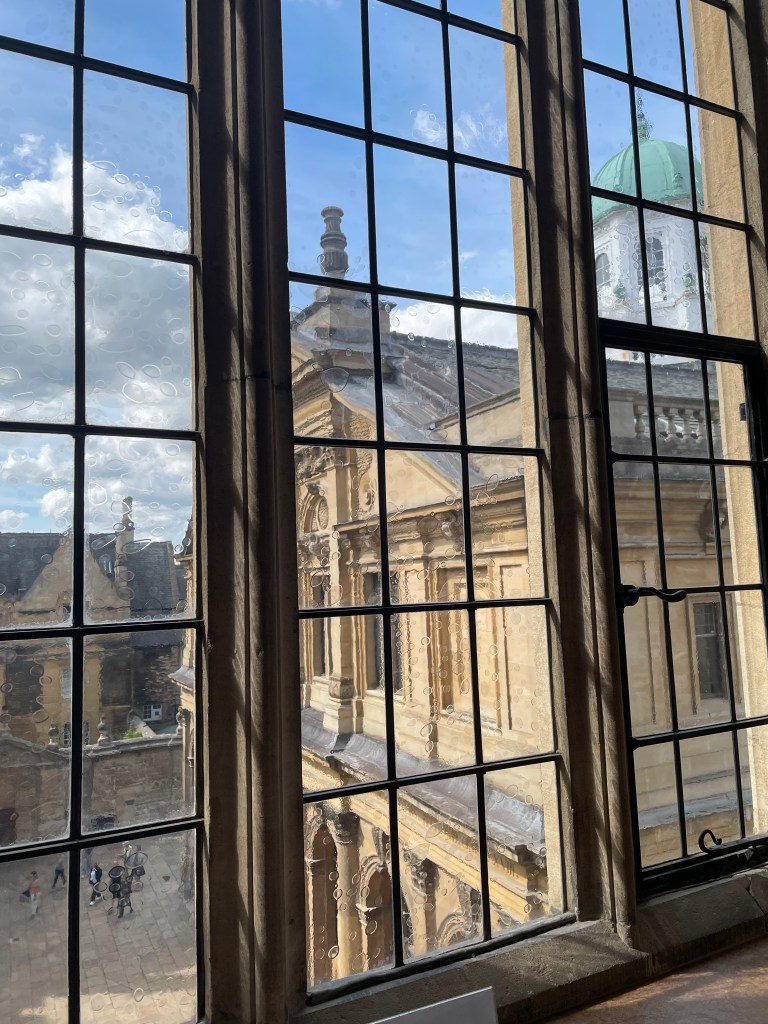
The title refers to King’s College, Cambridge, so a photo from a genial Wikimedia contributor, used under CC license, since none of my very old photos have been digitized:

King’s College is glorious. The Chapel is astonishing, if one can gain access, as it’s a popular place for recording music and hosting weddings.
And Gillian Adams, the heroine of Kelly’s first mystery novel in a short series, is feeling nostalgic as she revisits the city where she completed her PhD in history.
A Canadian-American academic currently teaching on Canada’s west coast, she’s been invited during a sabbatical year to give a guest lecture. This ordeal includes Sunday lunch at the home of a very much more famous but also contentious historian who was once one of her university teachers.
Lunch is eventful: an unexpected guest pulls out a pistol. But her host has the excitable young woman escorted off the property and he prefers not to notify the authorities. He might well have reconsidered, since he’s shortly to turn up dead.
Before that can take place, in an even more exciting development, Gillian is offered the run of the celebrated historian’s library for the afternoon, and that includes permission to finger a volume of Gibbon’s own copy of The History of the Decline and Fall of the Roman Empire.
If you don’t understand the need for my italics, you are not the ideal reader for Kelly’s novel, which takes rather a lot for granted about one’s knowledge of academic history.
Except that I think that Kelly’s novel, published in 1984, may also be having a bit of fun with Colin Dexter’s The Dead of Jericho, from 1981, which invokes Gibbon during an interrogation (a suspect’s response turns on particular editions, and whether a sequence might take place in Volume III or Volume IV).
“The Dead of Jericho” is the inaugural episode of the Inspector Morse series, and it’s penned by Anthony Minghella and was first broadcast in 1987. It was my introduction to the screen Morse, because Julie Andrews persuaded me that the beginning “is a very good place to start.” But it’s not, strictly, the beginning of Dexter’s Morse. I hadn’t intended to read the books, at this late stage. Two or three times in my life, I’ve attempted a volume of Morse that was pressed on me by an enthusiast, and I was left irritated by both the character and by a particular narrative quirk. Dexter frequently inserts an intrusive narratorial comment to informs readers that Morse was, unbeknownst to himself, on the brink of a Great Discovery. But he was only to realize it later, alas. So we have a very knowing and rather teasing narrator who seems impatient with his own investigator but who seems, too, to be prodding along dim-witted readers.
In keeping with my previous experiences, in reading the novel after watching the adaptation, I rather preferred Minghella’s take, notwithstanding the wearying amount of Wagner worked into the story. The Mozart bits are lovely, conversely. The series takes pains to assure us that Morse, courtesy of his love of classical music, is very cultured. It’s somewhat less effortful than having him break into Latin, I suppose, as he does in the books.
Minghella makes Morse’s connection to the hanging victim, Anne, deeper and more significant by having them be fellow choristers, while in the novel they meet once at a party, have a meaningful conversation, and . . . that’s it, until, six months later, on October 3, Morse blunders into the front hallway of her home (having pocketed her address, but never previously contacted her).
It’s an odd way to check in on a fleeting romantic interest, and he refrains from visiting the rest of the house–which means he misses the corpse in the kitchen.
Let’s re-state that, with emphasis: a senior investigator enters an unlocked home, calls out to the home owner and, upon not receiving a response, simply leaves, even though from outside the house he detects some odd lights turning on and off.
That same day, he stumbles again across this neighbourhood of Jericho (having followed sirens), which he apparently never otherwise visits. And this time he wanders into an active investigation, checks out the crime scene, and departs without letting anyone know he was there earlier that day. And knows the victim in passing.
I’m no cop, but this feels like a fireable offense to me.
I picked up a paperback from a free Little Library a few days ago, but this is still a bit of a disappointment. The character’s sexism and class snobbishness, coupled with his smug erudition, are rather a lot to take. But the plot is nicely constructed, and there’s a complex Sophocles intertext that is original (albeit very odd).
It’s fine. It doesn’t inspire me to read more Morse, although I am reminded that I could re-read Peter Robinson if I wanted more of this, but with less overt sexism and healthier working relationships. For all of Inspector Banks’s weaknesses as a husband and father in the early novels in the series, he’s been imbued by his creator with far more of a back story than Dexter seems to give Morse.
Heresy, I know, if you’re a Morse devotee. But this isn’t quite my cup of very English tea.
Back to Nora Kelly, now, and I’m hoping the novel picks up, because I’d intended to work it into a chapter in which I’m also discussing her terrific book My Sister’s Keeper, with a brief digression into her Bad Chemistry (a later book in the series, also set at Cambridge).
The novel is billed on its back cover as a follow-up to Dorothy L. Sayers’s Gaudy Night, which is set, of course, at The Other Place.
And it does follows Sayers in the lengthy intellectual debates that are duly reported, including some rather tedious Woman at Cambridge discussions.
But we’ve been given a victim so odious that it seems improbable anyone in the book or outside it will ponder his demise for long.
I’ll finish the novel and then try a cryptic crossword by the Wordle creator over a second cup of coffee. Here is the site, in case you’d like to join me, virtually.
Then I’ll be back on blog hiatus in order to write towards a Big Deadline on Monday. I’ve been shortlisted for this, and I need to revise my submission before it goes to the jury.
It’s a Creative Nonfiction Prize, and I’m also very happy to share, with all due modesty, that I’ll be starting an MFA in Creative Nonfiction at King’s College in Halifax in May. Huge thanks to my Camosun College Faculty Association for funding this rather expensive endeavour.
 The Landscape of Canadian Women's Crime Fiction

Leave a comment