When I was in high school, a friend and I often hung out at Café Wim on Sussex, near the current location of the National Gallery. Safdie’s glass and metal marvel was still under construction, and it was sited in such a way that it mirrored the Parliament Buildings across from it.
Ottawa was an odd place to be an immature and broody teenager. Hull, with its forgiving approach to underage drinking, was a magnet for most of my classmates. They were sporty and (it seemed to me) relatively carefree.
Skipping one grade, on top of starting kindergarten early, meant that I was nearly two years younger than my peers, which mattered a lot when they were sixteen and I was fourteen. So the handful of friends that I’d made, I held close.
One friend worked at an upscale boutique in the Rideau Centre and modelled part-time; we’d meet up for afternoon tea at Zoe’s in the Chateau Laurier, because her father was rich but guiltily neglectful, and he kept an account for her there.
Another friend was a budding research scientist, and by our final years of high school she was already spending weekends and afternoons in the lab.
But this friend, my only other friend, was more like me: bookish and argumentative; awkward and underdeveloped in the way that girls can be when they’ve experienced life mostly on the page. And we liked Wim’s because it attracted an arty crowd from the university and they had very good coffee.
On a day when I couldn’t meet up with her, she encountered a painter, much older, and semi-famous. Part of a grouping of artists who had been well know, he was in his 50s and she was seventeen. Their subsequent relationship troubled me deeply: it felt situated somewhere between child abuse and romance, and although she was both happy and flattered, for a time, I worried about her terribly.
After my first year of university, which was a failed experiment, I worked for a writer, Ted Allan.
He had written a book about Bethune that was being made into a book, with some degree of contention between the author and the leading man.
I typed his manuscripts, which were mostly revisions of his old plays and short stories, which he was trying, endlessly, to recycle.
Once, I picked up the phone and heard a Scottish brogue that I could barely make out: Sean Connery, if you please, was calling.
Once, I arrived at nine on a Monday and a gorgeous woman only a few years older than me was slipping on her coat and shoes while Ted stood, in his bathrobe, in the doorway of his bedroom.
I left the job after several weeks: two checks in a row bounced, and I was disquieted when Ted, who had taken to calling me his amanuensis and nagging me to submit my work to Now Magazine, suggested that I could add foot massage to my list of duties.
He was recovering from heart attacks, of the serial sort, and I didn’t at all mind making his lettuce-based smoothies; but figuring out reflexology for a man in his 70s was (bad pun) a step too far.
As a young poet in my early 20s, being approached by avuncular yet creepy older men became the norm. They told me how to write; they told me how to live. More than one said I reminded him of a young Sylvia Plath. (And I’m reminded of Atwood, who remarked on a time when women poets were asked not if but when they were going to commit suicide.)
I stopped going to readings and open mic nights; then I stopped writing poetry.
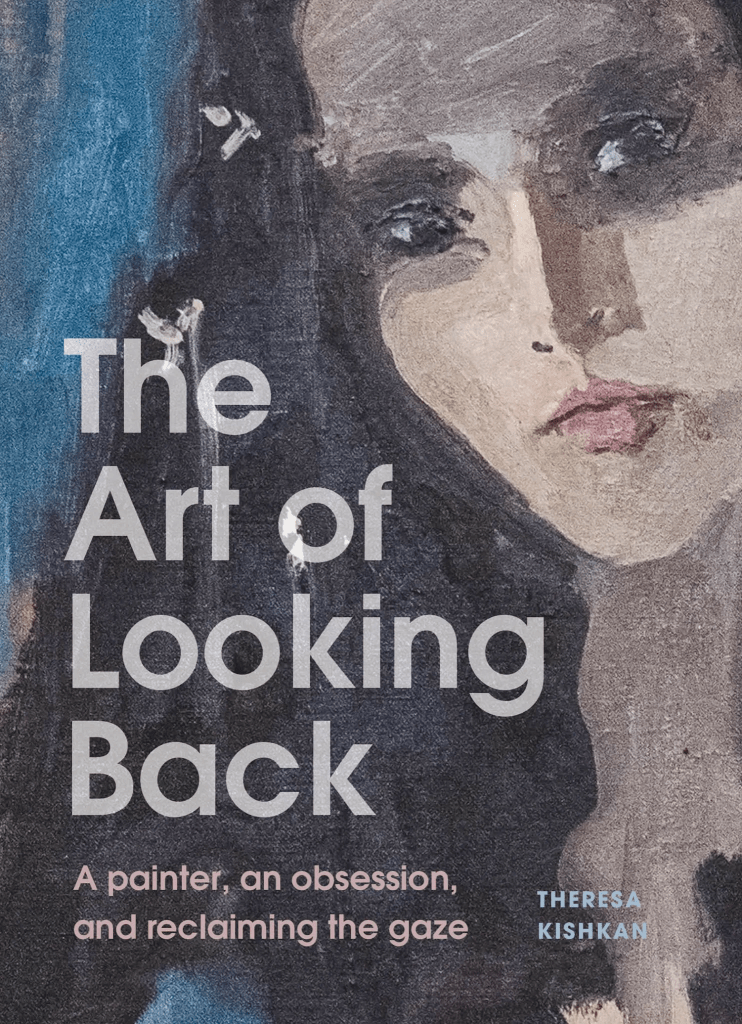
All of this is context for how I received (because read doesn’t seem to be quite the correct word) a new book by the wonderfully and eclectically gifted Theresa Kishkan.
I reviewed her Euclid’s Orchard and Other Essays some years back; I’ve read an additional three or four other books.
And I admire the careful craft of her writing, but it’s this one that has resonated more deeply, and in an unsettling way. I’ve been making my way through it slowly, because I seem to only be able to manage a few pages at a time. Twice, I notice that I’ve read on without taking anything in: a bit dissociated, perhaps.
Here’s Kishkan:
“To sit on a bench in warm sunlight, eating baguette and soft cheese, slices of apple, drinking wine out of small tumblers, while an accomplished man listened to me, argued with me without drowning me out, was a gift (not a Picasso drawing, not money) I couldn’t refuse. Even if I knew I should, or at least that was what my friends advised.”
An older painter, married with children, is besotted with the idea of drawing, of painting the young Kishkan. She consents. In a sense. But she also writes, and this also rings oh-so-true, “I was present in body but not in my mind or my heart.”
Young women, in my experience, encounter older men who want to paint them, or write about them, or mentor them; these men offer guidance and a kind of care, and for a while it may seem innocent, until there is a touch of a hand that lingers on a shoulder, a kiss of a cheek that misses and slides along the mouth, damp and demanding.
I’m writing a play about a famous artist-couple; they painted the same young models, she basing her paintings on the photographs that he took of them. He slept with some of the models. They invited one of the very young women, a teenager at the time, to live with them and help out with their children.
Many years later, the artists, both by then famous, divorced. In documentaries made when they are elderly, they are gentle and generous with each other.
Forgiving.
But what about the models?
At a book launch in Toronto a couple of years ago, I met Donna Meaney, famed for the portraits that include “This Is Donna.”
More recently, a woman artist has painted Donna again: it’s a lovely and now award-winning work.
But somewhere in my play-in-progress about the painters and their shared model I am working out the dynamics between old artists and young women, crusty aged writers and eager young poets.
And I’m reminded of two men, both writers, both of whom, when I was in my teens, wanted to take me to Woody Allen’s Manhattan.
I demurred, having seen and disliked it.
But there was an invitation there, and not an especially subtle or welcome one.
I’m so grateful for Kishkan’s work.
 The Landscape of Canadian Women's Crime Fiction
Leave a comment