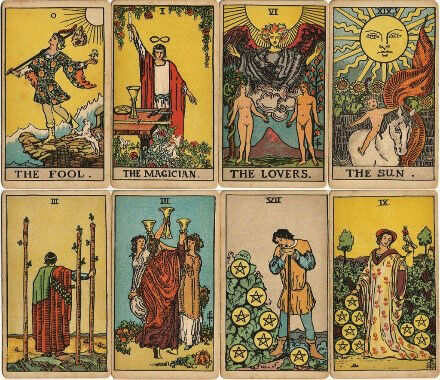
Image: Eight Tarot Cards from the Whitney Museum’s Pamela Colman Smith collection.
Things I don’t believe in: magic and divination; astrology and second sight; ghosts and haunting.
Things that have, very occasionally, prompted me to pause and re-think my assumptions: all of the above.
Victoria is a west coast woo-woo place, and I have only very slowly acclimated to the accepting attitude toward homeopathy and homeschooling, astrology, tarot, and winter women’s moon rituals.
In fact, I struggle the most with homeopathy at this point, because the logic escapes me.
Two recent novels got me thinking about tarot: Sarah Henstra’s wonderful The Lost Tarot and Katy Hays’s The Cloisters about which I am a shade more ambivalent. [Full disclosure: I attended grad school with Sarah and think that both the author and her books are terrific.]
Hays’s novel has such a promising beginning!
In the opening chapters I was transported back to The Cloisters, a Bronx museum surrounded by glorious gardens, one of my favourite places in New York. Hays attends to place and atmosphere with deft assurance.
But her book then meanders through many middle chapters before regaining confidence and purpose in the final section.
Worse, the dialogue is overheated, the characterizations thin.
And this novel is much too long for the story it has to tell.
Even the tarot cards, which initially seem so crucial, are a bit of a MacGuffin.
Admittedly, my expectations may have been too high, because The Cloisters was pitched as the next Secret History, and Donna Tartt’s claustrophobic tale of twincest and ancient Greek language study remains enthralling when I re-read it.
The original Dark Academia story, The Secret History is one of the reasons I wanted to study ancient Greek; while my studies have lapsed while I try to finish a book project, the language is a joy. For more on this, I recommend Mary Norris’s book, although her New Yorker article is a good place to start.
But the arcane knowledge of tarot is less enthralling to me than ancient Greek and, worse, the protagonist of The Cloisters is so very young. Because she’s also the narrator, this colours every other aspect of the novel.
Conversely, Sarah Henstra’s The Lost Tarot is, for this reader at least, one of the best of her books. (I’m also very partial to her YA novel Mad Miss Mimic.)
The Lost Tarot is, as the title indicates, about the legendary nineteenth-century Ringold Tarot deck, which perished in a fire alongside their creator, avant-garde artist Lark Ringold.
When a contemporary art historian in Toronto receives one card from this purportedly lost deck in the mail, she begins to investigate a tangled set of lives, art works, and tragedies.
Here’s Sarah Henstra in a CBC interview with Christa Couture:
“Well, actually the tarot cards is what sort of was the initiating spark of this story to me. I have always been interested in the tarot, not so much as a sort of fortune telling tool or an occult game like Ouija boards or something like that, but as a kind of collection of images that represent a history of mythology and archetypes that have to do with different aspects of human psychology.
From the time that I first discovered the tarot in high school, and took some books out of the library and started reading about it, there was a little bit of an aspect of “ooh, I’m going to read my friend’s tarot cards, and that will make me more popular.” I was always desperate for anything at all that might make me more popular, nothing really worked.”
Tarot reading has served a range of purposes for Canadian authors.
I finally finished Margaret Atwood’s very long and very detailed (and yet also very selective) autobiography–of sorts–a few weeks ago.
And Atwood is Tarot-obsessed: this piece is a good introduction to her interest.
Her short story, “My Evil Mother” (free to Amazon Prime subscribers! sighing–because “evil” and Amazon have multiple associations) is about a teenage girl contending with having a witch as a mother. “I use my evil powers only for good,” the 1950s single mom retorts when her fifteen-year-old daughter insults her.
And the daughter has an unfortunate boyfriend, Brian; “the Universe doesn’t like him,” her mother informs her “serenely.” And a bit later: “he was dealt the Tower. You know what that means: catastrophe!”
Fifteen-year-olds aren’t especially concerned about catastrophe, at least to the best of my recollection. Or perhaps more accurately, the potential for catastrophe is everywhere, because there’s a lack of proportion: failing a geography test is a catastrophe; wearing the wrong sweater is a social disaster; not getting asked to dance is a humiliation so searing that you’ll remember it forever. (Hello, past self: thanks for that memory snapshot.)
Her mother insists that, notwithstanding her own mysterious powers, she can’t forestall Brian’s fate: it’s in the cards, after all. “The Tower plus the Moon and the Ten of Swords,” she explains to her angry daughter. “It’s very clear.”
It would be lovely, in a way, to have such clarity.
So I bought a tarot pack, on Sylvia Plath’s death day, when I was feeling in a Mood.
Plath, too, was tarot-preoccupied, and this turns up in her poems, including the vitriol of the oh-so-problematic “Daddy”:
“The snows of the Tyrol, the clear beer of Vienna
Are not very pure or true.
With my gipsy ancestress and my weird luck
And my Taroc pack and my Taroc pack
I may be a bit of a Jew.”
Try teaching that in today’s classrooms.
I’ve retreated from the challenge and instead offer students some nice beekeeper poems, maybe “Nick and the Candlestick.”
Because what Plath is doing here runs very counter to contemporary sensibilities around language (Roma, not “gipsy”, of course) and, perhaps, imaginative poetic cultural appropriation.
Except. Something complicated and interesting is happening in this poem with the speaker’s identification with both that tarot-reading figure and the Jewish people, both condemned to non-personhood by Nazism. My view is that this is a profoundly political elegy that makes an audacious leap from self-mythologizing to geopolitics as a way of claiming affinity and identification with the Other in a deeply ethical way (and I’m stealing a bit from Jahan Ramazani here, who does a brilliant reading of Plath).
But I’m not sure I’ve made a strong enough case for that, in the classroom. At least not in the first-year lit classroom, where poetry throws up all kinds of difficulties for general readers.
Back to tarot, via Plath and Atwood and art:
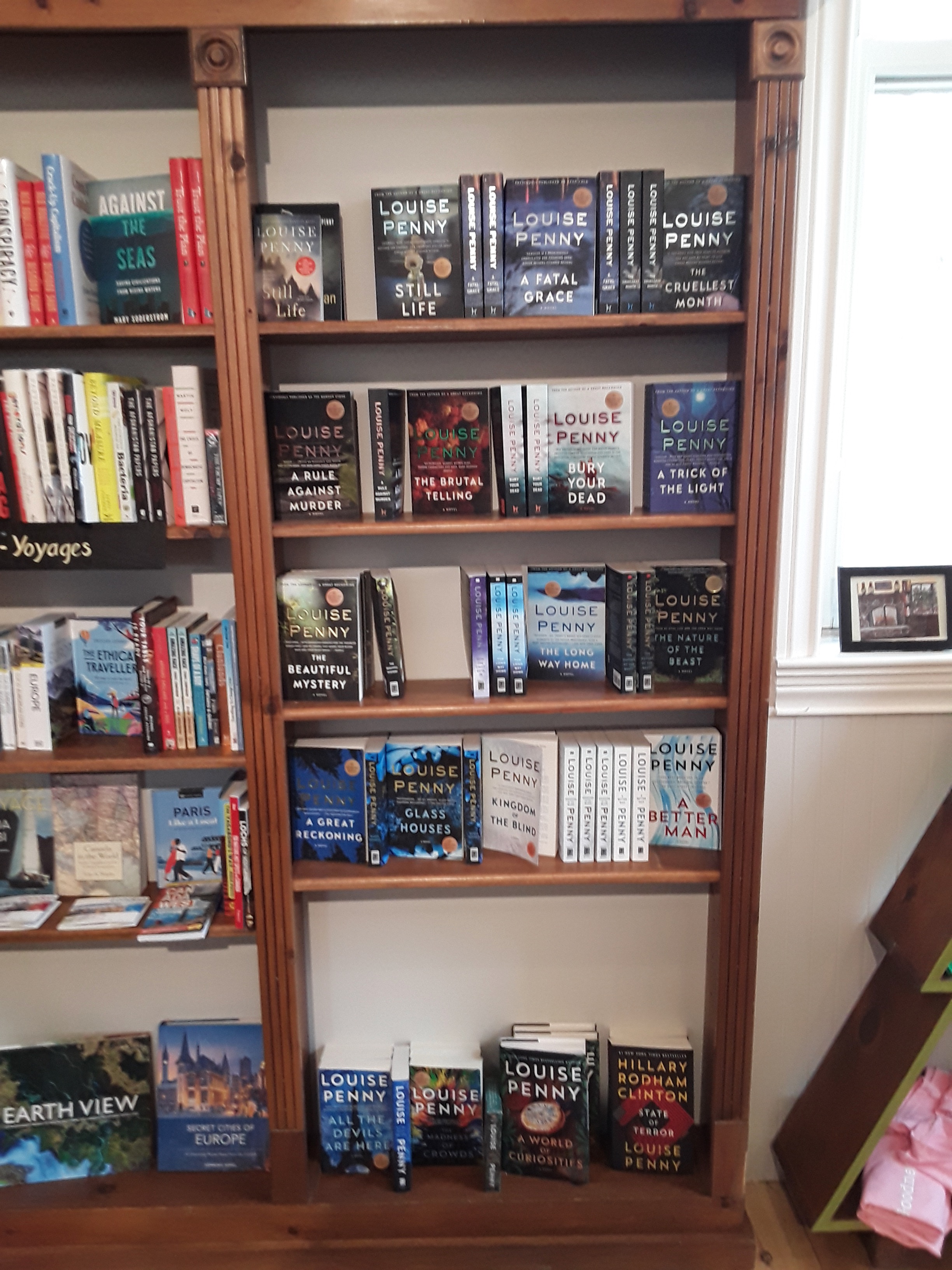
The Whitney Museum owns perhaps the world’s most beautiful tarot deck: Pamela Colman Smith’s Rider-Waite deck. The New York Times had an intriguing piece on Colman Smith last month; they’ve been doing a series of belated obituaries of figures, primarily women, who merited inclusion at the time of their death but were overlooked.
An English woman with American parents and a storied life, “Colman Smith was also an author, publisher, once-incarcerated women’s suffragist, world traveler, prolific letter writer, party hostess, public entertainer, storyteller and mystic, who in her later years — before her death in 1951, at 73 — converted to Catholicism and revived a withering chapel in the English countryside.”
And there’s more!
“While she was not a tarot card reader herself, she had always flirted with magic, and joined the Hermetic Order of the Golden Dawn, a secret 19th-century occultist group influenced by Freemasonry.
Through the Golden Dawn she met Arthur Edward Waite, an occult scholar who commissioned her to illustrate the tarot deck he was creating in 1909; she was paid a small one-time fee for many months of work and research.”
Flirting with magic is a lovely phrase.
“A small one-time fee for many months of work and research” is wretched, but familiar.
Back to Atwood and the ominous Tower card. I’m not going to spoil the story, because it’s worth reading. But I can tell you that this card is notorious for its association with dramatic reversals and upheavals, often violent ones. The Tower clears the way, potentially, of illusions and clutter, but in a destructive manner.
A decade ago, I sought my first tarot reading, and it scared me: Tower card, Hanged Man, then on another try, Tower card again.
There’s been a social media moment of posting photos of oneself from 2016: I would be more inclined to post my photos of the cards, because, to my disbelief, it was a year of utter destruction. I lost all my moorings. (Which makes me think of Elizabeth Bishop and Marianne Moore, simultaneously: they had a great friendship, and Bishop’s “One Art” is my rosary in times of trouble.)
Then, slowly, things got better. And I haven’t done a tarot card reading since. I may be overdue.
We escaped, my daughter and I, to London and Dublin and Amsterdam, that year. Our first trip as a duo. And in the extraordinary spaces of those cities–and in Manchester’s Rylands Institute and Library–I saw the first glimmers of new possibilities.
Huge thanks to Maggie Stiefvater: our trip was instigated by the writer’s UK tour, and we followed her from London to Manchester and then on to Scotland. Here’s Manchester:
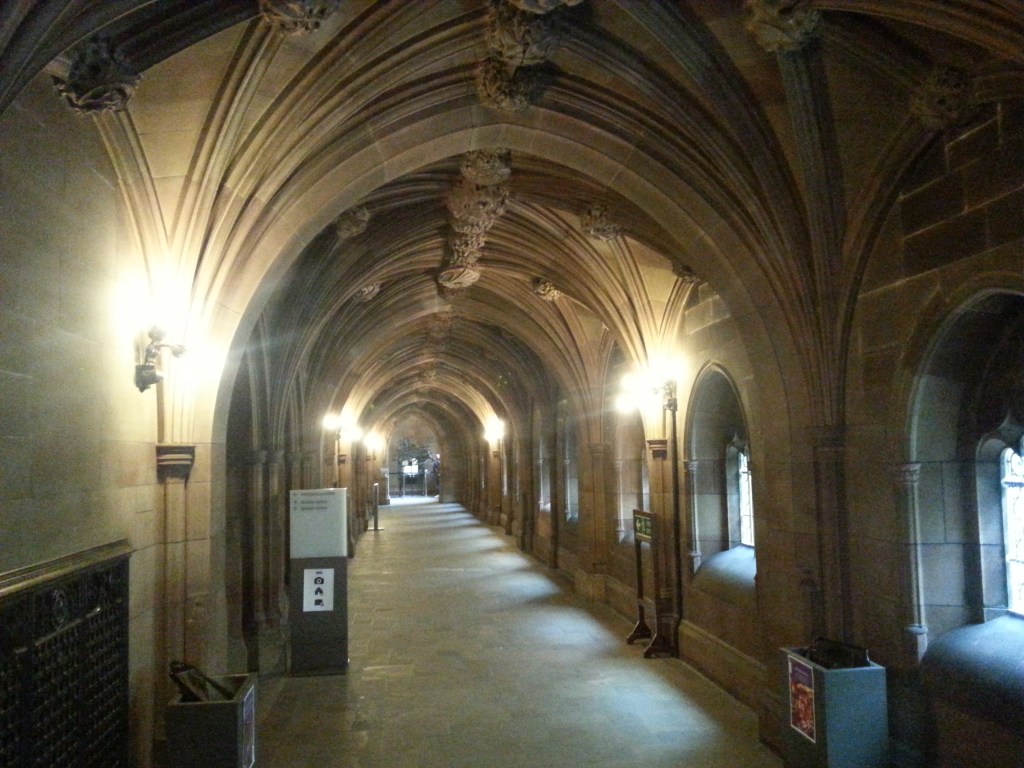
The Spooky Rylands
Stiefvater has, of course, created her own gorgeous Raven Boys Tarot Deck.
It’s precious. I’m not allowed to play around with it, alas.
 The Landscape of Canadian Women's Crime Fiction
Leave a comment