
In The Solitary Friend (ECW Press), Gail Bowen revisits themes and characters that have peppered her mystery series over more than three decades. Bowen has announced that this is the penultimate volume; she’s currently writing the final Joanne Kilbourn Shreve novel. Readers can be very grateful that we’ve had the good company of her fiction for so many years.
It’s worth pausing over the longevity of this series, because for many readers, the characters are familiar. Revisiting Jo, in particular, is akin to catching up with an old friend.
In this volume, Joanne, husband Zach, and their family make a new friend, whose odd behaviour prompts their deep concern. As events spiral, past traumas are brought into the present and tragically reproduced, with profound consequences for Bowen’s central characters.
It may be helpful for readers, especially those new to Bowen’s fiction, to know that this is not really a murder mystery, and the other potentially criminal behaviour that takes place in the book is treated by both author and character with significant empathy and gentleness. In short, this is not a novel about justice or retribution but about the painful ways that the past bubbles into the present, shaping what would otherwise seem like irrational and unforgivable conduct. There isn’t a puzzle to solve other than Bowen’s perennial fascination with the vagaries of complex human behaviour, desires, and suffering.
A widowed mother of three when the series opened, Joanne has been a political science professor, television commentator, and most recently the co-author of a autobiographical television mini-series. Her professional shifts have been accompanied by transformations in her personal life, first as she adopted a late friend’s young daughter and then later when she quickly fell in love with and married a driven criminal defense attorney known for his hedonism. To the surprise of Zach Shreve’s friends and colleagues, he happily settled into family life with Jo’s sprawling clan, a troupe which includes Jo’s four adult children, their partners and children, and a sprawling crew of friends, colleagues, and political allies.
Repeatedly, the family members’ lives have been disrupted by murderous violence, and Jo has doggedly pursued the truth. Here, however, she’s called on to intervene rather than to investigate.
(Bowen has commented that her one regret in crafting the character was not giving Joanne a more organic reason to be immersed in crime: the television films that adapted several of the books made Jo an ex-cop and criminology professor, which Bowen notes “justifies all that snooping around. In the books, she does seem like a bit of a busybody.”)
In The Solitary Friend, Jo’s interventionist tendencies are on full display. Jo is drawn into an awkward problem instigated by her friend of several decades, Howard Dowhanuik, who is also the province’s former premier. Vera, the owner of an elite escort agency, requests Joanne’s assistance in halting Howard’s insulting treatment of several escorts. Meanwhile, Jo learns that another close friend, Noah Wainberg, a widower since his wife’s murder several years earlier, has fallen in love with a warm and caring PhD student, Calista, who is also an escort at Vera’s agency. Noah wants to marry her, but a campaign of harassment by one of her former clients, along with Calista’s anxiety about bringing scandal into the lives of Noah’s family, threatens to ruin their relationship.
The novels largely take place in Regina, Saskatchewan, a locale that is vividly described in Bowen’s novels. Last night, McNally Robinson Booksellers launched The Solitary Friend in Saskatoon (many thanks to the bookstore for sharing the event online). Veteran mystery writer Anthony Bidulka had a warm conversation with Bowen about the significance of her work and the evolution of her character and the series. For Bidulka, crucially, Bowen’s decision to set her mysteries in Saskatchewan made it possible to conceive of doing the same thing.
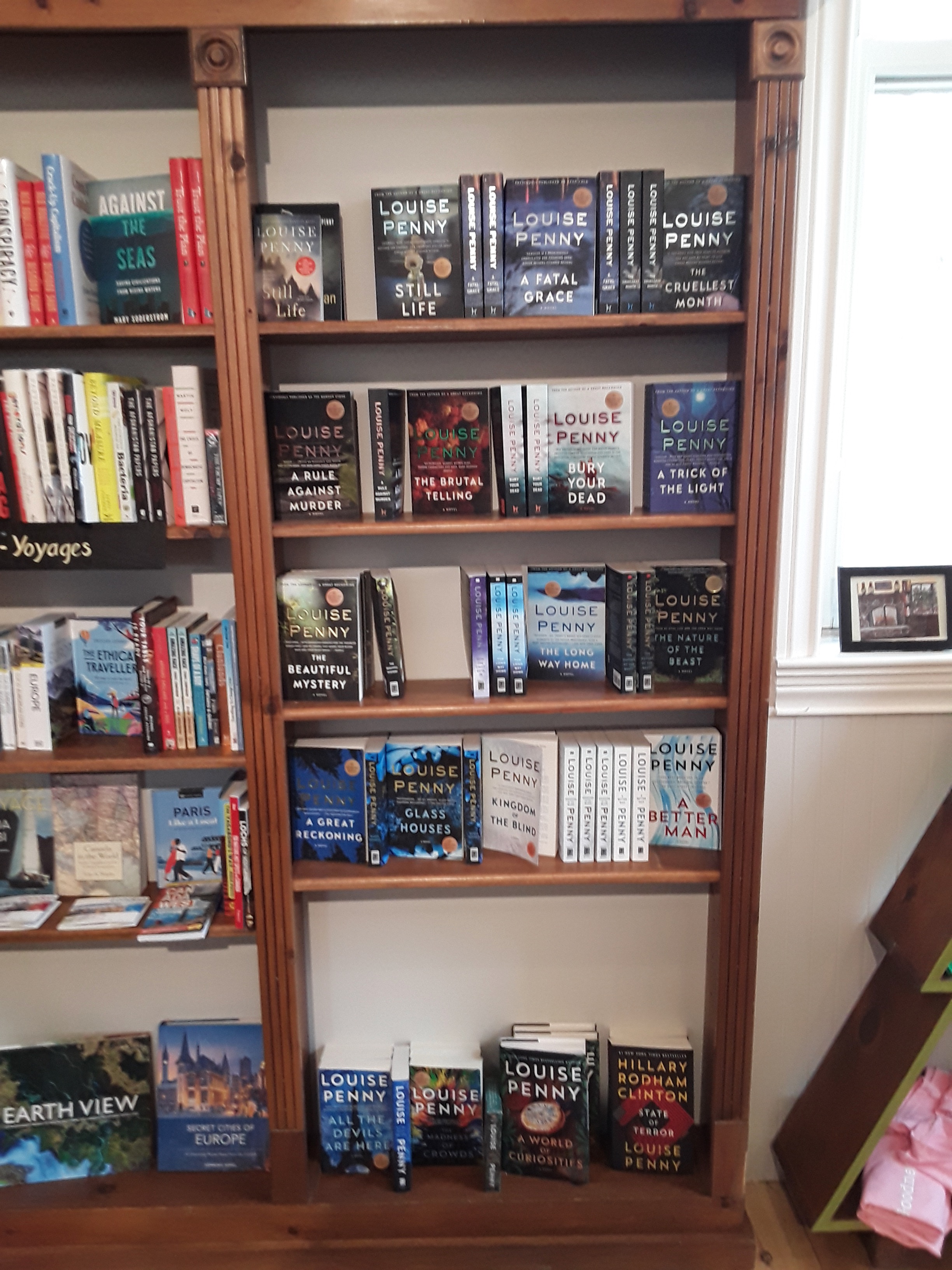
Given the success of Louise Penny’s Three Pines series, with its Eastern Townships and Montreal settings, as well as the important work of writers like L.R. Wright (Sunshine Coast), Alison Gordon (Toronto), and more recently Janice MacDonald (Edmonton), Giles Blunt (northern Ontario) and Ausma Zehanat Khan (Toronto) in embracing Canadian settings, it can be hoped that crime fiction writers will continue to feel emboldened to incorporate both the local and the national into their books.
 The Landscape of Canadian Women's Crime Fiction
Leave a comment