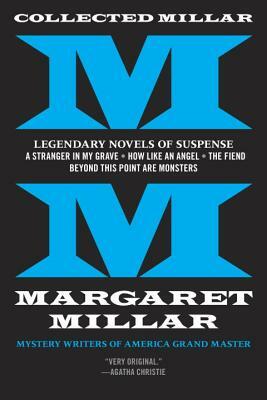
Not travelling to the U.S. is impeding my research only when it comes to one author, the Canadian-American Margaret Millar (1915-1994), who was very famous in her day.
In an astute 1971 New York Times review of Daphne du Maurier’s new novel, Millar points out that du Maurier’s books work better when they’re written in the first person, and thus “sprawl” less across multiple viewpoints. Millar herself was adept at narration and point of view, and she was an ambitious, versatile writer. She helped create the genre of domestic suspense and has been cited, by everyone from Anthony Boucheron to Gillian Flynn, as a crucial influence on the development of twentieth-century crime fiction.
And alas, her papers are held by the University of California, Irvine. Most of her adult life was spent in Santa Barbara in the company of her husband, Kenneth, who used Ross MacDonald as his pseudonym. Of the two, MacDonald is certainly more celebrated these days, but Millar’s work was successful before his own. She began publishing mystery/suspense short stories and novels in her mid-twenties, and within a few years her career took off. She also seems to have spent some time as a screenwriter, and in the 1960s, two of her novels were adapted to television.
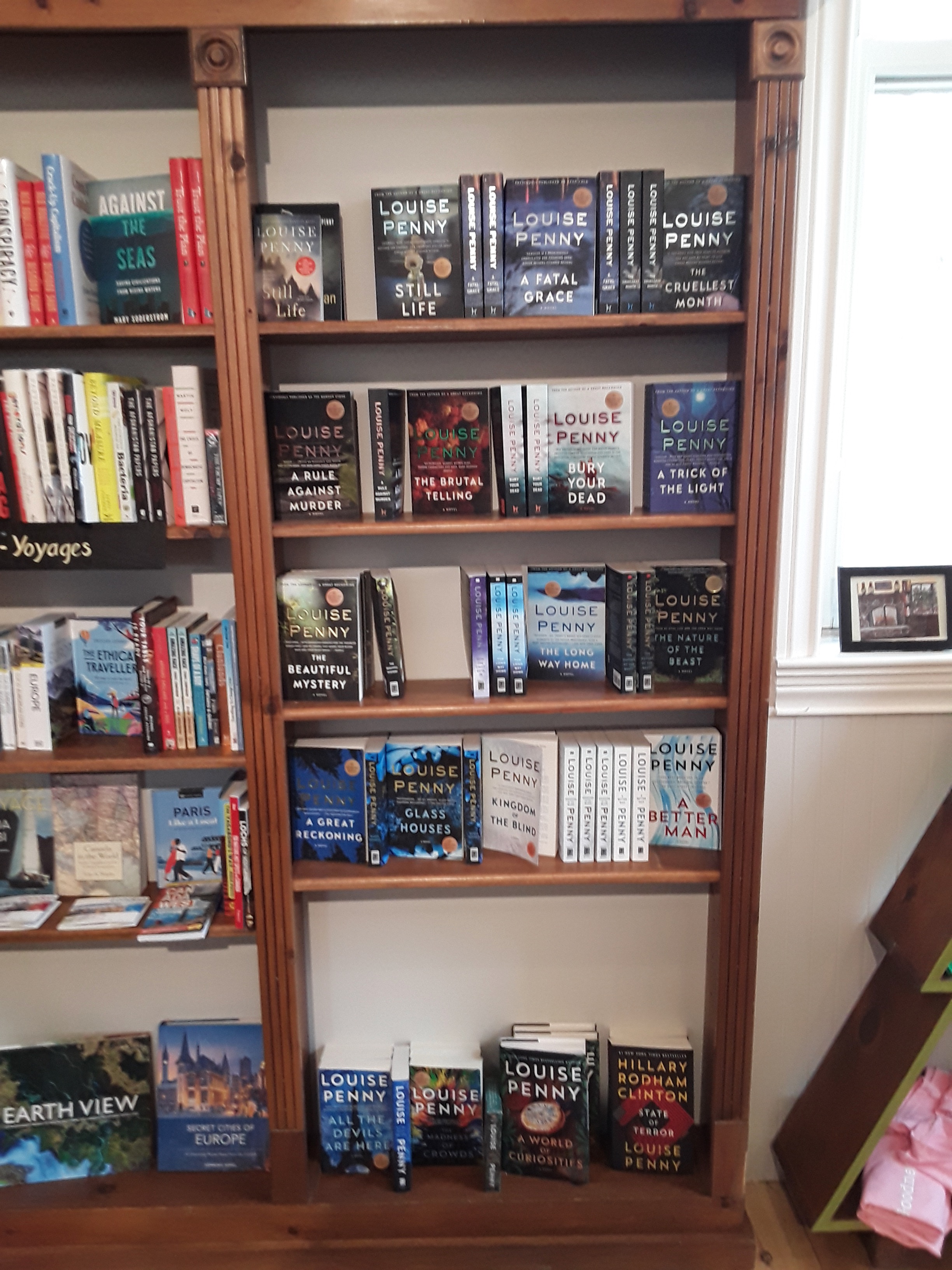
I did buy the daunting complete set of re-issued Margaret Millar novels, and I’m working my way through them.
H.R.F. Keating declared that “No woman in twentieth-century American mystery writing is more important than Margaret Millar.” In a less sexist vein, Baltimore crime writer Laura Lippman calls Millar “one of the most original and vital voices in all of American crime fiction.” But I think we can claim her as a Canadian writer too. Two of her series and a few stand-alone novels have Canadian settings, including the early-1940s series featuring a psychologist investigator, Paul Prye. (Millar was born and raised in Canada and attended U of T.)
Prye’s a bit much. He quotes Blake and expresses world-weary cynicism. While I found the first novel a bit of a slog, I’m looking forward to the rather oddly titled The Weak-Eyed Bat: “Paul Prye finds his lakeside vacation to Muskoka, Ontario, interrupted by nosey locals, and vacation only becomes less relaxing when the free-spirited teenage daughter of a local classics professor disappears.”
These days, Muskoka is rather more exclusive than it was several decades ago. I suspect the classics professors have long since been priced out of the local real estate market.
 The Landscape of Canadian Women's Crime Fiction
Leave a comment