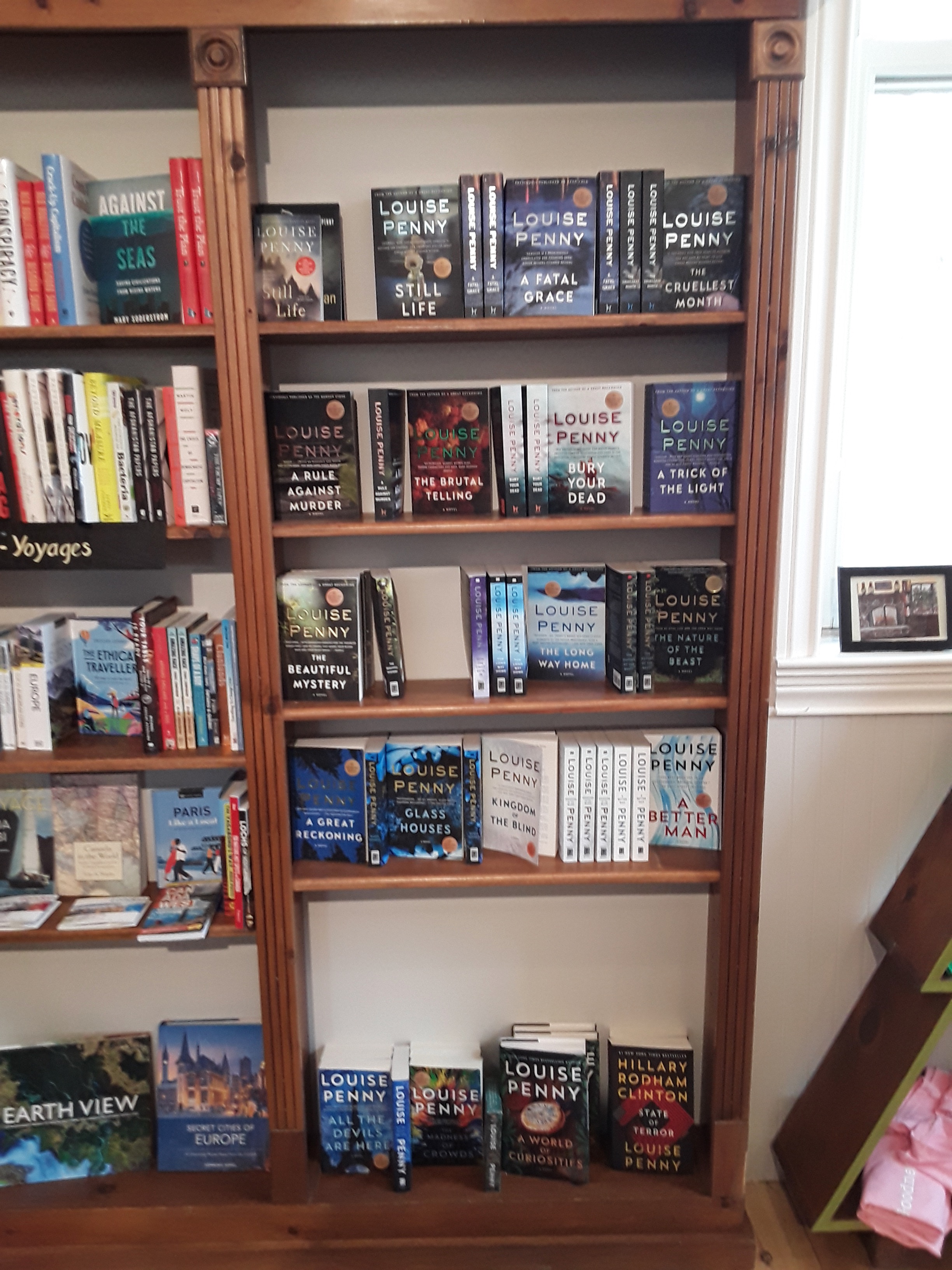
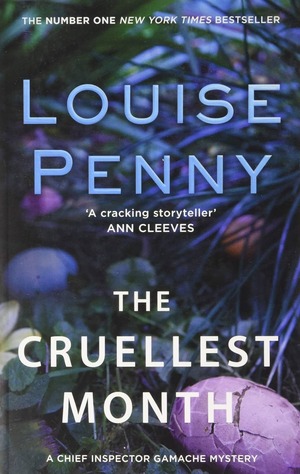
This is not a loose adaptation: it’s more of an interpretation of the themes of Louise Penny’s fiction through a very different story that shares the same title.
In putting together the first (and only) season of Three Pines, the producers made some interesting and important choices. One of the key ones was to capture a plot thread that runs through several of Penny’s novels, the corruption of the RCMP and the violence they wreak in northern Indigenous communities in the province.
In Penny’s books, this violence is relatively recent, and it’s brought to Gamache’s attention by the vigil of a grandmother outside Quebec City’s Chateau Frontenac, which she mistakes as the legislature.
He looks into her story and discovers that, encouraged by the highest echelons of the Sûreté du Québec, some officers in remote Indigenous communities have been authorizing extra-judicial targeted slayings. Gamache brings them to account, and his insistence on doing so (when the leadership had agreed to allow them to evade a public trial through suicide) raises the ire of his superiors.
The plot thread is a way for Penny to signal Gamache’s unflagging support for the most vulnerable and marginalized. Penny positions Gamache and his closest allies on the police force as progressive anti-racists who have an understanding of Canada’s long, destructive history of colonialism and anti-Indigenous policies.
But in Penny’s novels, this all appears in flashbacks or as recalled events. Indigenous characters are not fleshed out.
Canadian literature is increasingly diverse, and authors from a broad range of communities are being represented, but most frequently in fiction and drama by community members. Conversely, in the writing of white Anglo Canadians, there is not always much range. Penny’s work is fairly representative: there are few Indigenous characters in Penny’s novels, and with the notably exception of Myrna, there’s limited racial diversity in Three Pines.
This can make for some awkwardness when books written twenty years ago are adapted for an audience with different expectations around representation.
I’m guessing that this is why the producers of Three Pines, who were creating the series in a contemporary context more attuned to reconciliation, decided to foreground settler-Indigenous relationships in their adaptations.
They were also tackling the fundamental paradox in portraying the police as allies to Indigenous people.
The TV Three Pines creates a new plot line that connects the eight episodes (four two-parters) into a broader story arc: Blue Two-Rivers, from a nearby Mohawk community, has disappeared, and her family is frantic for answers. They encounter bureaucratic obstacles, because while Blue is a devoted young mother, there’s a perception that Indigenous young women are more likely to be absent from home for a range of personal reasons, and the authorities are reluctant to put substantial resources into investigating. But when Gamache is put on the job, he and his team are dedicated.
And here’s where another interesting choice was made: Elle-Máijá Tailfeathers (Kainai) was cast as the francophone Isabelle Lacoste from the novels, but here she’s an Indigenous adoptee who didn’t grow up in her culture, and a single mother. Gallery-owner Bea is foregrounded, and she’s also given an Indigenous identity, in a role performed brilliantly by Tantoo Cardinal. The old Hatley House is also given a different back story: it was once a residential school. The palpable sense of menace stems from the imprisonment and torture of generations of children. In The Cruellest Month, the mystery of three boys who have missing for decades is solved by Gamache, and it’s a crushing revelation.
All of these choices are important ones, but they do transform Penny’s novel into something quite different, and they take up a fair amount of screen time.
So the writers also dramatically simplified the murder plot from the novel, while substituting a different victim/form of death.
Instead of Madeleine being frightened to death during an attempt to communicate with the dead, Three Pines’ Marc Fortier is found battered to death. His family connection to the former residential school is explored, but his death stems from more adjacent causes: as the close friend of another local man, he has been intervening in the life of the man’s over-protected teenage daughter, who has a sight impairment and is musically gifted. Marc’s efforts to encourage Sophie to consider moving further away for university has made her father furious, and he kills Marc.
This is . . . not very satisfactory.
In The Cruellest Month, the relationships between Hazel, her daughter, Sophie, and Madeleine (the mother’s close friend) are nuanced and the dynamics are psychologically complex.
All of this is flattened here into the story of a possessive father who reacts apparently uncharacteristically yet with enormous violence towards a friend he loved. Worse, Marc Fortier is a cipher. A murder victim whom the audience doesn’t get to understand or care about is a problem, surely?
Despite these storytelling failures, the inclusion of the residential schools history is important, as Dan Bilefsky pointed out in the New York Times:
“Jesse Wente, a writer who is the first Indigenous chairman of Canada Council for the Arts, the national arts funding body, said there has yet to be a mainstream Canadian show with an Indigenous cast and crew and a budget on the scale of “Three Pines.” He viewed the omission as a legacy of colonialism that still infects Canadian culture and ignores Indigenous voices in the country’s storytelling.
‘We could’ve been making shows like ‘Three Pines’ in Canada for more than a generation but we just haven’t, he said.”
And this is a crucial point. I’m thinking about the controversial Where the Spirit Lives, which I showed to Canadian Studies students in the early 2000s, because it was just about the only visual media portrayal of the residential schools that wasn’t a documentary. We contextualized it by discussing cultural appropriate debates and the 1996 Royal Commission on Aboriginal Peoples. And we focused on how intently the drama, which starred Ann-Marie MacDonald, focused on a young white teacher, with her Indigenous residential school students treated as secondary. The TV film’s portrayal was sensitive, in some ways, but it wasn’t produced by Indigenous writers and filmmakers.
Elle-Máijá Tailfeathers expressed similar concerns about the lack of Indigenous writers working on Three Pines, although Tracey Deer (Mohawk) did direct two episodes, and there were Indigenous consultants.
But there were also missteps: “. . . aspects of the plot upset some Indigenous cast members, in particular a scene in which Blue Two-Rivers’s mother, despairing over the failure to find her daughter, hurls herself off the roof of a police station in Montreal.” Tailfeathers objected to the portrayal and “did not think the scene rang true.”
My overall impression is that the makers of the limited series had good intentions and were thoughtful about how they proceeded with adapting Penny’s fiction. Incorporating Indigenous characters and storylines and acknowledging the residential schools’ history with empathy and compassion are appreciated.
But I’m looking forward to a time when directors like Deer can command the kind of funding needed to make a series like this–or even more importantly, based on Indigenous stories and fiction–on their own, with Indigenous writers and values rooted in First Nations’ cultures. Deer’s Beans is terrific, and I’m so glad to have films to share with Canadian Studies and literature students that are told from this perspective.
 The Landscape of Canadian Women's Crime Fiction
Leave a comment