Some years ago, Meg Tilly moved to my neighbourhood. Soon thereafter people started reporting sightings of actor-turned-writer Colin Firth, the father of Tilly’s two children. Darcy in Oak Bay!
We were previously only graced by Bill Nighy, who has local friends and frequents Ivy’s Bookshop, much to the delight of the well-informed ladies dishing out book advice. I need to interview the staff at some point. Decades ago, the bookstore was the site of a famous fist-fight, involving English Department members and visiting poets. It’s a storied place, but I digress.
Meg Tilly has long since moved on from acting to writing. She is the author of a popular series of romantic suspense novels inspired by the west coast, where she has also lived on a smaller island off the coast of Vancouver Island. And she has published a novel, Gemma, that depicts the abuse of a young girl kidnapped by a violent pedophile who’s fixated on her. He’s on the run, and Gemma is in jeopardy. For my comfort level, the sexual abuse is too extreme and I can’t keep reading. Nor can I re-read Lolita, which is not graphic, but which features the self-delusion and appalling narcissism of its famous adult male narrator.
As I’m working on a set of lyric essays, I’ve been experimenting with different ways to get at the experience of childhood abuse, and this is not easy work. What Tilly does that’s revelatory is write a portion of the book from the point of view of the abuser, and that level of empathy is beyond me. Her romantic suspense novels include a fair amount of sexual violence as well. Again, we get point-of-view chapters with the culprit.
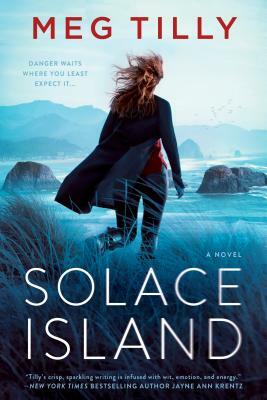
I’m reading one of them, the second in the Solace Island series, and portions of it are a lot of fun. The bakery run by two sisters, on a small island off the mainland, leads to romantic intrigue of various kinds. We get descriptions of scrumptious food and I like the idea of a “Solace Island,” Tilly’s invented place. It is so much like the real Salt Spring in some ways, with affluent and entitled weekend visitors jostling alongside chill, bemused permanent island dwellers. The mystery element takes a backseat to the protagonists’ love lives and close ties to family and friends, and that’s fine, as a change of pace.
Romantic suspense sells well and its fans tend to be loyal to their authors, so it’s a pity I have nary an idea that would suit the genre. I am noticing, though, that the depictions of sex are rather more specific in itemizing body parts than I had anticipated. The element I don’t care for is the psycho-stalker plot, which is juxtaposed against the heroine’s budding erotic relationship with a visiting Hollywood actor. In general, outside of Talking Heads songs, I could do without psycho killers.
Then there’s Meg Tilly’s sister Jennifer Tilly, who has been in the news because she recently joined Real Housewives of Beverly Hills. The franchise is a bit of a mystery to me, although murders and heists are not prominent features, just occasional financial or real estate shenanigans. Tilly explains her decision to join the cast of characters this way: “I thought I could take it and have some fun with it. Plus, I was having intimations of my own mortality.”
That’s quite the juxtaposition.
Did you know Jennifer Tilly is very, very wealthy? She has an adjacent house solely for clothes, courtesy of her divorce settlement, which gives her a percentage of The Simpsons‘ profits. The NY Times profile is quite something, and it touches on the unhappy upbringing of the Tilly sisters, in the wilds of B.C. with their mother and stepfather. These themes inform Meg Tilly’s novels and autobiographical writing, and the two blur. Singing Songs, which I haven’t yet read, apparently draws extensively on her life in a fictional form. It was her first book, and not as well-received as most of her subsequent fiction.
Writing about trauma, as I’ve discussed with students over the past twelve weeks, presents both aesthetic and political challenges. We read Lidia Yuknavitch and Maggie Nelson, and we considered advice about “going cold” to convey powerful emotional experiences. Dylan Landis cites no less an authority than Anton Chekhov on this.
“Chekhov, in two letters he wrote in 1892, critiqued a story for a writer named Lydia Avilova, and told her exactly what was wrong with it: ‘When you describe the miserable and unfortunate, and want to make the reader feel pity, try to be somewhat colder–that seems to give a kind of background to another’s grief, against which it stands out more clearly. Whereas in your story the characters cry and you sigh. Yes, be more cold.’”
For Tilly, there’s clearly a benefit (as she describes in interviews) to forcing readers to confront childhood sexual abuse in a brutal form. Readers aren’t let off the hook. I’m trying something different, perhaps largely to protect myself–using connected images, the key one being water, that have associations with violence and with safety.
My draft is a half-formed thing, a bit inchoate and messy right now. There are days when I rue my decision to complete a writing certificate in the Creative Nonfiction stream. Fictionalizing would allow some distance, and I have a whole mystery novel draft that I could revise instead. But what felt more urgent at this stage was to go back, in order to go forward.
Today’s writing task is to persevere with the messy middle of the manuscript and, for fun, pitch a story on women’s mid-life renewals. Career changes, yes, but also dramatic transformations. The Tilly sisters illustrate that when life is long, zigzagging between options is possible. And in my own context, as I see friends training to become therapists in their late 50s, or starting businesses, or going to nursing school(!), I’m inspired to be a little braver.
 The Landscape of Canadian Women's Crime Fiction
Leave a comment