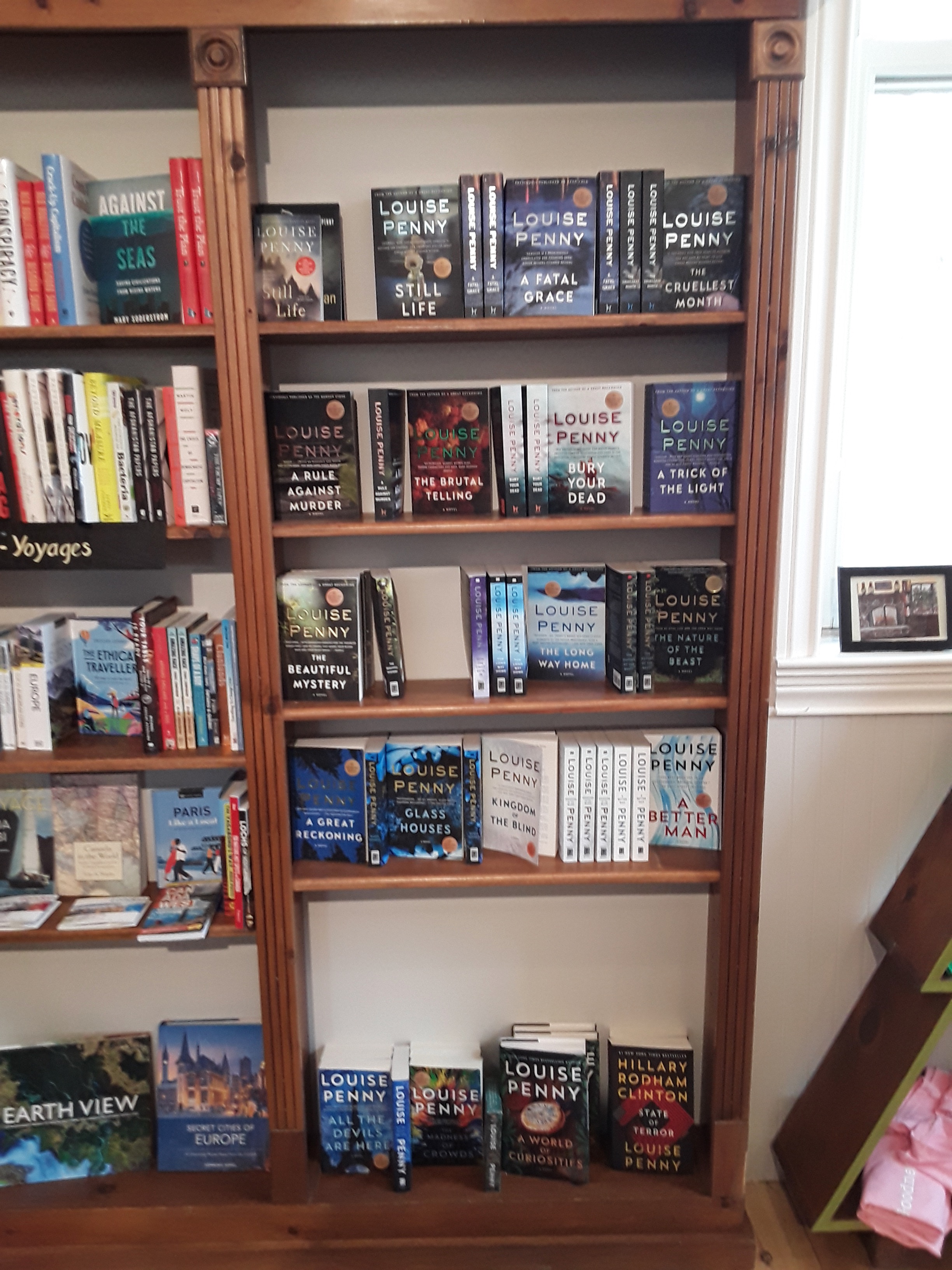
“Nature’s in turmoil. Anything can happen.”
Ruth Zardo, The Cruellest Month
“Whan that Aprill with his shoures soote
The droghte of March hath perced to the roote. . . .”
Geoffrey Chaucer, General Prologue to The Canterbury Tales
Penny borrows the opening line of T.S. Eliot’s The Waste Land as the title of her third Three Pines/Gamache novel:
April is the cruellest month, breeding
Lilacs out of the dead land, mixing
Memory and desire, stirring
Dull roots with spring rain.
Penny also shares with Eliot an interest in Buddhist thought, drawing specifically in The Cruellest Month on the concept of the “near enemy.” (This is another helpful introduction.)
Positive ideals and emotions like love have an antithesis: hatred.
But they also have near enemies, which can seem like positive traits but actually disguise ill intentions or pathology. Rather than a binary opposition to a precept such as lovingkindness, it’s an adjacent, easily mistaken aspect that can cause confusion.
A near enemy of lovingkindness is conditional love, or selfish attachment masquerading as love.
Some psychologists who draw on Buddhist ideas include the limerence phase of romantic love, those neuro-chemical surges of infatuation, romantic obsession, intensity and single-minded focus on the beloved.
This can last for weeks, months, or a few years . . . but it’s not a permanent state.
It can, however, be a very dangerous one.
Penny includes conversations about near enemies in the novel, in typically deep and reflective conversations between Gamache and Myrna Landers, the psychologist-turned-bookstore owner. And later, it’s by contemplating this concept that Gamache ultimately solves Madeleine’s murder.
His reflections also provide a painful counterpoint to his growing realization that one of his own most intimate relationships has been betrayed by duplicity. Gamache’s happiness has sparked envy, which turned to rage and a desire to destroy.
I. The Waste Land
The Waste Land begins with an epigraph–and what an epigraph!:
‘Nam Sibyllam quidem Cumis ego ipse oculis meis vidi in ampulla pendere, et cum illi pueri dicerent: Σίβυλλα τί θέλεις; respondebat illa: άποθανεîν θέλω.’
For Ezra Pound
il miglior fabbro.
Oh you don’t read Latin and Ancient Greek and also have a smattering of Italian? Pity.
Also, you’ll need a bit of Sanskrit, for later in the text.
This is the kind of thing that annoys first-year students, which is why we tend to offer them Prufrock rather than The Four Quartets (my favourite) or The Waste Land. The erudition required to truly understand and fully read The Waste Land in all of its linguistic diversity is beyond nearly all of us.
But there’s a case to be made that starting with the most overt Eliotic (lovely word) difficulties helps to unpack what he’s doing.
Eliot’s own translation of the Latin and Greek passage above, which is from Petronius’s Satyricon:
“I saw with my own eyes the Sibyl at Cumae hanging in a cage [other translations use “bottle” here, or “jar,” which makes more sense to me], and when the boys said to her: ‘Sibyl, what do you want?’ she answered: ‘I want to die.’”
Because she’s immortal, but not forever young, and that turns out to be a worse fate than aging and dying.
Rather bleak, that.
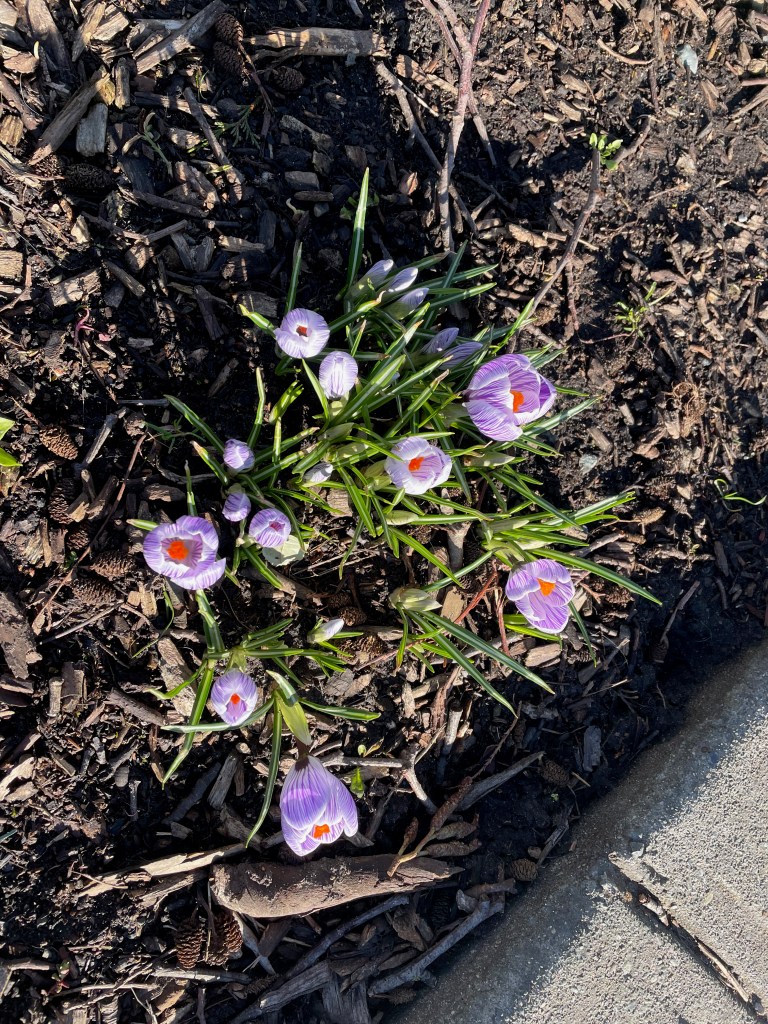
Appropriate to a Quebec Eastern Townships month of snowdrifts, wind, rain, and flooding. A month when winter has outlasted its welcome and newness is craved: new baby animals, and new growth of crocuses, daffodils, and tulips. Green-tipped branches. Green grass.
Eliot’s epigraph alerts us to the fact that he’s writing in a tragic mode and in dialogue with the Ancients. But he’s also in close contact with his contemporaries, as the reference to Pound indicates: “il miglior fabbro” or “the better craftsman.” A gesture of humility and tribute.
As someone who regularly confuses epithet, epitaph, and epigraph when I’m speaking, I’ve been focusing on etymology as an aide-mémoire: epi-graph, so on-write (more colloquially, “write on”).
An epigraph is an inscription, and the meaning shifted from being one inscribed literally on a building to the current English language usage of being the initial text or header of a text.
Penny doesn’t typically use epigraphs: instead, she incorporates literary allusions into her titles and then involves her characters in discussions of literary works.
This is delightful, for some of us.
A friend confided that she finds the device of the stuniningly literary detective, who could be a professor or a poet but instead solves crimes, rather annoying. Penny plants this kind of naysayer in her text: Jean-Guy Beauvoir sighs every time that Gamache starts in with a quotation or allusion.
Gamache is definitely in the image, here, of P.D. James’s Dalgliesh, although his most obvious antecedent, according to Penny, is her own late husband.
But let’s treat Penny’s title as a caution: April will bring in spring flowers and showers, but also the unpredictability of the changing of the seasons.
A new game is afoot.
II. Easter
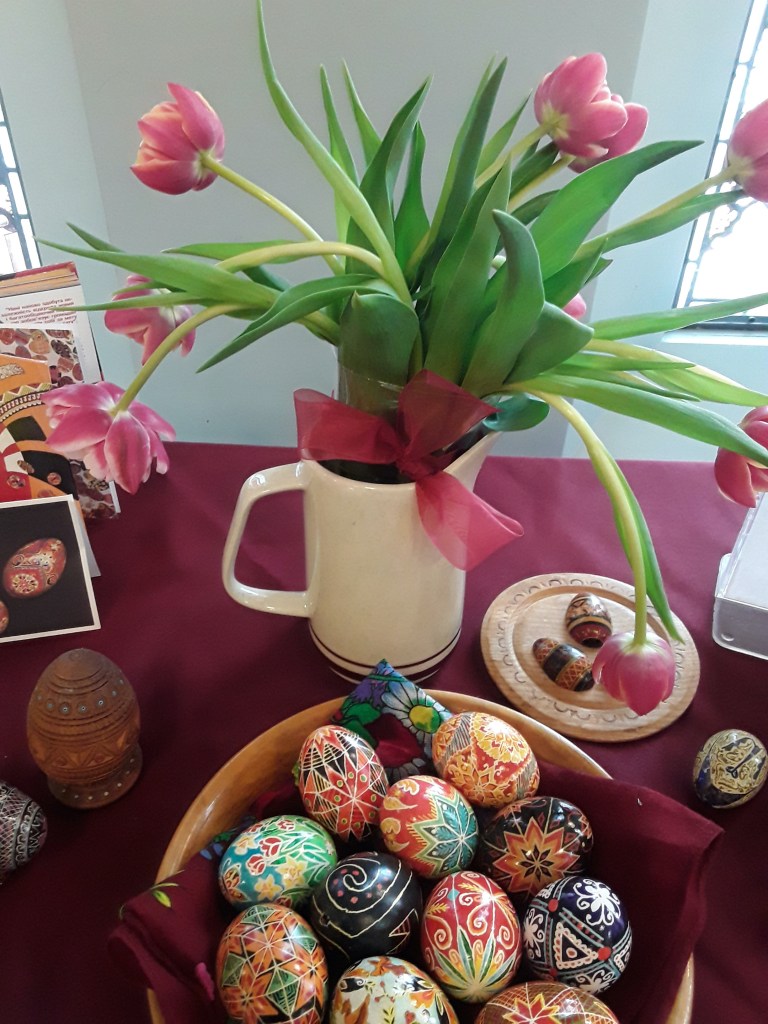
“Kneeling in the fragrant moist grass of the village green Clara Morrow carefully hid the Easter egg and thought about raising the dead, which she planned to do right after supper.”

It’s gutsy of Penny to juxtapose the resurrection and a séance. (And I’m sorry to say that this is an AI-generated egg.)
In The Cruellest Month, Gabri has an out-of-town visitor at the B & B; he bills her as the amazing Madame Blavatasky. In reality, not only is she not a celebrated medium, she’s a demure middle-aged woman with a day job as a receptionist at a car dealership.
Who turns out to be a witch. Wiccan, in her preferred term.
But she agrees to hold a séance for them at the bistro, and then a second, more dramatic one, at the evil old Hadley House.

This one produces a victim. Someone is literally scared to death.
For many readers, it’s in this third volume of the series that Penny’s characters and setting really gel: we start to feel invited in to Three Pines in a new way. (And this is a lovely virtual tour, if you’re in the mood for armchair travel.)
We’re reminded that only those who are lost can find Three Pines, which doesn’t appear on any map.
And we see how welcome newcomers are when they arrive, how they carve out a place for their particular talents with the support of their new community.
Myrna had this experience when she arrived from Montreal, her car packed with her belongings, burnt out and exhausted. By the time she finished her first pastry in the bistro, she wanted to stay in Three Pines. In their own way, each of the major characters has had the same experience. And it’s one shared with readers, who are invited in, which is one of Penny’s impressive achievements. Readers feel like guests, and then like treasured friends. In her public appearances and in her informal monthly letters, she treats her readers like friends.
In The Cruellest Month we also learn more about the origins of Gamache’s relationships with his two most trusted colleagues, Jean-Guy Beauvoir and Isabelle Lacoste. Each was saved from an ignominious professional fate by Gamache’s intervention. Each one was resurrected, after a fashion, in their policing work. Jean-Guy was released from the police station basement where he’d been consigned; Isabelle was released from the mockery of her colleagues, and their contempt when she expressed care and commitment to the dead.
III. Ducks
And then there’s Rosa. The duck.
The ones below are wintry ducks, scampering over the snow.
It’s in the early spring of The Cruellest Month that we meet one of the best characters in Penny’s novels, the Eastertide duck adopted and raised by Ruth Zardo.
Ruth, the poet whose surface is so brusque and critical; whose heart is molten chocolate.
Someone’s written a whole post about Ruth and Rosa, the duck.

[Sometimes writing about Penny makes me start imitate her staccato sentence fragments. A loving tribute. Not parody.]
As always, Penny writes about love, and the troubled ways that humans make ourselves unhappy.
Ruth decides to nurture two abandoned duck eggs, but her good intentions undermine the well-being of the weaker one, when she helps it out of its shell; she languishes and dies. Ruth is bereft and guilt-stricken.
Peter, who adores his wife, Clara, lets his envy of her brilliant new painting get the better of him. By the end of the novel, his love for his wife is back, but Penny plants a chilling indicator of the future: “a tiny shard of jealousy” in Peter, aroused by Clara’s extraordinary portrayal of Ruth as the aged and forgotten mother of Christ, has begun to fester.
And then the murder. A young woman’s admiration of her mother’s friend curdles into bitter jealousy; her mother’s generous care of others is shown to contain unhealthy selflessness. For Hazel to be strong and giving, others must be weak and needy. The near enemy of generosity is Hazel’s desperate need to be perceived as caring and competent, and through her nurturing she reduces the vitality of those around her. Madeleine, her one-time best friend and rival, came back into her life in a reduced state: divorced, suffering from cancer. But when Mad recovers, she is radiant. And Hazel is crushed.
Meanwhile, Gamache struggles with a rising tide of public and peer criticism as, behind the scenes, his own professional fate is being re-written by someone he believes to be a beloved friend.
Gamache often quotes a particular Biblical passage–Matthew 10:36, “And a man’s foes shall be they of his own household.
But in this novel, we see one of the early ways that this manifests painfully in his own life.
Later novels will explore his estrangement from Beauvoir, and, briefly, from his son Daniel. Penny does not place Gamache, as admirable as he is, in an unruffled domestic context, although his connection to his wife, Reine-Marie, remains steadfast.
IV. In These Times
April, in Penny’s hands, is a cruel month because the hope of resurrection, of renewal is countered with a destructive spirit of spiteful anarchy.
Rather like what’s happening in the country of my birth, right now, where undoing is prized so much more than creation.
Penny addressed this today, in her monthly newsletter.
She won’t be doing big in-person American book tour events next fall, but she will appear at one virtual event, and she’ll also appear at the Haskell Free Library in Vermont/Quebec, at a border-town location that, until recently, Canadians could visit without a security checkpoint.
From the Library’s website (bold in the original, and when librarians use this much emphasis, you know they’re really angry):
“For over a century, the Haskell Free Library and Opera House has stood as a powerful symbol of unity and cross-border friendship—one of the only buildings in the world that quite literally connects two nations. This sudden closure not only limits off Canadian visitors from their shared history and threatens the very spirit of collaboration that has defined this institution for generations.
We refuse to let a border divide what history has built together. Join us to raise your voice and take action to protect this irreplaceable piece of our collective heritage.”
The breathtaking cruelty across the border appalls.
But this too shall pass. To everything there is a season.
Choose your own bromide. They endure because they contain truths.
Alongside the Book of Matthew, Penny’s other most frequent quotation is drawn from Julian of Norwich:
“In my folly, before this time I often wondered why, by the great foreseeing wisdom of God, the onset of sin was not prevented: for then, I thought, all should have been well. This impulse [of thought] was much to be avoided, but nevertheless I mourned and sorrowed because of it, without reason and discretion.
But Jesus, who in this vision informed me of all that is needed by me, answered with these words and said: ‘It was necessary that there should be sin; but all shall be well, and all shall be well, and all manner of thing shall be well.’”
Easter, if you’re a believer, is a reminder that all shall be well, albeit after great sacrifice. I spent many years steeped in church seasons, and Easter is a splendid event of ceremony and faith.
Even without that faith, because Easter is in the spring, it brings me a sense of hope and renewal.
Ending, here, with etymology.
In French, Easter is la fête de Pâques, which derives from an ancient Greek word, πάσχα, or Passover. I rather like that. “Easter,” conversely, owes its name to an ancient goddess. Much to unpack and debate there, pace Bede.
Sending best wishes to all for a season of spring where you may be Surprised by Joy.
Tulips do that, for me.
 The Landscape of Canadian Women's Crime Fiction
Leave a comment