“The nitty gritty of life is anger, and a sense of injustice.”
–Patricia Highsmith
I’m trying to recall which crime writer said that when she got angry at someone, she turned them into the victim in her next book. That intrigued me, notwithstanding my possibly faulty recollection and my failure to attribute the quotation. Surely one would be more tempted to turn a nemesis into the evil-doer, rather than the victim, in a mystery novel?
This week I’ve been wondering why we’re not marching in the streets.
The “we” here is in relation to my U.S. citizenship, but I’m also thinking about the powerful solidarity of Quebec anti-Trump protests on International Women’s Day a few weeks ago.
I’m remembering the Pussy March held in Victoria back in 2017. in the wake of the beginning of the first Trump era.
At that event, a former colleague, an American, rolled her eyes when Shania Twain’s “Man, I Feel Like a Woman” heralded the end of the speeches and the beginning of the actual march component. And I would have preferred, say, “That Don’t Impress Me Much.” But it was rousing, in its own way.
And now . . . no marches to attend.
A miserable and escalating trade war between Canada and the U.S., and that’s distracting my attention from the much worse things going on within the country of my birth, or with the tacit permission of the global powers in other parts of the world where suffering is endemic and preventable.
There are a variety of forms of solace, always.
A novel I recently finished reading (not at all anticipating that it would be about harnessing the collective power of feminist rage) had a no-holds-barred ending. Readers learn that a sheltered and isolated community has re-made itself as women-only, for self-protection and mutual care.
The first couple hundred pages of the book didn’t seem to set this up, but the author was exceptionally careful with her unreliable narrator. At one point, he notes, “Aren’t we all unreliable narrators of our own lives?”
In this book, the answer is no: women testify to violence, to abuse, to mistreatment and are repeatedly ignored, so in the wake of a devastating tragedy they take matters into their own hands. They reclaim the narrative.
With gusto.
And that leads me to another female story of empowerment, although this one is less focused on revenge than on ensuring future safety.
Miriam Toews’s Women Talking is a painfully tender and important book, and the film adaptation by the amazing Sarah Polley is accompanied by an equally adept film score by Hildur Guðnadóttir. Here’s just a taste of the musical richness. I don’t have a good enough ear to pick out all of the instruments, but it’s apparently scored for acoustic guitar, cello, viola, and some percussion, although I keep thinking I hear harp?
Women Talking is based on true events.
In the Manitoba Mennonite community in Bolivia, men committed repeated sexual assaults on the girls and women of the community, whom they’d drugged with an animal anaesthetic. In the historical event, there was both community retribution and, belatedly, legal convictions. But in Toews’s novel, women decide to take things into their own hands.
They meet to discuss what solution to pursue, and by the time their long conversation ends, they are determined: they will leave.
Leaving is sometimes the only option, and I remember the times that I have left–fled–with some pride about the courage I mustered at the necessary moment.
But leaving requires extraordinary sacrifices, and there are losses that reverberate over decades, or that have consequences for the next generation. This is especially true when we deliberately disconnect ourselves from close family members and other loved ones. Harriet Lerner writes about this with brilliant insight: these losses become part of a broader family pattern of emotional intensity followed by ruptured ties and long silences. Increasing numbers of people are going NC or LC–no contact or low contact–with their parents and other family members. Something this is absolutely necessary. It’s still wrenching.
According to a study cited in The Guardian, “by 2021, women were angrier than men by a margin of six percentage points, with the gap widening during the pandemic.” The expert they interview suggests, however, that women’s rage manifests very differently than men’s, due to social conditioning.
So novels and films and TV shows about women’s anger can be, in their own way, empowering. I’m thinking of a range of works, from Ibsen’s Nora and David Hare’s Skylight to contemporary thrillers like Killing Eve, which got too violent for my particular tastes.
A couple of years ago, I saw Jodie Comer, who plays Villanelle in Killing Eve, in a very different work: the National Theatre Live’s screening of Prima Facie, a one-woman show by Australian playwright Suzie Miller. Comer played a barrister who enjoys defending her clients but then finds the criminal justice system lets her down when she attempts to seek justice after a lover sexually assaults her.
I’m reading it right now, and I’m struck by how very controlled the anger is i this play, most of the time. At the screening, the drama was prefaced by a long set of discussions of sexual assault and the law, also carried out in carefully controlled language.
As someone who cries when I’m furious, and who finds the anger of men terrifying in most circumstances, I’m committing to reconnecting with rage this year.
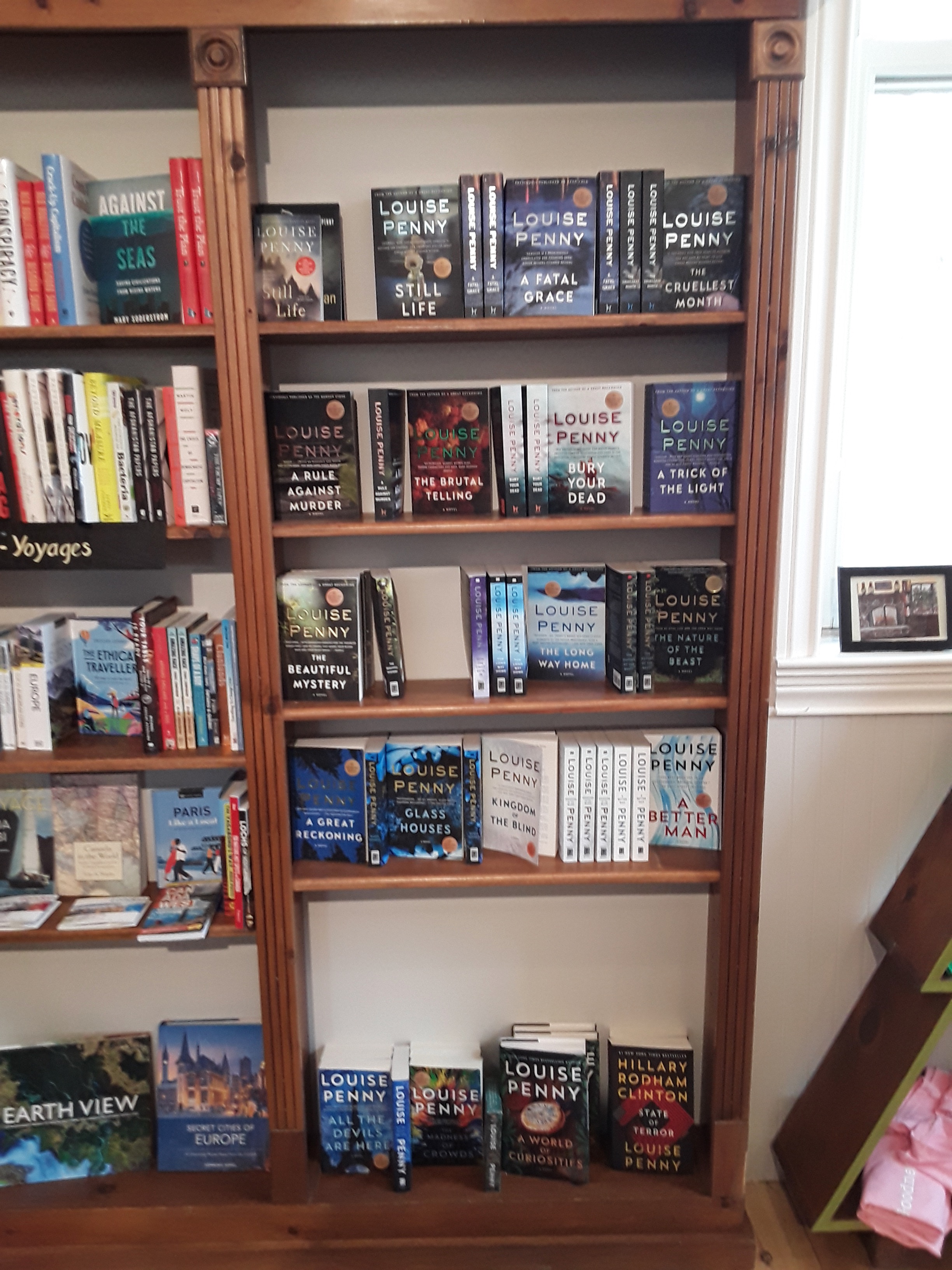
Crime fiction helps.
Oddly, though, the most satisfying fantasies of justice and retribution are in the current crop of classically-themed novels and dramas. Everyone from Helen of Troy to Philomela is being rewritten as a furious feminist. Antigone, obviously. Medea was pretty mad to start with. But the ones that fascinate me are the revisions of Medusa, of Phaedra, and of lesser-known women characters, like Briseis in Pat Barker’s The Silence of the Girls. There’s a tradition of portraying women talking, of course, going back to Euripides’s Trojan Women. But contemporary women writers have a distinct take. The anger is more visceral, more visible.
I’m looking forward, especially, to Erin Shields’s new Stratford play, Ransacking Troy, not to mention her revisions to Much Ado about Nothing. It’s shaping up to be a good year for re-thinking women’s rage on Canadian stages.
 The Landscape of Canadian Women's Crime Fiction
Leave a comment