Borders and citizenship have been on my mind.
In the current climate, it feels more necessary to attend to the relationship between the two countries than I had intended to do in my book project. My teaching materials on Canadian cultural nationalism and sovereignty and American cultural imperialism are getting a dust-off for revision in my Chapter 2, which now focuses just on the border as a site of conflict and community.
I write as a deeply divided dual citizen who’s been hearing a lot of anti-American comments in a city that thrives on the American tourist trade, especially during these spring and summer months, as cruise ships pause in Victoria on their way to Alaska. The arrival of the first Disney Cruise of the season was a Big Deal a couple of weeks ago.
The cruise ship traffic is contentious. The economic benefits that have been touted tend to ignore or minimize the environmental costs.
Cruise ship visitors are frequently in town for only a few hours, just long enough to stroll down Government Street and purchase cheap t-shirts or tchotchkes (definitely not made in Canada), or dash up to the famed Butchart Gardens by bus for a quick visit.
Some ships only pause here overnight: no one even disembarks. There, the environmental cost seems to very obviously outweigh any economic benefits.
But in the current climate, some U.S. politicians are arguing that an effective way to punish Canada is to bypass our ports.
Folks in James Bay, where the bus traffic during the summer months from the cruise ships is onerous, would not mind that one bit, but some cruise ship-focused retailers would collapse.
The friends who run the wonderful Irish clothing import store on Government Street, on the other hand, doubt that cruise ship travelers make a big difference for most local retailers at the mid-to-higher end of the market. They’ve been more adversely affected by pedestrian-only hours (which as a walker and wanderer, I really appreciate).
Travel decisions feel weighted and symbolic right now.
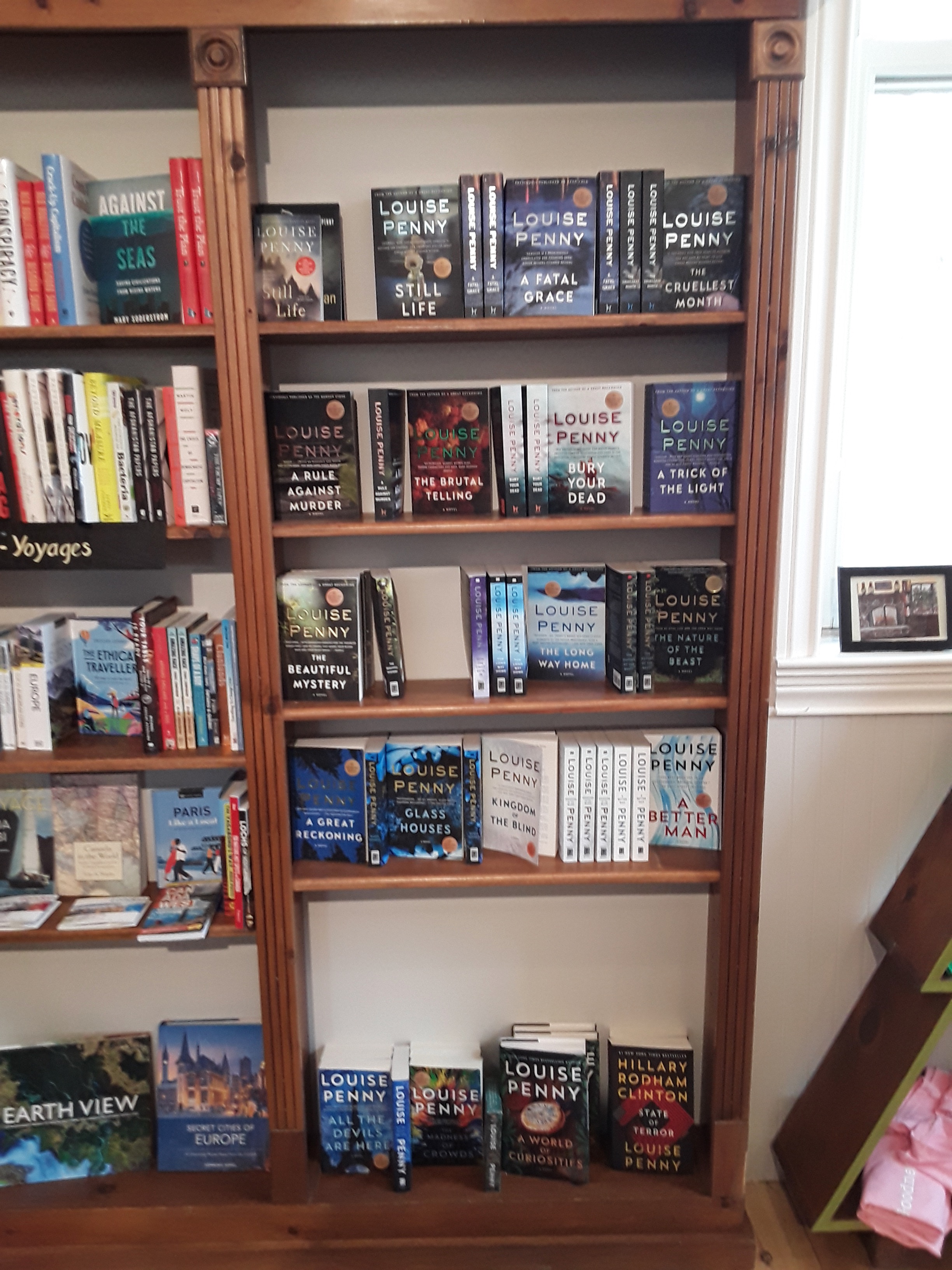
Louise Penny recently announced, after cancelling her Kennedy Centre appearance, that she would not do any U.S. visits when The Black Wolf is published in the fall of 2025.
Instead, she’ll have an extensive Canadian tour, starting with a National Arts Centre launch in Ottawa that sold out within a few hours.
She’s explained her decision to her American readers in thoughtful terms, but her choice may still alienate some book purchasers, which Penny, more than most Canadian crime writers, can likely afford.
That’s not meant to sound snippy.
I have enormous admiration for how Penny is using her resources to support her home community of Knowlton, Quebec.
She recently announced a fun project of building a bistro-like space, albeit one that just serves pastries and coffee, in the same building that houses Brome Lake Books. I look forward to visiting La Joie de lire in late October during a research visit timed to coincide with the publication of the new book.
Knowlton is tiny, and while there is good coffee to be had, a dedicated spot near books is always welcome.
Remember that in Three Pines, a new business is created expressly because there is both a need and because it won’t edge an existing business out: at both the bistro and bed and breakfast run by Gabri and Olivier, Sarah’s bread and pastries are served, even though Gabri would enjoy baking his own, because it’s part of co-existing harmoniously and interdependently in a small community. I love that idea.
I don’t know if Canada and the U.S. will go back to co-existing peacefully any time soon. But anything that happens across the border has a profound impact here, and our national politics and culture are being shaken up. “Elbows up,” indeed.
But we have a long history, and conflict and skirmishes have been relatively infrequent. The current issues are being driven by a big personality (disorder) who can only serve four more years. I’m hoping that not too much damage is done in that time, although the early indicators are worrying.
In crime fiction, the U.S. is often associated with guns, drugs, and other illegal activity; in Penny’s fiction, this has included organized gangs who treat the border as a minor inconvenience.
But from the Montreal Gazette several days ago, this startling insight into Penny’s next book:
“. . . here’s the twist: Penny had already written this script. Her upcoming novel, The Black Wolf, imagines a powerful group attempting to make Canada the 51st state. She wrote it a year ago.”
 The Landscape of Canadian Women's Crime Fiction
Leave a comment