Bauer’s new book is due out in April in Canada and the U.S., having just been published in the UK. Many thanks to NetGalley for my preview copy. In The Impossible Thing the author does a number of things exceptionally well; there are also a few aspects of the book that I puzzled over, and look forward to discussing with fellow Bauer fans.
My introduction to her work was Exit, a black comedy about the Exiteers, a secretive right-to-die group that arranges at-home assisted dying. One day, something goes terribly wrong, and that’s a problem. When you’re killing someone dying of a terminal illness, details matter. Killing the right person matters even more.
Euthanasia is a serious subject. In the era before MAID, Canada’s medically-assisted dying legislation, family members sometimes took it upon themselves to assist a terminally ill person in terrible pain. Legal consequences followed, if this came to light.
Certain Catholic hospitals have been resistant to permitting MAID on site, and it can be challenging to deal with the scheduling of required medical permissions, which prevents some who would benefit from receiving assistance. In our family, it provided a welcome and peaceful end-of-life for a loved one. But it’s still not available to people with mental illnesses, if they aren’t accompanied by catastrophic physical health issues.
In Bauer’s hands, assisted dying is treated simultaneously with humour and with empathy, and that’s a significant artistic achievement.
The Impossible Thing is a substantial departure from her previous works, in both plot and narrative structure, and it’s definitely her most ambitious novel to date. The story revolves around the high-risk, high-reward profession of stealing valuable birds’ eggs from inaccessible locations. I’m reminded of Vera’s father, Hector, an avian taxidermist who smuggled rare and illegal eggs.
A character from a past book turns up: medical student Patrick, who has autism, from Rubbernecker. This is a brilliant characterization–Bauer avoids a lot of disability representation pitfalls, portraying him with nuance and empathy.
In The Impossible Thing, Patrick is now in his early twenties, living at home with his mum. He enjoys his friendship with Nick, a former classmate and his video game partner. When Nick’s household experiences a home invasion, the burglars steal a prized guillemot egg and its display case, which Nick had advertised on eBay. Patrick is brought into the mystery.
All of this takes place in the present-day timeline. A century earlier in Yorkshire, we meet Celie, whose father abandoned his family on their farm. She ventures into egg collecting with the assistance of an older boy, a farm helper with his own challenges. Together they make an intrepid team. And then they make a life-changing discovery, an “impossible” red egg.
This is a book that, I think, it’s better to open without knowing any more than that. It’s about friendship in adverse circumstances, across boundaries of gender and neurodiversity. About science and history, love and betrayal, greed and altruism.
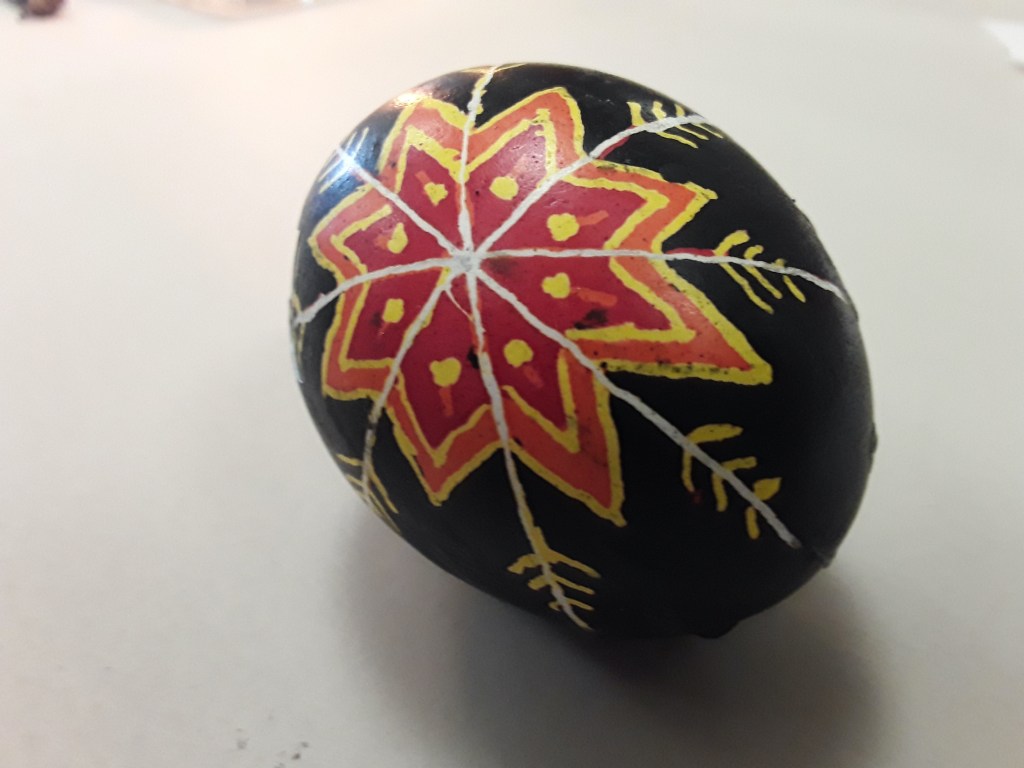
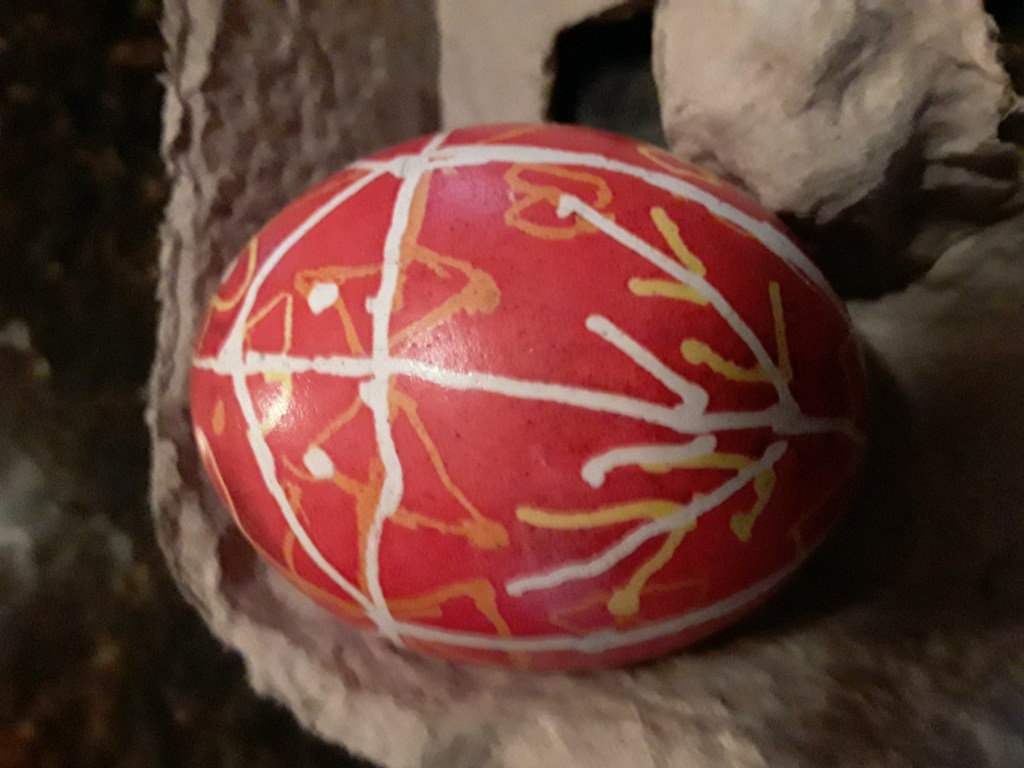
Eggs have been on my mind this week, and today a friend joined me to make pysanky (or pisanki) at the Ukrainian Cultural Centre. Tiffany’s egg, shown at the top of the page, is gorgeous. Mine is a bit sooty, from contact with the flame that melts off the wax near the end of the painstaking process.
One of the organizers read several paragraphs of an essay, about the mindful spirit in which one should make pysanky. Silence, ideally. No negative thoughts, and only peace and gratitude towards others.
Trying.
 The Landscape of Canadian Women's Crime Fiction
Leave a comment