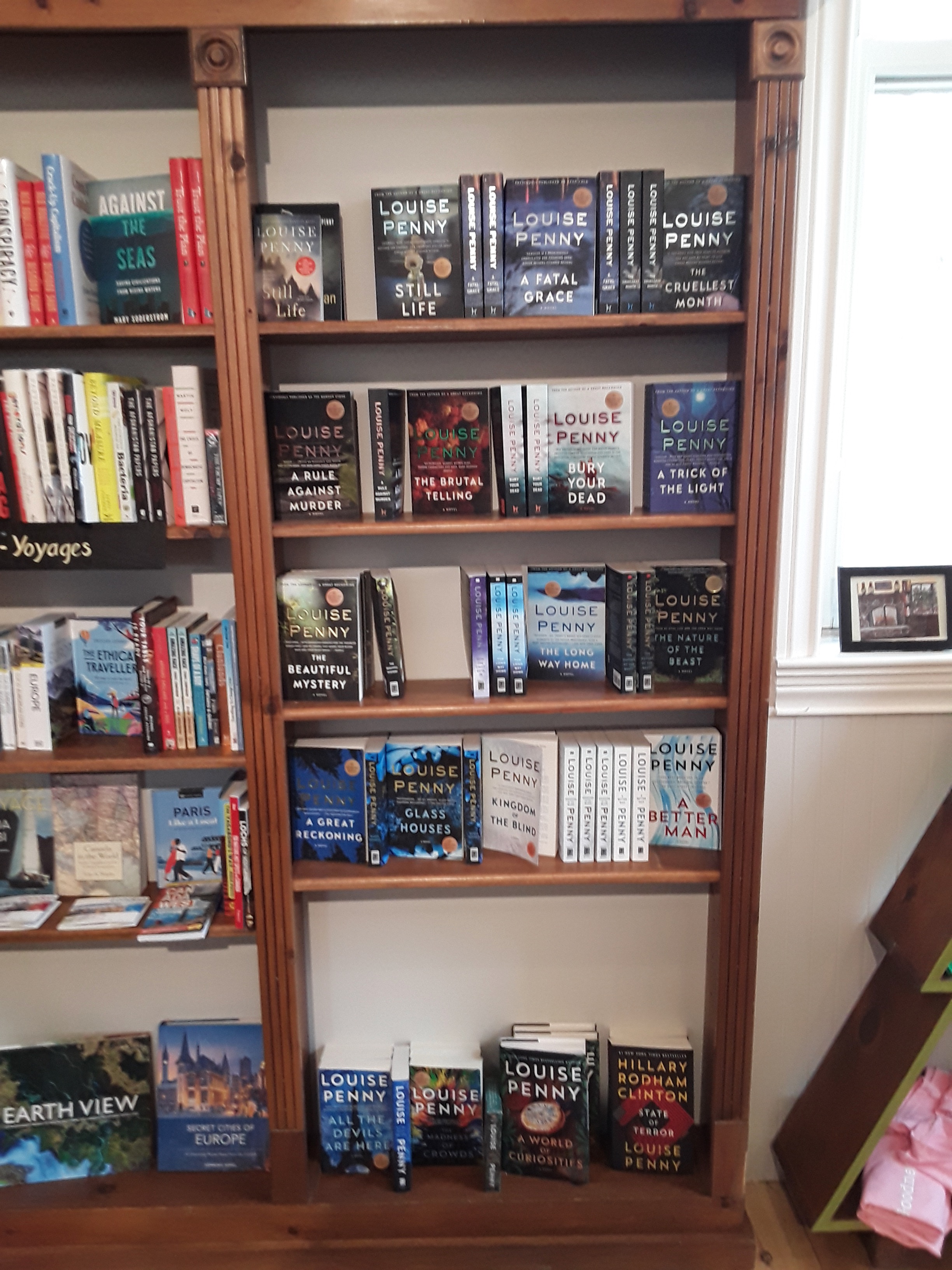
Several strands of my professional life collided yesterday.
I’m trying to complete an email–just an email!–to participants for a Zoom webinar that commemorates Pat Lowther’s brilliant poetic legacy. A heavy cold has been hampering me, but I’ll finish it and get it out today.
Except that the Lowther project, for July, reminded me that I meant to do something about Munro this year, and I’m making very slow progress on what’s turned into a lyric essay about Munro, her Juliet triptych, learning Greek, maternal and romantic love and loss, and reading our lives through fiction. That might just be because I have one too many narrative strands. Or because my secondary research has taken me in the direction of caryatids and Persephone/Demeter, on the one hand, and the Can Lit establishment of canon formation, reviewing practices, feminist interventions, and precarious academic employment, on the other.
So pausing, for a moment, to think about Lowther.
Her work has been read, too frequently, both biographically and with a kind of ret-conning that starts with her terrible death and works backward.
I’m determined not to do that, and I’m finding helpful guidance in M.A. theses and dissertations, as well as in the handful of sensitive and writerly discussions of Lowther’s poems by authors like Iain Higgins, himself, not coincidentally, a poet.
There’s an interesting review of Lowther’s A Stone Diary in Atlantis, written by Elizabeth Jones. She describes the book, which was published posthumously (challenging reviewers, thus, to review the work and not the life and death) by Oxford UP as a “work of no banality and great beauty.” A precise and fitting tribute.
Lowther was an intensely politically aware and astute writer, and from this collection Jones singles out the long poem “Chacabuco, the Pit” for particular praise, noting that there is “not one false note of sensationalism” in the work. I agree, and I’d add only that Della Golland’s excellent M.A. thesis on Lowther, from 1994, provides a detailed and insightful reading of this work.
I’m obsessed with jellyfish, which appear in this poem (a line drawing accompanies Jones’s review), so a photo, from my most recent visit to the Vancouver Aquarium.

But the one poem Jones is troubled by is “Kitchen Murder,” which other critics have used, I think unfairly (while also understanding the impulse) to “read” Lowther’s death. For Jones, this one has a “lethal whiff of Atwoodian attitudinizing,” a striking phrase. I’m wondering if it’s the sense of heightened, even staged drama in the poem that she’s identifying here?
Returning, then, to the paradox that is the kitchen murder, which I write about in this book chapter by linking Alice Munro’s work to Mary Pratt’s paintings. I used a quotation from Plath in my title, the “viciousness in the kitchen” of her poem “Lesbos.”
But the kitchens I’m thinking of right now are the ones that appear in Carol Shields’s Swann.
The sub-title, “A Mystery,” was added by her publishers for marketing purposes, apparently; the crime has been solved by the time the novel opens: a rural farm wife with a distinctive poetic voice was murdered by her husband, yet, miraculously, a handful of copies of her only published work survives.
Grad student Sarah Moloney finds one copy in a friend’s family cottage and, curious, gets to work on Mary Swann. She ultimately builds her successful feminist academic career on Swann’s slim volume.
Other academic critics populate the novel, which is about the jockeying for interpretive and academic power, an unseemly scramble over, effectively, a body of work attached to a very real woman’s body.
Yet much, it turns out, about Mary Swann and her legacy has been invented or fictionalized, because the actual material evidence of her existence is so paltry.
The museum that purports to house her belongings is an ersatz creation.
The poems themselves, readers learn near end of the novel, have been reconstructed from sodden and disintegrating pages by her publisher and his wife after the manuscript was inadvertently used to wrap fish.
Some parts of Swann are wonderful. For me, the screenplay portion that portrays the academic symposium doesn’t quite work, and some of the novel’s uneasy humour seems to risk forgetting what Swann’s critics so frequently overlook: this was a real woman, with a real life, and a tragic death. Their scavenging of her poems will not bring her back.
Critics identified a relationship between Pat Lowther’s work and legacy and Carol Shields: some suggest that Lowther’s life and death partially inspired Mary Swann; others view the echo of Lowther’s A Stone Diary in Shields’ novel title The Stone Diaries as too close to be coincidental.
Like Lowther, Shields worked as a sessional instructor while juggling child rearing and writing. But until late in her life, Shields, who was born in the U.S., lived in Winnipeg and Ottawa, before retiring to Victoria. I haven’t found much evidence that Lowther’s and Shields’s paths crossed.
There’s a closer tie between Lowther and Atwood, and I’ll write about that another time.
I’m re-reading critical essays by Cynthia Sugars and Wendy Roy today, with a close eye on domestic spaces in Swann, while also diving into a quite wonderful history of the origin of the English kitchen.
I am, for the first time ever, undertaking a kitchen renovation, that most bourgeois of projects. I’ve ordered a few relevant New Yorker cards to send, at appropriate moments, to the family members who will be inconvenienced by said project.
And it’s tremendous fun, because one selects all kinds of things: colours and textures; heated flooring (!) to address the chilblains, that most Victorian of ailments, that one’s adult child has managed to incur in a cold and drafty craftsman bungalow with the kitchen placed inconveniently over an unheated granite-hewn space; new appliances, although space constraints mean that I can not fit in the Aga that my budget, in any event, does not enable.
But the renovation very quickly took from the glossy pages of design magazines and down a scholarly rabbit hole of trying to discern how kitchen spaces were created. Why the triangle placement, for instance, of sink, stove, and fridge? And who came up with the new approach of a single wall of kitchen, which seems vaguely Scandinavian, perhaps because of Ikea displays briefly glimpsed while marching towards meatballs and lingonberry sauce.
I have vague recollections of a terrific MOMA exhibit on the very gendered space of the kitchen.
But what has intrigued me for some years is how potentially violent this space can be, what with all of its sharp objects, whistling kettles, and hot stove elements.
Oddly, the lovely people in charge of our kitchen renovation prefer to focus on aesthetics.
Munro, again, and that image in “Open Secrets” of a hand being pressed against the stove, a mute punishment meted out only in fantasy.
Time, now, to finish up my Lowther email. Yesterday’s procrastination took two forms, including creating a Special Session proposal for MLA 26 and spending a couple of hours locating a language tutor/class. Today, I must focus.
Off to a good start.
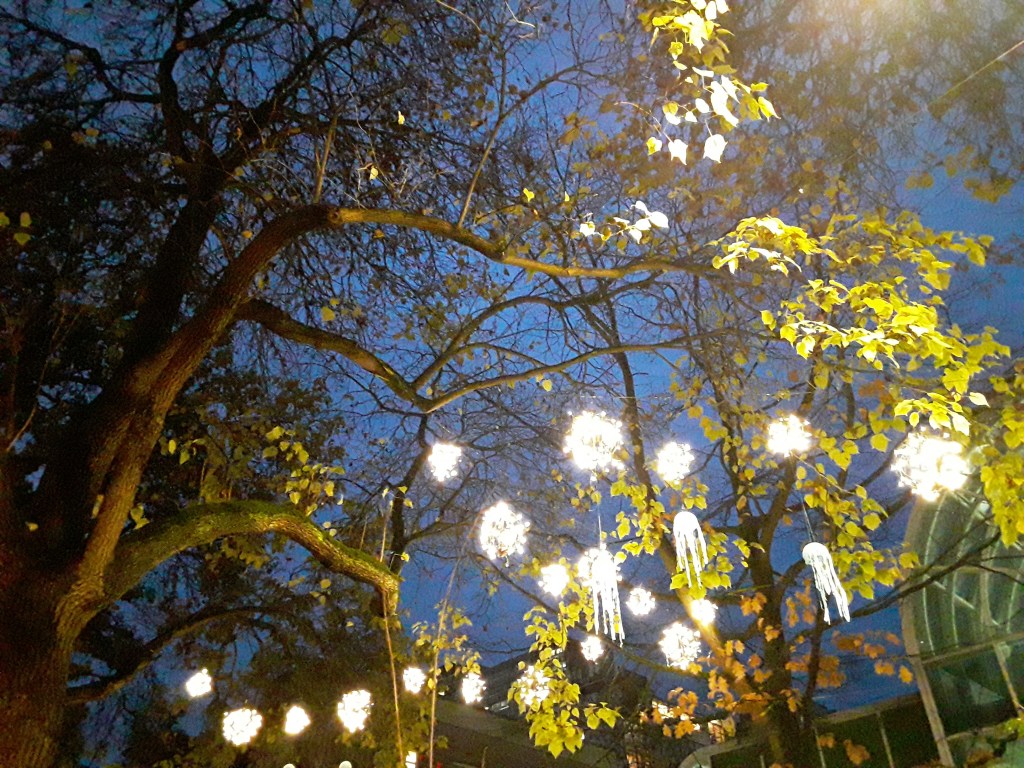
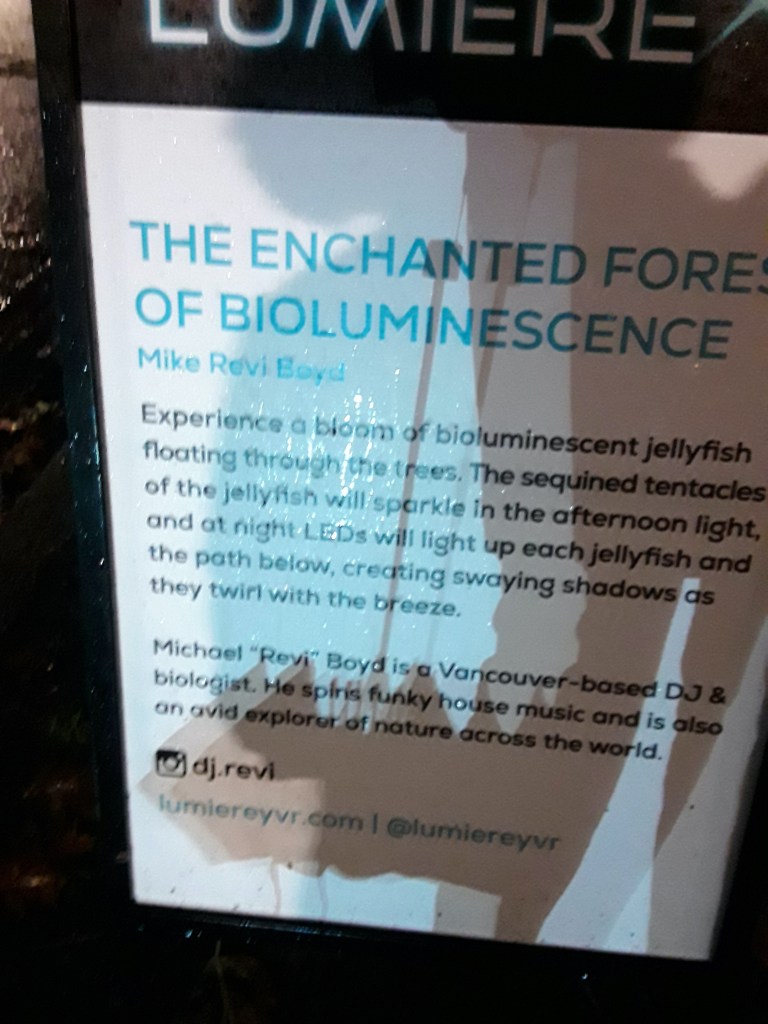
And do have some more jellyfish, as I close.
They’re just wonderful.
And not unpleasant to the palate, apparently. I won’t be bringing any into my new kitchen, however. My pescetarianism does not extend to these beauties.

 The Landscape of Canadian Women's Crime Fiction
Leave a comment