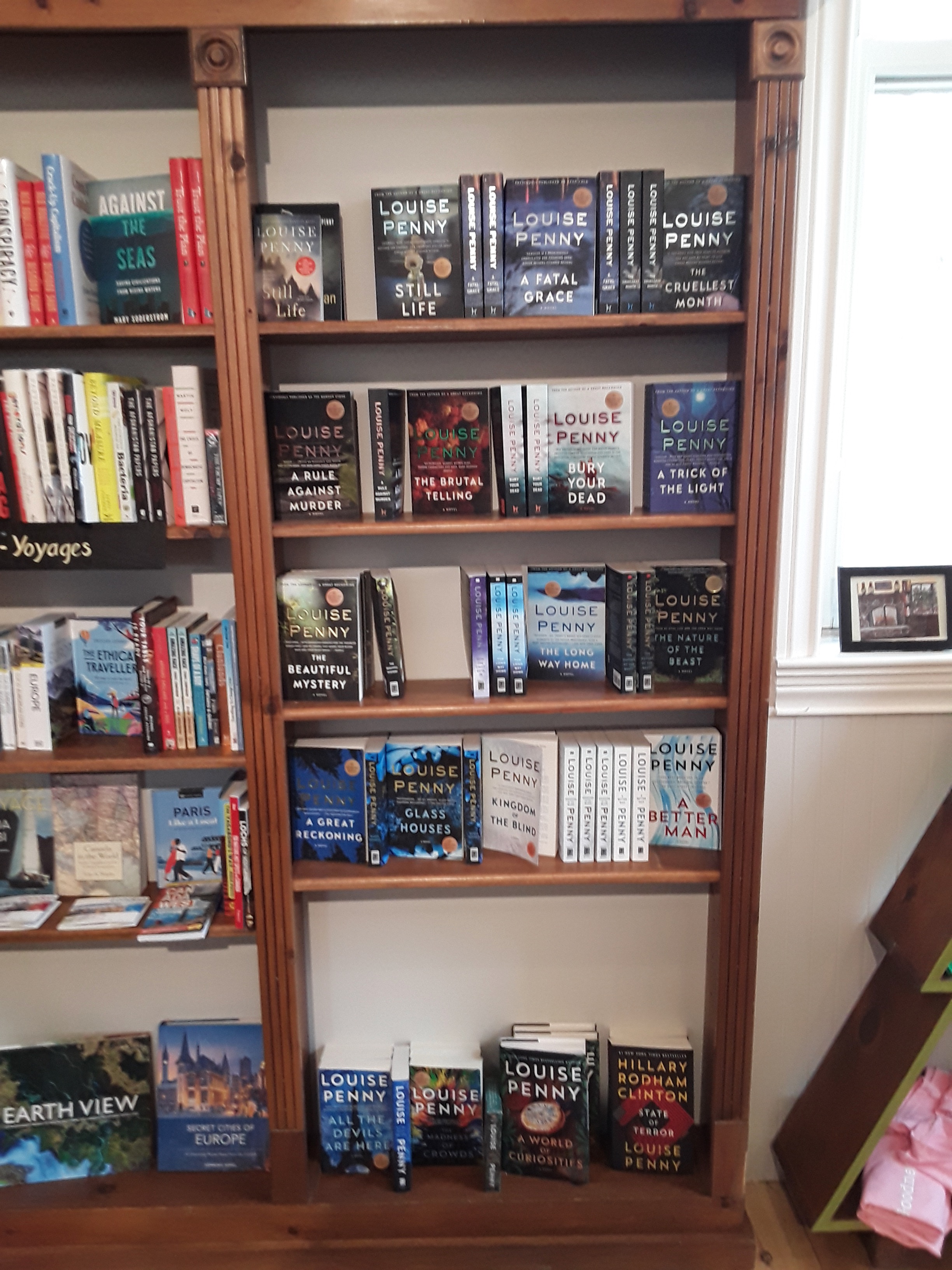
Twenty years ago, I was teaching Canadian Studies at the University of Toronto. I would screen Molson’s “I Am Canadian” during a class early in the term when we were talking about Canadian cultural nationalism. The goal was to contrast the muted expression of Canadian patriotism with a more jingoistic American approach, and then link that to cultural imperialism and the impact of living next to a broadcasting and publishing juggernaut.
I just watched the update made by a group of apparently anonymous creative industry folks who wanted a new version without a link to any corporate sponsor.
The Guardian, which has had enthusiastic coverage of symbolic hockey and avian Canada-vs-the-U.S. battles, observes that “The US president’s suggestion that the country might become the 51st US state has provoked a wave of patriotic fervour.”
I liked the poutine/Putin line in “not the 51st state.” It reminded me of a Vancouver restaurant’s store-front photo:

But it reminds me that as I’ve been drafting (too many) chapters about Canadian women’s crime fiction, I’ve been noticing how rarely authors refer explicitly to Canadianness as a concept. There are occasional off-hand remarks about niceness, or gun control, joked about Mounties, or observations about universal health care. But in general, a sense of nationalism comes across through the landscape and descriptions of place rather than through political reflections.
To some extent, Gail Bowen’s fiction is an exception, because her protagonist is a political science professor and is, like Bowen herself, politically active with the NDP (not named, but evident), a left-leaning political party.
But Joanne Kilbourn’s political concerns are both pragmatic and literally provincial: her focus is Saskatchewan electoral politics and the work of campaigning in the early books in the series, and in the more recent ones her focus is Regina municipal politics.
Intriguing (to me at least), but with little scope for analysis of, say, French language rights or even national Indigenous concerns, although Bowen does (to her credit) pay far more attention to Indigenous-settler relations than most Canadian mystery novelists.
Some comments on Canada as a nation-state are found in Peter Robinson’s Inspector Banks series, which is, of course, set in Yorkshire; but Robinson, a UK expat, manages to insert Canada, including quick trip to Toronto, into a number of the books.
For me, though, the author who engages most profoundly with Canadian political and cultural issues is Ausma Zehanat Khan who, lamentably, no longer lives and writes in Canada.
Khan’s first mystery series pairs an experienced Muslim police officer in Toronto, Esa Khattak, with the younger Rachel Getty. In the first novel, The Unquiet Dead, the detectives investigate the death of an affluent local man and art collector who has been concealing his secret (and brutally violent) history, including his close connections to the massacre in Srebrenica.
While Canada screens immigrants and refugees diligently, after every conflict, from the Second World War to Somalia, a few people with appalling histories appear to lie their way into the country and build new lives. Khan’s novel engages with the complexity of having a welcoming approach to new arrivals from war-torn regions.
But Khan goes further: in later books in the series, Khattak and Getty investigate terrorist cells and even go overseas for cases, broadening the geographical, cultural, and historical scope of the Canadian crime novel in ambitious ways.
Khan is a terrific writer with an engaging prose style and a whip-smart understanding of geopolitics and international law. I would have liked this series to continue for many more books.
And what Khan does so well is call into question how nationalisms, and especially those founded in ethnocultural divisions, can spur conflict.
Canada’s familiar with this from its international French nationalist movement. It should be far more concerned about its own English-Canadian cultural assimilationist tendencies, notwithstanding Official Multiculturalism.
So as we face the rumbles on the other side of the border, and the wretchedness of enduring this for four more years (at least–and some have concerns about whether that will be the limit), it’s worth re-visiting not just Canada in crime fiction but, I think, the weak state of Canadian Studies in this country and internationally.
Now would be a very good time for the federal government to re-invest in programs that have been allowed to languish.
And a good place to start would be a re-boot of the early 1970s Symons research report on the state of teaching and learning about Canada. Here’s (ironically) a U.S. government link to the full text, which is worth perusing in these times.
The world needs more Canada, and not just from our brilliant crime writers.
 The Landscape of Canadian Women's Crime Fiction
Leave a comment