I’ve just completed comments/corrections in response to the best copyediting of my academic work that I’ve ever experienced (for a forthcoming MLA volume on teaching Margaret Atwood).
It was a marked contrast to some past mediocre experiences, and one real disaster, when an entire book manuscript, including my chapter, was outsourced to a non-English-speaking country and dozens of new usage errors were introduced into the text.
I would name the publisher, but I’m hoping to work with them again.
And the practice is apparently widespread.
It will be interesting to see how AI affects/afflicts copyediting of academic sources, not to mention the researching and drafting of these texts. Some scholarly journals are developing generative AI policies, and all of them should.
This brings me to the consideration of editors in crime fiction.
Some mystery writers have also been editors; more frequently, however, the professions seem to be distinct.
And the presence of editors remains rather shadowy, although my suspicion is that they play an especially significant role in identifying plot holes and “messy middles” for crime writers. I’ve been contemplating working with a developmental editor, because in reviewing my own manuscript, I’ve realized that I can see (some of) the problems yet have very little idea how to fix them.
And then the whole mystery book project gets stuffed back in a drawer and forgotten again, for months, because I’m too frustrated to proceed. This is not productive.
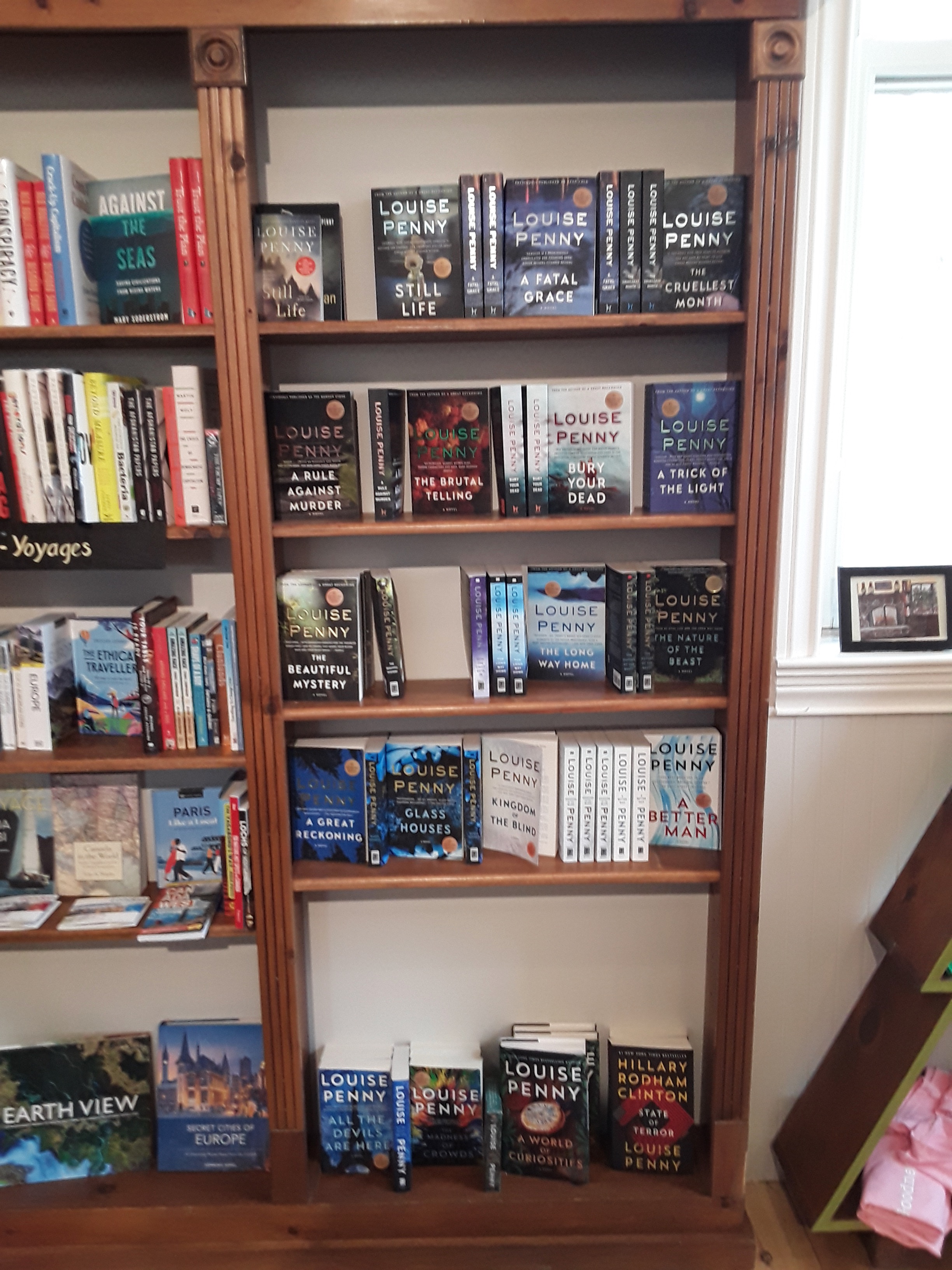
Let’s take the example of Louise Penny, because she expresses profound gratitude to her editors in all of her books. Like the handful of other Canadian writers who are published in multiple languages, she now works with a variety of editorial teams as national editions and translations are prepared.
Canadian English and Québécois French have distinctive features and I’ve noticed that as the series evolved, there were fewer expressions that would require explanation to Americans.
Penny’s long-time editor was the esteemed Hope Dellon, who worked on her books for 15 years. Dellon also wrote some excellent contributions to the Chief Inspector Gamache website.
And here she describes meeting Penny’s work for the first time:
“I started working with Louise in October 2006, after the editor who had bought her first three books left Minotaur for another company. At the time, only Still Life had been published. A Fatal Grace was in bound galleys, and The Cruelest Month was a completed manuscript in search of a title.
Since I needed to read three books in a row, it was lucky that I loved them from the start. Although Louise had me from the acknowledgments at the beginning of Still Life, there came a scene in A Fatal Grace that gave me chills in a way that only the very best manuscripts ever have. (I describe that scene in the recap below.) I even remember where I was when I read it. In those days I had an hour-long commute on the train. I know that I started reading the galleys on the train on a Tuesday night, then continued on Wednesday morning, when we always have our editorial meetings. By the time I got to that meeting, I couldn’t stop talking about how amazing Louise was, except perhaps to ignore everyone else and keep reading more of the story.”
And that’s, surely, what one wants in an editor: a fan, an advocate, a careful reader with an attentive eye for detail.
Several weeks ago I was teaching Toni Morrison’s Sula and musing to students that her work as an editor must have informed her own writing in some intriguing ways. But I seem, for once, to have understated the case of the significance of Morrison’s editorial efforts. As Arielle Gray describes, Morrison had a monumental impact on the nurturing and publication of Black writers, just one part of her extraordinary legacy.
 The Landscape of Canadian Women's Crime Fiction
Leave a comment