I was intrigued to see that York University is creating a new Mad Studies hub. I’m hoping that this will take a disability studies “nothing about us, without us” (Tom Shakespeare) approach. But I worry because of what Shakespeare and Eva Feder Kittay, among many others, have described. People who have intellectual/cognitive and mental/psychiatric disabilities are the least likely, within the community, to be able to speak or write in our “own voices.”
Let’s start changing that.
Today’s post will combine literary-critical, political, and unabashedly autobiographical perspectives. I’m teaching Creative Nonfiction, for context, and until today I was teaching Women’s Literature. A partial medical leave/accommodation means that a PhD student will finish out the term with my Women’s Lit students, which I rue a bit. For me, and not at all for them, as she’s fabulous and they are in good hands.
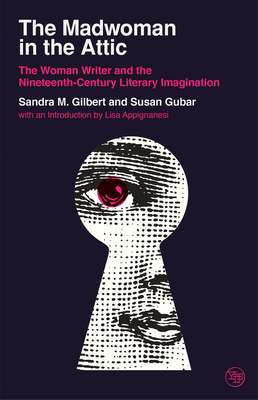
Because I’ve been prepping Jane Eyre, this week I intended to write notes about Bertha Mason. The madwoman in the attic of my title, which borrows from the extraordinarily powerful work of Sandra Gilbert and Susan Gubar. It’s become customary to be dismissive of 1970s/80s feminist work, in particular its American iteration. I can’t count the number of conference presentations I’ve attended where speakers sneered at the alleged biological essentialism, reductivism, or oversimplification of this era’s work.
But American literary feminists were swimming against the stream in making a case for why women’s writing, especially non-canonical women’s writing (and in 1979 that was most of it), merited study and teaching. And they made their case. Sometimes that meant they invoked theories of everything that now appear, to those of us who stand on their shoulders, to blur distinctions between texts, authors, and/or historical periods.
Contemporary, sophisticated feminist critiques and theorizing wouldn’t exist without them, and I’m reminded of the metaphor of literary critical mothers and daughters. We gaze at each other across generational divides, baffled.
So just a reminder, from 1987 in the pages of the New York Times, and by no less a figure than my idol Elizabeth Kolbert:
“One of the country’s most renowned feminist critics, Professor Showalter does seem capable of offending some of her students. After class, one young woman, an English major, protests privately that the teacher has managed to make an issue of feminist concerns even in the case of books that lack significant female characters. But to most of her colleagues, Professor Showalter’s ideas, while still controversial, have lost their ability to shock. For feminist literary criticism, once a sort of illicit half sister in the academic world, has assumed a respectable place in the family order.
‘Anyone worth his salt in literary criticism today has to become something of a feminist,’ says Peter Brooks, a professor of French and comparative literature and director of the Whitney Humanities Center at Yale University. ‘The profession is becoming feminized.’ Feminist criticism has become so popular that Peggy Kamuf, a French professor at Ohio’s Miami University, has coined a new term, ‘femmenism,’ to denote male practitioners.”
I don’t think Kamuf’s term got much traction.
But here’s what I find really interesting about Brooks’s observation. The feminization of the academy, notably in the humanities, coincided with the rise of a precariat class of underpaid, over-educated, contingent faculty members who now make up the majority of our profession in English lit. Weird historical coincidence. Please fill in your own eye-roll emoji.
In 1979, Gilbert and Gubar (an undergrad professor said they sounded like a vaudeville act) teamed up for the first of their efforts, a Norton-sized book titled The Madwoman in the Attic: The Woman Writer and the Nineteenth-Century Literary Imagination. Along with this book, from the mid-1980s or my mid-teens onward, I was reading Elaine Showalter and Ellen Moers. And, perhaps most important to me, Elizabeth Hardwick’s Seduction and Betrayal. There was a copy in my high school library, in the slim section of literary criticism, right next to Al Alvarez’s The Savage God. For the past four decades, I’ve been figuring out my relationship to the ideas they introduced.
Starting in undergrad, my guided reading in feminist criticism and theory expanded to include the French feminists, via Toril Moi. Deconstructive, psychoanalytic, and/or post-structuralist in orientation, the newer critics were more challenging to read or to drop into second-year lit papers. I’m not in dialogue with, say, Cixous or Irigiray. But Kristeva was/is always important, because there’s greater lucidity for me as a reader, and she’s more directly post-Freud. I am very fond of Jessica Benjamin and other offshoots of the Frankfurt School. Thank you, Dr. Marsha Hewitt!
Back to madwomen. I come from a long line of women who struggle to cope with everyday life, while also being very accomplished. It’s complicated. We go all out and are celebrated for our efforts. We publish, we create child care centres for the disadvantaged, we sponsor refugees and house foster children. And we periodically get overwhelmed. There’s an alphabet in my family tree: PTSD, both kinds of BPD, etc.
My Addison’s is less obviously a mental health condition, but it’s rooted in a neuro-endocrine issue, and connected to my set of linked autoimmune disorders that have not been fully worked out. This mystery will be taking me on a vacation to Rochester, Minnesota sometime soon. Plus, Addison’s can present with some intriguing symptoms in and of itself.
So as I read Jane Eyre and “read” Bertha Mason–her fortune usurped by her husband, who’s gallivanting around Europe having affairs and feeling sorry for himself–I read her frustration at having her condition (as a woman, a daughter manipulated into marriage, and a wife imprisoned in an attic) “diagnosed” as madness.
Jane Eyre‘s second edition had a lovely acknowledgement/dedication to Thackeray. Then the mortified author learned that the Great Man had his own wife locked up, and thus, the gracious thanks she’d tried to express could be viewed by some readers as a snide allusion to Thackeray’s domestic circumstances.
Who else locked up a wife? I’m thinking of Encanto’s family round-up here.
Depends, of course, how you define “locked up”. Confined to a room to write, which is vile but not imprisonment and has happened surprisingly frequently, or actually committed to the care of the alienists and mad doctors? Let’s stick to the latter, so that I don’t wander off on a Colette-and-Willy tangent. Although it’s a fun story.
It was a dark and stormy night . . . and the author of this infamous line, Edward Bulwer Lytton, can be faulted for seeking to confine his stroppy wife Rosina to residential psychiatric care. This is a terrifically intriguing episode, and I highly recommend reading Rosina’s own work.
There’s Thackeray, who doesn’t really seem like a wife confiner, does he? But you never can tell. This is much discussed, so I’ll just refer you to sources for details. Unlike Rosina Bulwer Lytton, who sounds mostly furious, it does appear that Isabella Thackeray suffered severe post-partum psychosis.
Now I’m jumping ahead several decades and thinking of Virginia Woolf, Anne Sexton, and Sylvia Plath, that triumvirate of mad wife-writers. One of Plath’s terrors was institutionalization and electroconsulsive therapy. Her first round of these, after a suicide attempt during her undergrad years, had major impacts on her cognitive abilities for some time. A second set was relatively efficacious but still terrifying. It’s in the poems, and it’s heartbreaking.
As for Bertha Mason, she tries to set Rochester on fire in his bed and rips Jane’s wedding veil. Well, what would you do if your husband proposed a little light bigamy, and the opportunity to spend more of your money on your younger romantic rival?
In the end (spoiler) she tries to burn the whole thing down. Thornfield, Rochester, all consigned to ashes. She dies in the effort while her erstwhile husband survives, blinded and maimed. And there is a whole fascinating direction of disability studies readings, about Rochester, his injuries, and his manhood. Fabulous new work by multiple scholars.
Jean Rhys and many others have taken on Bertha; Wide Sargasso Sea is just the beginning. There are lots of revisionist and postcolonial readings that build on insights by Gayatri Spivak, Susan Meyer, and others about the imperial and colonial roots of the fortunes in Jane Eyre.
I have a slightly different vision. A Caryl Churchill Top Girls-like play where all of the dead/mad wives, historical and fictional, congregate for a party and compare notes about their crap husbands. I envision Sylvia cackling over a glass of Chablis with Bertha and, oof, maybe with Assia.
Fun will be had. Because in the 21st century, I’m convinced that disability studies is adding to the previous insights of late-second-wave feminist theory. Developing insightful readings of works like Jane Eyre, a novel which deserves to be read every year.
A bibliography for a change, and for full intellectual honesty. Start with Margaret Price’s Mad at School, a brilliant, important book.
Anything and everything by Jay Dolmage, Eva Feder Kittay, and my extraordinary friend and mad studies theorist Erin Soros. I should be sipping coffee with her in Vancouver right this moment, but circumstances were not fortuitous. But read Erin’s work because she is peerless, as poet, scholar, and essayist. I’m very lucky to know her and to work in dialogue with her thinking.
And in mystery fiction? Don’t forget about Pat Capponi. She brought a fresh, crucial perspective to Parkdale ex-psychiatric patients. In both life and mystery fiction, she insisted on the dignity of everyone who is receiving care, including those on involuntary holds which too often mirror abuse experiences. Pat was amazing and one of a kind, and she is so very missed.
 The Landscape of Canadian Women's Crime Fiction
Leave a comment