
I’m interrupting my set of four posts on academic mysteries to reflect on how brilliant Ann Cleeves’s Vera novels are, in particular. No shade to her other series, which are engaging and innovative as well.
This past fall I was due to go to Knowlton, Quebec to see Louise Penny interview Cleeves, at a public event that was to be the highlight of my year. Instead I came down with COVID, and that was miserable, as someone with umpteen autoimmune issues. So no fall trip for me.
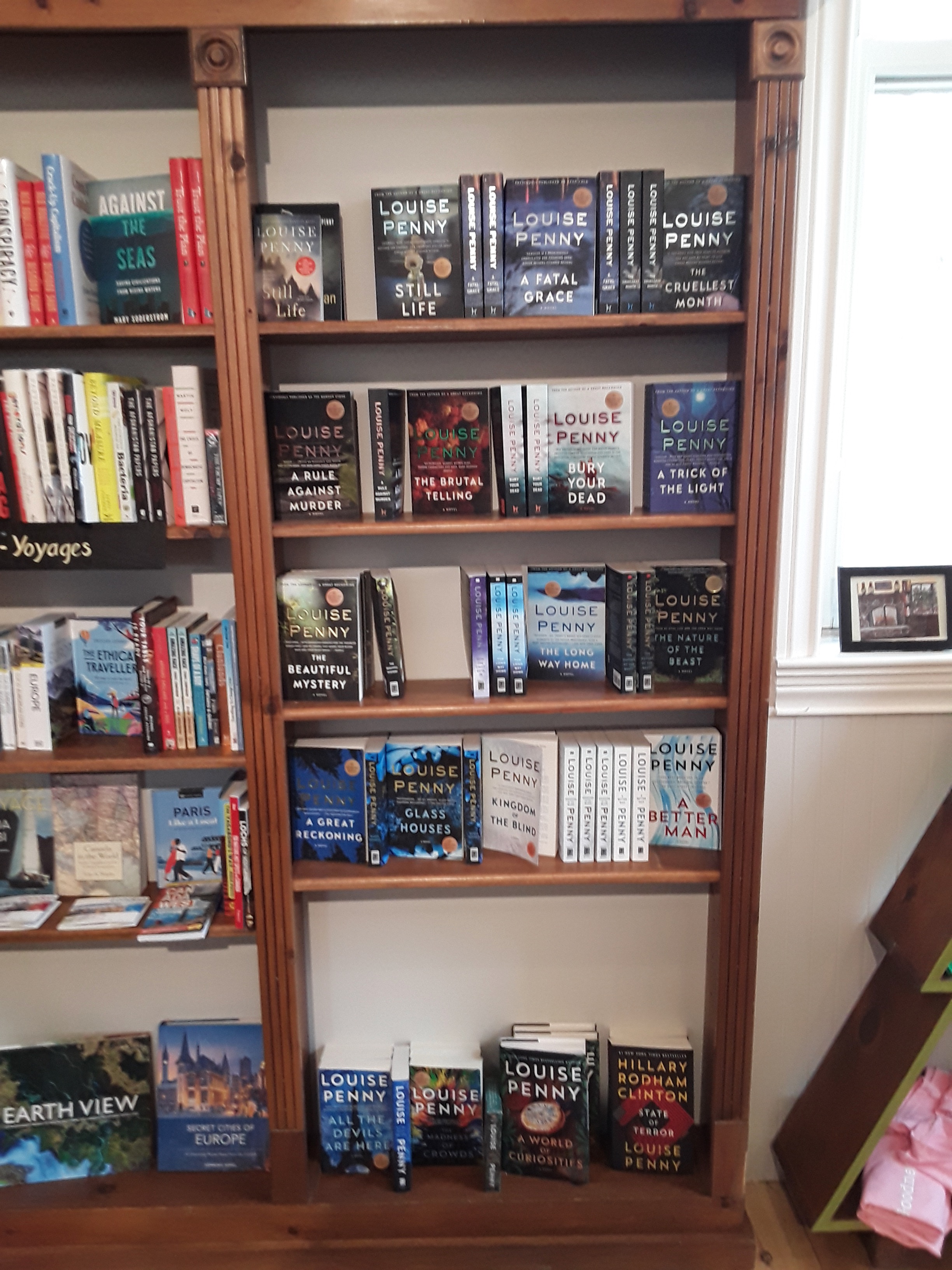
I’m now planning for next fall, and Knowlton’s on my list of places to visit during an extended research trip. Of course I’m reading Penny in the meantime, and looking forward to the bistro from the Three Pines books that she’s quasi-recreating in Knowlton. As her latest Newsletter explains, she purchased the building that houses the wonderful Lac Brome Books, and there’s room for a café.
Spaces to write and read and think and talk are important. In an increasingly chaotic world lived largely online, having these spaces as accessible and in-person locales also matters. Those of us who limit our time in public regret the necessity of doing so.
But what about writers’ retreats, or artists’ retreats in general? These are even more closely defined spaces of creativity. And according to a number of books, by Canadian women writers and by others, they can be murderous.
Elisabeth de Mariaffi’s The Retreat is a lot of fun. The protagonist is a dancer and choreographer, who is spending time during the stormy winter season at a site closely resembling–to me, at least–the Banff Centre. With the roads blocked off and the power out, her fellow artists start to drop dead, one by one. Very And Then There Were None.
It’s rather slight: nothing like the complexity of her Hysteria, for instance, which is a brilliant book. Nonetheless, it’s a compelling and well-paced read. Much better than, say, Julia Bartz’s The Writing Retreat and several others of that ilk.
But for me, nothing surpasses Ann Cleeves’s The Glass Room as fiction about a writing retreat gone bad. I’m re-reading it to try to understand how it is constructed; she does multiple points of view so well. This novel is full of tiny meta-moments, as characters reflect on the differences between fictional and real-life murder, at a one-week writers’ seminar on crime fiction. Just perfect.
I’m still hoping, someday, to see Cleeves in the company of Louise Penny. Or at Scotland’s mystery festival, Bloody Scotland.
For the moment, during a rare Victoria snow day (where I will nonetheless trek to the dentist and then to campus for a rally . . . about which I should probably not say more, but you can read about it in the news), I’m just so grateful for Ann Cleeves. The novels, the TV adaptation, all of Vera. What an absolute blessing for those of us who are semi-shut-ins during flu season! The best of company.
 The Landscape of Canadian Women's Crime Fiction
Leave a comment