
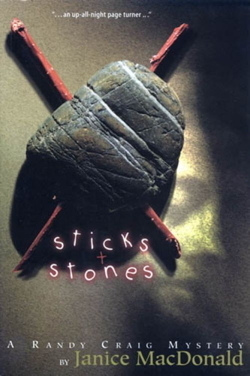
This was intended to be the third of three posts about academic mystery fiction, but a social media comment from Janice MacDonald made me pause. She noted that her Randy Craig series, set in Edmonton, is an instance of a Canadian academic who investigates murder within an English department. I’d been suggesting that, unlike in the U.S. and the UK, Canadian women writers are less likely to select English Lit as the home department for their mystery heroines.
Janice didn’t say “professor,” because Randy is acutely conscious that her status as an instructor of lower-division gen ed and intro courses, as well as her lack of a PhD, make her very much not a professor. Her research university colleagues at her grad institution will quickly remind her of that status, if she forgets.
Years ago, a colleague of mine was identified by the local paper as a professor. A tenured member of the same department took umbrage that a mere sessional instructor, who had taught in his department for nearly two decades, was so inaccurately characterized. He wrote a letter of complaint to the paper. It was all quite cringe-y. Not much later, that instructor–who’s a friend, and thus I am unabashedly partial–was forced out of her job, based on a single student complaint linked to plagiarism that the instructor uncovered and documented. She was scapegoated, and discarded.
Sessional/term/adjunct instructors are many things. Valuable resources to first-year students, as they navigate a new environment. Inspired teachers and outstanding researchers. Hardworking department members who serve on committees, supervise independent studies, and even sit on graduate committees for no compensation or hope of future reward. Underpaid labourers often tasked with the least rewarding gen ed and basic writing courses, and the most demanding students. And the natural “waste product” of graduate studies, Marc Bousquet’s rather pungent metaphor.
I am so proud that many sessional instructors are my friends. More of them, in fact, than tenured faculty, because I’ve spent most of my academic career in more-or-less temporary contingent positions.
For years, I worked in contingent faculty and union organizing. Much of it was exhausting and dispiriting, but some of it was amazing. Four free trips to New York City, to spend three days at the MLA offices strategizing for change! I loved chairing and being a member of the Contingent Labo(u)r in the Profession committee. They continue to do very good and very important work.
Through this effort to forestall the de-professionalization of my profession, I learned about The Adjunct Novel.
I’d read some, of course. James Hynes’s The Lecturer’s Tale is in my “top 100 novels” pile, and thus on my never-to-give-away bookshelf of treasured readings. It’s a hoot. Nelson Humbolt is a former visiting assistant professor, once greeted with back-slaps and dinner invites by august colleagues, now resigned to piecemeal adjunct teaching in the same department (where those colleagues pretend not to see him in the elevator). His career is languishing because of the crummy academic job market, and his own failure to turn his dissertation research into publishable articles and books. But after his finger is severed in an accident and then re-attached, he acquires magical abilities. By the end of the novel he has triumphed . . . sort of. In a managerial, privatized, shadow-of-itself version of the great research university.
But there’s also lots of other adjunct fiction, and I’ve heard some terrific talks about short stories and novels over the years, at both the ACCUTE and the MLA conferences. Have a look at “The Rise of Adjunct Lit” for the major examples, and note the difference from Faculty Towers, Elaine Showalter’s analysis of the campus novel. While Showalter focused on Snow, Lodge, and Amanda Cross, newer critics are attending to the proliferation of fiction about underemployed, temporary “professors” whose tenure may not last out the term. Who have no protection, especially in the U.S., where unionization is far rarer for academic faculty members.
So back to Janice MacDonald’s point, and again, I need to admit some partiality. Janice’s Randy Craig books are terrifically fun, and part of my childhood was spent in Edmonton. I know this landscape, these streets, and my attachment gives me a stronger affinity for MacDonald’s apt and detailed portrayals of place. She’s very good at setting and she makes the University of Alberta’s sprawling campus, to name just one location, come to life.
MacDonald’s heroine, Miranda (Randy) Craig, completes an M.A. in English Literature but decides not to continue on to a PhD. She knows herself to be a bit of a Jill-of-all-trades, and becomes restless if she does one thing for too long. Throughout the mystery series, Randy tries her hand at teaching English, helping organize a folk music festival and a summer teen Shakespeare program, working in a historical house, and several other jobs. Very helpfully for the novels’ plots, she falls in love with a police officer.
In my view, MacDonald’s books have only been properly appreciated in Alberta, where she’s much lauded. That’s a shame because Canadian regional fiction is sometimes pigeonholed, even with genre fiction, and she deserves a bigger audience.
And adjunct faculty deserve living wages, professional respect, manageable teaching loads, and the title of “professor.” Highly-paid research faculty who treat their colleagues poorly should remember that they could be teaching eight sections of first-year writing a year, instead of four sections of senior and graduate seminars. Say thank you, and be modest, and grateful.
 The Landscape of Canadian Women's Crime Fiction
Leave a comment