I’ve just come across a fun allusion.
Insomnia has me on a pre-bedtime reading diet of innocuous mystery fiction, ancient Greek novels, and Greek vocabulary. The latter, in particular, is very handy. Working on contract verbs produces slumber surprisingly quickly, but then I wake up, over and over. This is an Addison’s Disease/steroids issue, temporarily exacerbated by massive organizational changes and layoffs at my college. It’s unpleasant, but this too shall pass.
In the meanwhile, I’m re-reading a lot of Agatha Christie. The Blue Train, And Then There Were None, Death on the Nile, A Murder is Announced, Death in the Clouds, Murder at the Vicarage, and so on. It’s been a veritable Christie-fest.
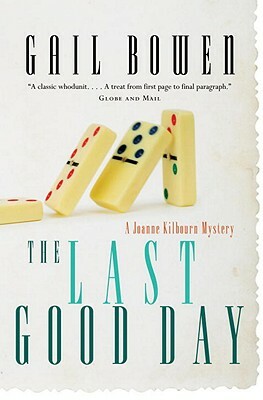
Yesterday I found a copy of Dead Man’s Folly in a Little Free Library when I was dropping off books, and as soon as I started reading, the whole plot came back to me. I haven’t read it in forty years, but clearly it made an impression.
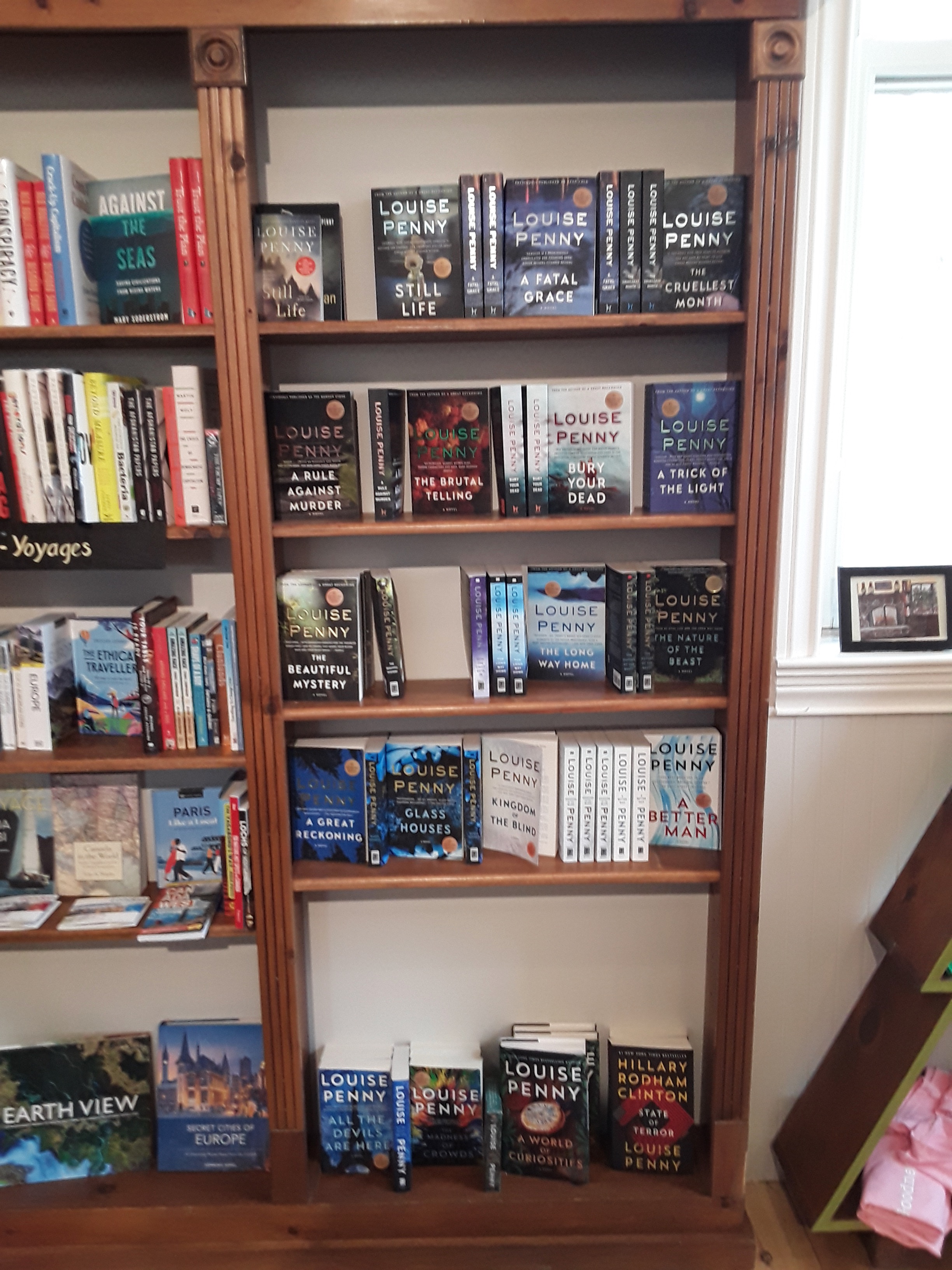
The intriguing allusion? I’m 30 pages in and pretty sure that the Folly of the title, an architectural oddity in an absurd location, is covering up a body. Just like the rapidly-assembled summer house in Gail Bowen’s The Last Good Day.
Bowen’s novel is poignant and profoundly distressing. Her protagonist Joanne is enjoying a summer at the lake courtesy of her good friend, lawyer-turned-baker Kevin Hyde, who’s off having overseas adventures. Her sojourn in his lake house introduces her to the cast of characters who dominate the next several novels, longtime friends and colleagues who first met as idealistic first-year law students. One of them, Zach, becomes Joanne’s lover and second husband in short succession.
Many of them later die in a murderous rampage: Bowen’s own version of the Red Wedding, and it’s a shocker. And a really intriguing artistic choice. I would love to know more about why she decided to kill off several key characters at once.
Jo’s daughter Taylor, whose artistic genius is already evident despite her young age, makes friends with the daughters of other residents of the closed community Lawyers’ Bay. It’s literally a gated community, but also a clever way to contain a mystery plot to a restricted number of characters. Gracie and Isobel are polar opposites, but they’re already best friends, and they admit Taylor into their circle.
Not everything is this peaceful.
The night that the novel opens, one of the lawyers elliptically confesses wrongdoing to Jo before driving his car into the lake, drowning himself. Figuring out why Chris Altieri took this drastic step preoccupies our heroine for much of the novel, and it’s a sad and sordid story. But while she’s investigating his death, she learns of a linked murder, and a body buried under the gazebo.
Lily, the steely and hyper-organized office manager for the law firm and also Gracie’s mother, presided over the construction. For reasons. And it turns out she’s linked through the nearby First Nations reserve to Jo’s old lover, Alex, who still works for the Regina police.
This is a tough book because it ends with tragic deaths that, from my reading perspective, deploy the trope of doomed Indigenous people in a really unfortunate way. There’s a longstanding Canadian literary tradition, in the poetry of Indian Residential Schools architect/government bureaucrat Duncan Campbell Scott and many others, depicting Indigenous peoples in what is now Canada as a “weird and waning race” (Scott’s wretched phrase).
Of course, it was convenient for settler colonialism to make excuses for the massive population reduction of Indigenous peoples, from diseases like tuberculosis and small pox that spread quickly due to the onslaught of colonial policies. Settlers equated it with the eventual dying off of what was termed in Canada, well into the twentieth century, the “Indian problem”.
I wish Bowen had made a different choice here. Lily and Alex are fabulous characters–fully developed, complex, and nuanced. Not at all stereotyped in life. But their deaths . . . Oof. That hits differently.
Regarding Christie, I’m not sure if Bowen was deliberately gesturing to her work in hiding an inconvenient corpse under a gazebo, but maybe?
And if I’m misremembering Dead Man’s Folly, I’ll report back, with ample mea culpas.
 The Landscape of Canadian Women's Crime Fiction
Leave a comment