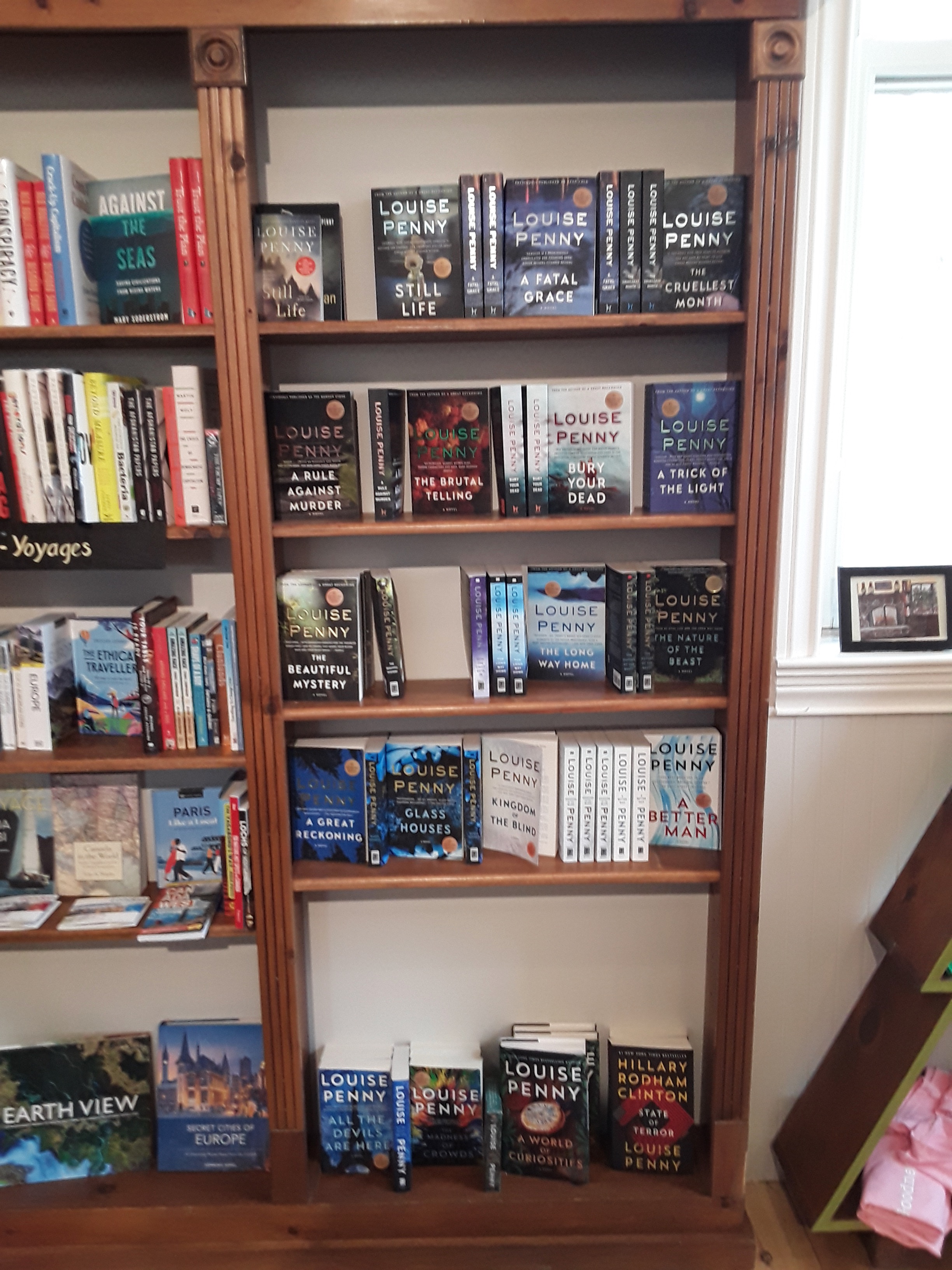
Crime fiction gives its readers much pleasure; Louise Penny’s work, in particular, is attentive to the moments in life when we are “Surprised by Joy.”
Penny put out a call in her January newsletter for life advice that’s worth sharing, and her assistant Linda Lyall, working from Scotland, responded with alacrity to the bromide I sent in, which is courtesy of an old friend’s aunt: “Keep the best, and leave the rest.” Those are my words-to-live-by this year, because 2025 will have challenges in the political and social spheres.
Many of us have spent the last year and more feeling helpless about the barrage of violence and the visiting of starvation on vulnerable people in a complex situation that is well beyond the capacity of this blog to assess. (So keep reading the New York Times, The Guardian, etc. Resist the de-funding of CBC, which I have to hope is an empty campaign slogan by an idea-poor candidate.)
But Joy. And pleasure.

This is my winter Joy project, to break up the long, grey mizzle of a Victoria winter.
We’re relatively fortunate: the winter cherry trees are blooming and I just saw a photo posted on FB of an early plum blossom in the park (which is, in fact, rather worrying for January).
But it’s still winter. And other than the upcoming alignment of planets, there’s not a lot to be excited about.
So I’m thinking about French and Quebec food a great deal and contemplating whether there’s a way to bring more joy into my writing project without undermining the very serious themes that my authors (I do feel proprietary) discuss in their works.
There are lighter strands of Canadian crime fiction, to be sure. Some examples: the very fun food-filled mystery novels by a number of cozy authors, some of whom share recipes either within the books or online. I’ll be perusing Mary-Jane Maffini’s culinary guidance here over breakfast.
But what Penny does so well, in her cozy cum police procedural cum thrillers is incorporate food and conviviality into the darkest spaces of the human imagination. I’ve mentioned Nature of the Feast a couple of times; well, her Nature of the Beast–a horrifying, serial killer mystery featuring, unusually, the death of a child, opens with our cast of familiar characters enjoying fellowship and food in the bistro. We need those moments, in this particular book, as relief. But I still find it very difficult to re-read this book. There’s a saying that children and pets should be off-limits to murderers in mystery fiction, because a substantial portion of the readership will put the back down. Penny braved that, and it’s an intriguing book in her series, but far from my favourite to re-visit.
And a recommendation for a critical reading, because this is very very good, and captures essence-of-Penny. I’m a bit grumpy about this piece’s merits, in fact, because I was working on similar lines for a chapter and realized that this preceded me–and is more insightful. Sigh.
Phyllis M. Betz edited this collection, Reading the Cozy, and she did a terrific job: these are sound, persuasive essays that are deeply engaged with the genre and books they consider.
In “Counterpointing the Cozy: Louise Penny’s Three Pines,” Paula T. Connolly offers a really interesting assessment of how Penny plays with and against cozy conventions in her work, including through her depiction of food.
I also recommend a new-ish collection, Blood on the Table: Essays on Food in International Crime Fiction.
But I stepped away from The Nature of the Beast for a moment because the crimes portrayed in this novel are sickening. Hideous. Grotesque. This is very un-Penny like, and the GoodReads review suggest that at least some readers were taken aback by the Hannibal Lecter-like figure she introduces here, to horrify Gamache’s team. But it’s a really interesting departure for her into serial killer territory, and she has enormous range as an author.
 The Landscape of Canadian Women's Crime Fiction
Leave a comment