Adaptations of Canadian mystery fiction are sometimes ephemeral or short-lived. I’ve been unable to track down copies of the series of TV films based on Gail Bowen’s Joanne Kilbourn novels, although it sounds like there were significant changes. For instance, IMDB describes the character in The Wandering Soul Murders–one of Bowen’s grimmest novels, featuring a child paedophilia ring–as an “ex-police officer turned criminology professor”. Bowen is credited as co-writer, so my research plans include work on her archive at the University of Regina.
A more recent series airing on Fox adapts several of L.R. Wright’s Karl Alberg novels. The books take place on the Sunshine Coast, and the setting is most definitely a major character, but the show relocates them to the U.S. Going back decades earlier, two of Margaret Millar’s novels were adapted to television during the 1960s. Millar is a fascinating figure, also on my TBR (read and researched, for that matter) lists.
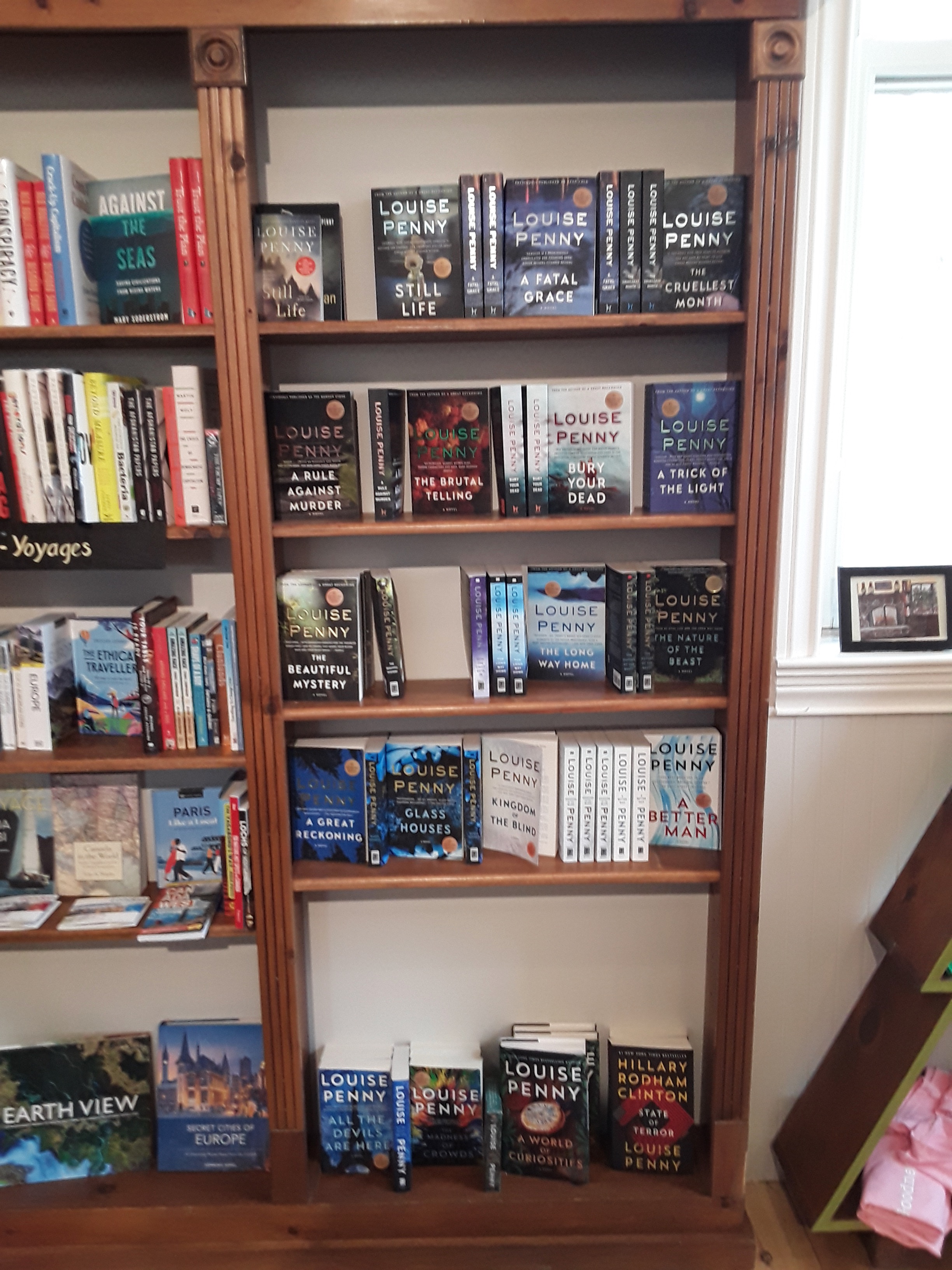
Adapting Louise Penny was first attempted with Still Life, a 2013 film starring Nathaniel Parker as Gamache, and he’s not bad. The movie features Kate Hewlett as Clara, and Patricia McKenzie as Myrna. They are both gorgeous, but portray disappointingly revised and flattened versions of the characters. In this iteration, all of Three Pines’s denizens are stunningly photogenic, with the exception of Deborah Grover as Ruth. She’s appropriately irascible, possibly the only casting choice that works for me other than Parker. But I think the script is the key issue.
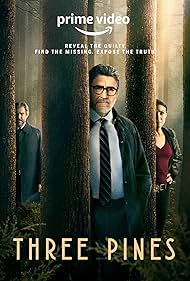
And then there was Three Pines, made for Prime Video, and here I have no quarrels with casting. In a rare and very effective addition, they’ve created an Indigenous-themed storyline that is emotionally powerful and well-told. So I’m rather sorry we aren’t getting a second season, despite the pleas of Penny’s fans, and the author’s own intervention. This is a series that deserved more than eight episodes. There are four stories, each told in two parts, with a through-line of the created story about the disappearance of a young Indigenous mother.
Re-watching the first two episodes, I’m noticing the highlights and the weaknesses in the adaptation of Penny’s second novel, A Fatal Grace AKA Dead Cold.
Alfred Molina as Gamache is even better than I’d remembered. Tantoo Cardinal plays Bea Mayor, re-written as Indigenous with a residential school story incorporated into the plot, and she is a revelation. I’ve seen her on stage several times, and she has a fierce integrity and authenticity as a performer that is perfect. The novel’s challenges still come through, particularly around the commission of the grisly murder that takes place at a curling match, in full view of a crowd. Gamache remarks that the murderer must have been brilliant to pull it off, and that’s the problem. Why go to such show-offy lengths to achieve the crime?
Intriguingly, the adaptation improves on a key character, murder victim C.C. de Poitiers’s adolescent daughter Crie. In the novel, as commentators have identified, there’s a lot of fat-shaming of the unhappy girl: mostly by her misanthropic mother, but not exclusively. In the show, Crie’s gorgeous singing voice is highlighted, along with a reduced emphasis on her physical appearance as grotesque. Roberta Battaglia’s depiction of an emotionally abused daughter is quite poignant.
But as with Still Life, I have the sense that filmmakers are not grasping the essence of Three Pines. In the 2013 film, Gamache and Beauvoir enter a book club where our key characters have gathered, and Ruth says Three Pines is welcoming but expels those who don’t belong. I’m sure I read somewhere that Penny took exception to this particular sentiment; it’s not in the nature of her Three Pines to exclude and cast out. Part of the difficulty, with adaptations that feel thinner than the originals, may be that Penny’s novels create a rich and immersive sensory experience. I feel a sense of distance from Three Pines in the onscreen versions, as a community of friends and villagers who break bread together.
There’s a final and intriguing adaptation, a radio play of Still Life authorized by Penny for fundraising performances. I sought permission to use it for a local charity event, which was forestalled by complications, but I’m hoping it might be feasible to mount a staged reading over the next couple years. It has a few awkward lines and I wish there was more of Penny’s dialogue, verbatim, but it’s been a successful production in a number of locales.
 The Landscape of Canadian Women's Crime Fiction
Leave a comment