
This morning I am breakfasting on the traditional after-school snack of the French schoolchild: squares of chocolate tucked in to a crispy baguette so that they will melt into the hot bread. A kind of DIY chocolate spread.
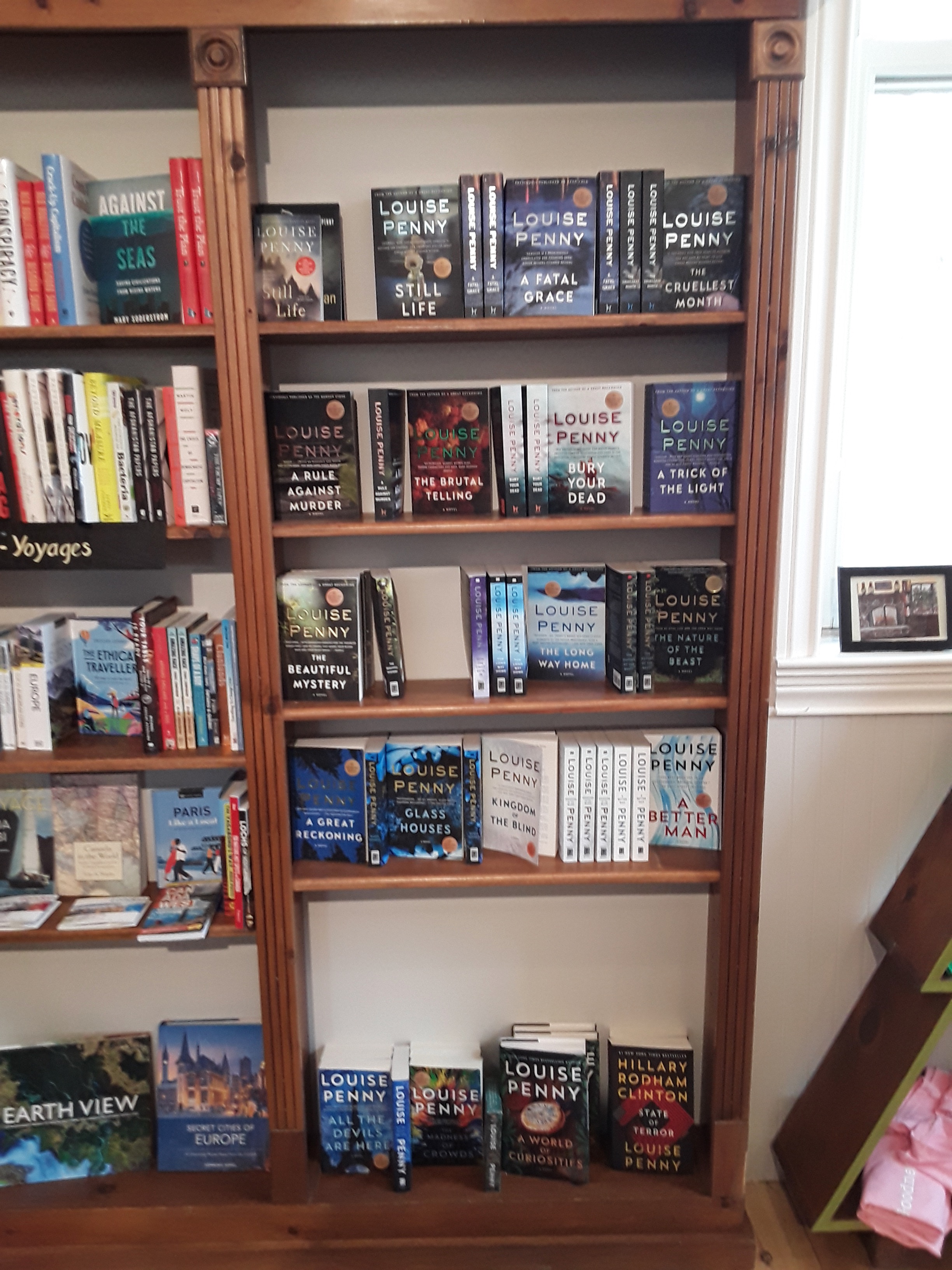
Louise Penny’s Bury Your Dead is one of her more complex novels, following multiple story and time-lines. Chapter 1 opens with a fraught scene: Gamache’s team is on the verge of entering a space that is far more perilous than they realize, and as they prepare, he reassures them by telling them they will be home in time for dinner with their families.
Many of them will never see their families again.
And by the next page, we jump to the present, and Gamache is visiting a long-time friend in Quebec City, and the friend is enjoying a flaky croissant.
But this is not a quick weekend catch-up. Gamache, we learn, has been staying with the friend for some time as the police officer recovers, physically and emotionally, from a terrible event that haunts him. It’s Carnaval d’Hiver and Gamache can enjoy the pleasures of a chilly Quebec winter: scrumptious bistro food (for once, not served up by Gabri in Three Pines); rich hot chocolate; lingering breakfasts outside the tourist area.
But this present-day reality brings Gamache into a complex mystery that starts at the local English-language Literary and Historical Society, where he is dabbling in academic research (remember, Penny describes him in nearly every book as more closely resembling an academic than a police officer).
The mystery ultimately turns on the question of the final resting place of French navigator/explorer Samuel de Champlain, who established the 17th century permanent settlement in what is now Quebec City and then, some years later, died there.
I’m envisioning Penny’s British, American, and other international publishers raising their eyebrows at this: surely too parochial a concern for readers outside of Canada–let’s be frank: outside Quebec–to care much about? And here I can only speak as someone who attended elementary school in Quebec’s French-Catholic system during the 1970s, when Champlain was part of a rising nationalist discourse that meant that “petites Anglaises” like me ultimately fled with their families to Ontario because the 1980 referendum freaked out the adults.
(It did not freak me out, because–thanks to my teachers, who were almost uniformly terrific, but also politically fervent, I imbibed sovereignty discourse and was, age 10, a fervent Péquiste. The move to Ontario proved to be more of a challenge. It turned out, in particular, that history and even geography were taught very differently once you cross the provincial line.)
So I’m wondering how other readers feel about this Champlain-driven plot, which, to me, seems like one of Penny’s most Quebec-centric choices?
She does lull us in with all of the Québecois cuisine. I’ve touched on Penny’s recipe book previously, Nature of the Feast. It’s terrific. Only one recipe, French onion soup, is credited to Bury Your Dead. But at least half of the recipes here have French flair, via Quebec agronomy: maple syrup, wild blueberries, Brome Lake duck.
But food and friendship are serving an even more intense function in this novel, as Gamache struggles with painful memories and overwhelming guilt. Eating meals, which are described in loving detail, provides a brief reprieve. Otherwise, this is a novel about a man seeking comfort and oblivion through his immersion in historical research–and by playing with his dog in the snow. And neither of these sufficiently preoccupies him to allow him to retreat, for long, from his trauma.
You can find a much more detailed plot summary online, but my interest is specifically the juxtaposition of food with history and trauma. Quebec’s food cultures are, more recently, diverse and complex; immigrants from around the world have opened restaurants and changed local eating habits by introducing thali and Phở, roti and ramen. But we don’t hear much about this now decades-long influx of multicultural food cultures in Penny (and I intend this as an observation, not a criticism). I think she grounds her novels in traditional Quebec foods for two reasons: 1) they represent the inherent conservatism of the values of the police procedural (more about this another time), and 2) they identify her as an Anglophone who is respectful of traditional French-language and food cultures in her adopted province. Penny identifies as Québécoise, which is not the case with all Anglophone Quebecers in her novels. Peter’s terrible mother, for example, is a Westmount elitist with a vocal contempt for Clara and for Peter’s vocation as an artist. When Anglophone characters in Penny’s novels bang on about losing their place and status in the province, they’re rarely good people.
Back to food, because I’ve nearly finished my baguette and melted chocolate.
Penny comes at trauma in interesting ways. In multiple books in the series, we have flashbacks to the same event: the disastrous, fatal raid, when Gamache nearly died–and nearly lost Beauvoir. This event takes on multiple meanings, and these shift at different points in time. It becomes possible, for instance, for Beauvoir to be persuaded that Gamache abandoned him at the moment of his greatest need. This raid takes place once in real time–and then over and over and over again in memory, and as the video plays online. It’s repetition compulsion with a vengeance.

 The Landscape of Canadian Women's Crime Fiction
Leave a comment