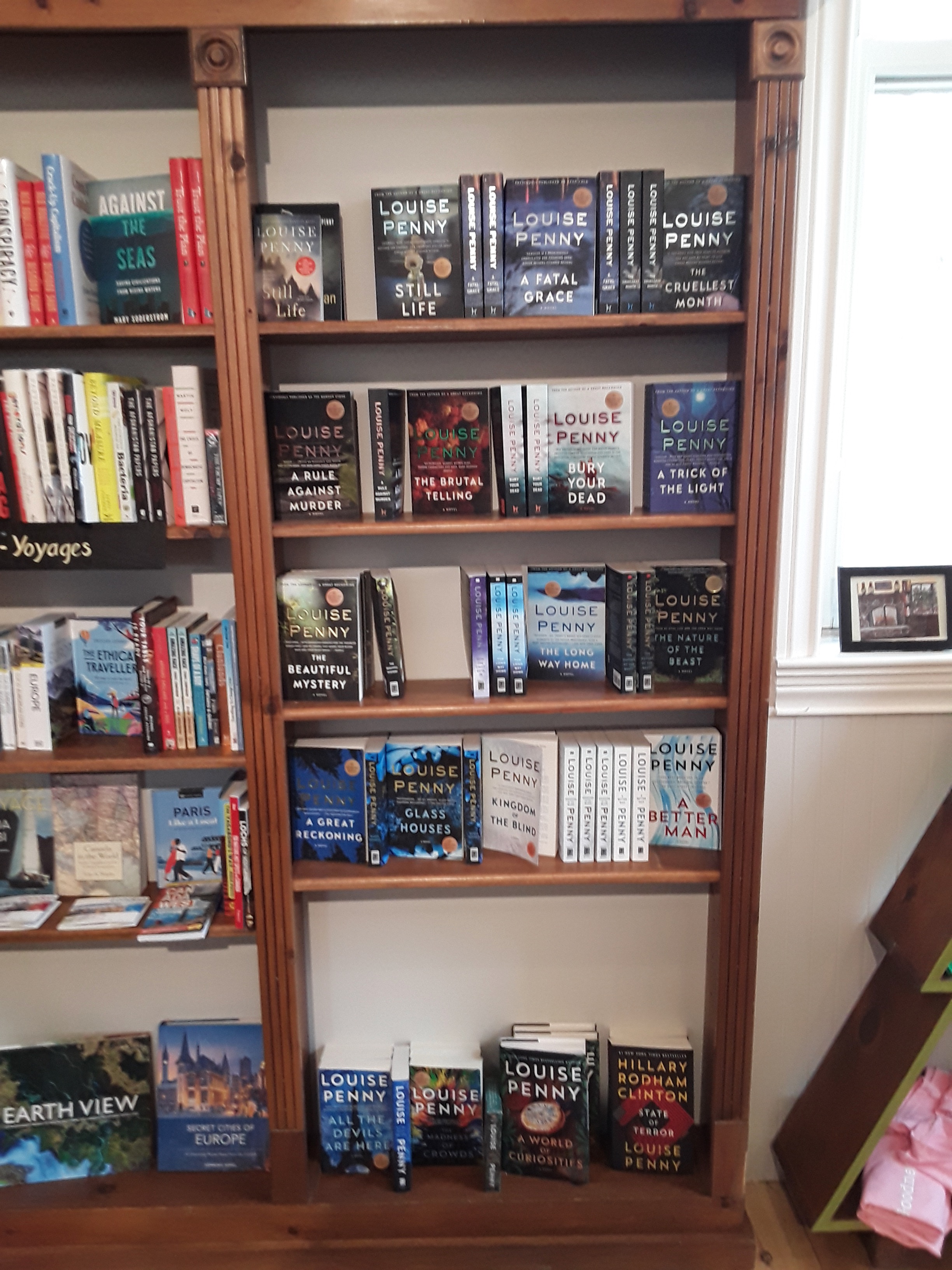
But first, for something completely different. Readers may have noticed that there is a decided lack of ethnocultural/racial diversity among the authors I’m considering in this project. It’s a challenge in the field of crime fiction in Canada and it leads to, for instance, Pamela Bedore’s excellent book devoting a chapter to Ausma Zehanat Khan’s novels and multiculturalism. Because so few other authors, especially women authors, reflect the much-vaunted Canadian commitment to diversity.
So I’m thrilled to see that there’s a new author whose work is exciting interest on both sides of the border. Liann Zhang‘s Julie Chan Is Dead is out in April, and I can’t wait. I’ve just put in a NetGalley request for a pre-pub e-text, but since I’ve been negligent in completing reading of my last two requests, that may not go well.
Back to Munro and “Fiction.” In my previous post, I suggested that this is the kind of title one uses to make a story impossible to locate. While I don’t mean that there was any subterfuge to publish-yet-hide the work, it’s fascinating in terms of the revelations by Andrea Robin Skinner about her mother’s conduct. And in an awful way, I’m afraid. The story itself is classic Munro territory, albeit set on the wet and wild west coast and not in southern Ontario.
A young couple move to a tiny community (modelled on Powell River, it seems to me), and embark on a boho life of house renovations and drinking cheap wine that is interrupted by an affair. The woman is a music teacher at the local school. One of her students has a single mother, who begins an apprenticeship with the music teacher’s woodworker male partner, and he falls for her. Falls hard, even though the story makes it clear that the woman is not nearly as attractive as the rather insufferable protagonist.
The relationship breaks up; the music teacher moves into an apartment, weeps a lot, and ultimately moves away. But before she moves away, although we don’t learn about this in the story’s Part I, she does something wretched. She ingratiates herself with her student, in order to elicit information about the new woman’s life with Jon. The child is a pawn.
Then there’s a break. In Part II Joyce is, decades later, the happy wife of a prosperous and musically gifted man and they live in his expansive North Van house. He has gracefully dispensed with his obligations to his brain-damaged first wife, who appears at his birthday party with her caregiver, and his adult children are just fine with their stepmother holding court at the family home. Joyce no longer teaches music, but she performs.
In fact, she seems like she is always performing as she whirls between social groups at the event, a frenetic Mrs. Dalloway enjoying her party and her privilege. One of her stepsons’ friends has brought his wife, Maggie, as a guest. Joyce dislikes her pretty much at first sight, but a few days later she spots Maggie’s photo on an event poster. This time, Joyce feels like she must have seen her somewhere before. Perhaps she’s a former student?
Ah.
Here’s a bit of fun. Maggie’s book is not a novel, as Joyce had anticipated, but a book of short stories. “This fact by itself is disappointing. It seems to diminish the book’s authority, making the author seem like somebody just hanging on to the gates of Literature, rather than safely settled inside.” We see that Joyce was never the protagonist, and Munro dislikes her character, who fails to see the value of a volume of short fiction.
But Joyce buys the book and starts reading. She discovers, with the familiar Munrovian pricklings of fear-shame-recognition, that the author is from Rough River. The west coast small town where she taught music and lived with Jon. Maggie is indeed the violin student who experienced her teacher’s behaviour–the effort to make use of her, and the subsequent sudden disappearance–as betrayal. All of that is well and good, but I don’t know what to do with the following.
“Joyce has to put the book down again . . . she can feel what is going to happen. She feels the horror coming. The innocent child, the sick adult, the seduction. She should have known. All so in style, nowadays. Practically obligatory . . . Here was where the writer would graft her ugly lie onto the people and the situation she had copied from real life, being too lazy to invent but not to malign.”
I need to pause, as work and student emails beckon. But what is this?
To not leave you in suspense, there is no abuse revelation coming. The trauma is the teacher’s departure, and the child’s growing awareness of how she was manipulated in an adult situation. Joyce is wrong, she is misreading, and she experiences some relief once she realizes that. When she returns to the bookstore for the event and asks Maggie to sign the book, her former student appears not to recognize her.
So Munro. At the time the story was published in Harper’s (2007), she was estranged from her daughter. It was two years after her partner, Gerald Fremlin, had entered a guilty plea for assaulting Munro’s daughter when she was a child. In a previous post, I suggested that there are several Munro pieces where she is effectively “telling on herself,” about the abuse history and her response to her daughter.
This story’s different. In “Fiction,” we have a protagonist who is happily married and settled but fears that her life will be upset by someone else telling a story, one which draws on autobiography but also incorporates sexual abuse. Remember, or know, that Munro had encouraged her daughter Sheila to write her biography. Sheila instead wrote a book about their relationship, with her mother’s blessing. Her sister Andrea is not a big presence in that book.
I’m going to re-read it, because I’m troubled that within the family, there was a conspiracy to protect Alice Munro’s reputation. Including in a book about her as a mother-writer-influence. I’m not discounting that Sheila Munro had a formidable challenge in crafting her book. I’m just wondering what purposes it served, rhetorical and familial? To tell the truth, or part of it?
As for “Fiction,” the story ends in a fairly conventional Munro manner, with a woman laughing at her own brief folly. I love these moments: “This could turn into a fairly funny story someday. Joyce would not be surprised. That’s what she often does with her life.” Yes, because she is a raconteuse, the life of the party. She’s not a writer. Maggie is the writer, and we leave her signing her book as an employee hovers and tries to hurry along Joyce, who has engaged her in conversation. Joyce gives her an ambiguous gift of chocolate lilies, a nod to their shared past that Maggie doesn’t recognize or acknowledge.
They are not actually chocolate lilies, the intended gift. They are chocolate tulips because that was the only option. The attempt to spur recollection fails, the wrong flower proffered. I’ve written on Munro and food/sex/violence before, and it’s a topic I keep coming back to. I would caution readers that in a Munro story, it’s usually a good idea not to eat the chocolate. Or the poison cake. Or agree to a fancy dinner which will, it turns out, require that you strip naked and sit on a prickly dining room chair. Avoid any offers and occasions of food.
Now I’m going to go take more photos of the old Bengal Lounge at the Empress Hotel, where Alice Munro and Carol Shields would hang out and talk about writing, and maybe their children.
 The Landscape of Canadian Women's Crime Fiction
Leave a comment