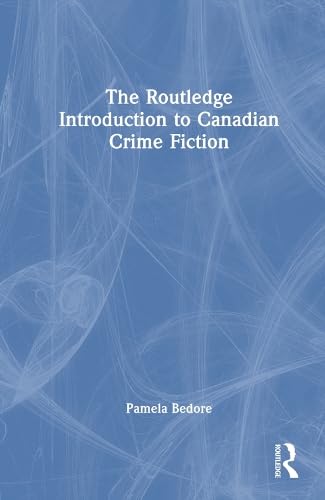
I’ve been drafting a sometimes sprawling book project, adding and subtracting chapters too frequently. It’s been such a big help to have a model and guide for my work, in the form of Pamela Bedore’s 2024 book on Canadian crime writing. In a crucial way, I’m writing in dialogue with Bedore–and with a few other authors, including the work of Manina Jones and Priscilla Walton and, more recently published, Rachel Haliburton.
There just aren’t that many literary critics who have tackled Canadian crime fiction, and this is both blessing and curse. Unlike in the work I’ve done on, say, popular Munro stories or Atwood’s fiction, there isn’t a thicket of references to negotiate before I can write an original word. Conversely, I’m more often on my own and fumbling towards new claims, without the reassuring bolstering of citations.
So huge thanks to Pamela Bedore for her book! It’s a bigger and more ambitious effort than what I’m trying. Although there are a few caveats, what’s below is less a review than an appreciation.
I’ll start with where we have some overlap, which is a rather self-serving approach, but it is inevitably how I’m digesting and learning from her book. And a shout-out, too, for her tremendously good article on Louise Penny. That isn’t in the book, but it establishes some key terms for discussing the Gamache novels, as utopian strivings for love, art, food, and community.
In contrast to my work, Bedore is just as interested in male authors as female ones. She has excellent chapters on writers I’ve read in their entirety, like Peter Robinson of the Yorkshire-set Inspector Banks novels, as well as writers like Anthony Bidulka and Giles Blunt whose work I know in passing, having read 2 or 3 books from each.
It’s a strength of Bedore’s work that she brings familiarity with multiple national contexts to her book. She’s working in the U.S. but was raised in Canada, and she brings a dual consciousness to the significance of the Canada/U.S. border in particular, and more broadly about Canada’s relationship to imperial others like the UK. That’s especially vital for thinking about Peter Robinson’s work, as a Yorkshire-raised Canadian immigrant who sets his work almost exclusively in the UK. I will admit to some unease with Robinson’s female characters, which I once raised with him at a public event; that did not go well.
Bedore also writes very engagingly about Anthony Bidulka, and his characterization as a gay crime writer. She takes up and, in my opinion, thoroughly dispenses with suggestions of misogyny in his work. Her chapter on Giles Blunt is sound and well-reasoned, and here I’ll just note Manina Jones’s work on Blunt, which has been helpful for me in thinking about place and setting.
Policing is very different in Canada than in the U.S., or in the UK or France, for that matter. One of the key elements of Canadian crime fiction, I think, is that weapons are used so differently. Private investigators are less likely to be carrying a handgun than in Sara Paretsky’s Chicago. While the police are armed, there’s a lingering sense (albeit one troubled by necessary critiques from Black and Indigenous activists and theorists) that Canadian policing is more benevolent and less antagonistic.
This is rooted, of course, in the myth of the RCMP and their antecedents, the North-West Mounted Police. Supposedly they were peacekeeping forces who helped quell protest in the Canadian west, as part of the nineteenth-century nation-building project. Louis Riel would have vehemently disagreed. Contemporary perspectives are probably closer to his understanding of violent, forcible displacement of Indigenous peoples than to the burnished image of the Mounties. And much to her credit, Bedore takes up these issues in several chapters, and also tackles the English/French linguistic divide that is so central to Canadian culture.
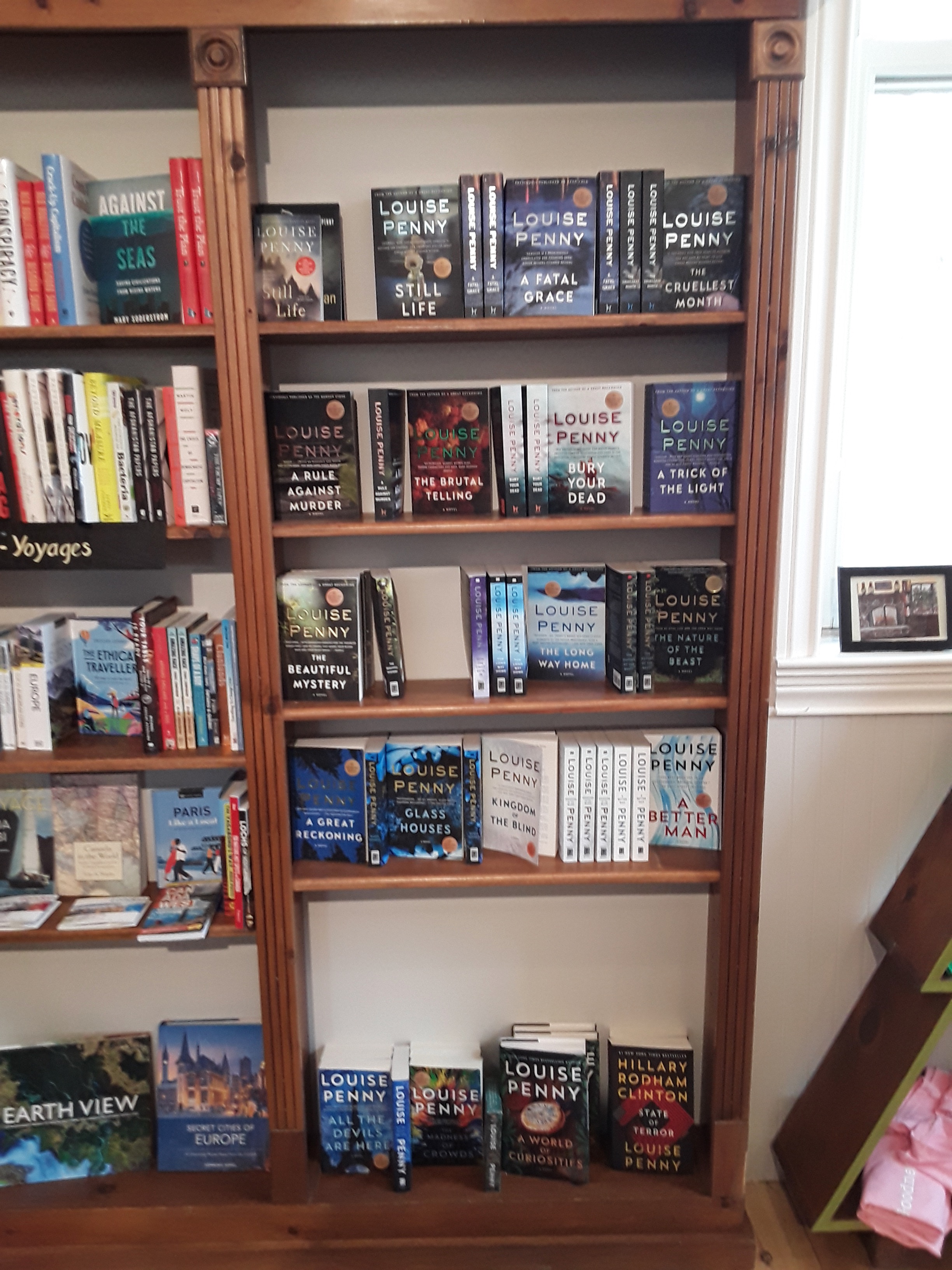
I find her Penny chapter in this collection, although intriguing and suggestive, a bit disappointing. I was hoping for an overview of the series as a whole, and Bedore elects to focus closely on a couple of specific books, notably Bury Your Dead, a rare Gamache work set in Quebec City. She juxtaposes analysis of Gamache’s historical research, into the burial place of Samuel de Champlain, with a provocative assessment of eco-terrorism and the events that effectively take place between novels in the series.
These are important observations, but Penny has repeatedly alluded to the threat of eco-terrorism, typically perpetrated with high-level government collusion. Including in The Grey Wolf, which came out after Bedore published her book. I’d like to hear about how this dimension amps up Penny’s series, because Bedore makes a persuasive case that these books are simultaneously using elements of the cozy, the police procedural, and the thriller. My bias is that I dislike the thriller elements, but I suspect this puts me in the minority of readers.
There’s lots to say about the merits of Bedore’s book, including her very interesting readings of work by Atwood and Emily St. John Mandel, which it wouldn’t have occurred to me to characterize as crime fiction. And the much-overdue discussions of Thomas King and Ausma Zehanat Khan as, respectively, Indigenous and multicultural voices in the genre. I’m not writing on King but in the work I’m doing on Khan, I’ve been intrigued by the geographical and historical range of her plots, from Serbian war crimes to Toronto. Bedore offers a really helpful way to contextualize her work, and I hope Khan’s fiction is only the beginning of much more diversity in mystery/suspense writing in Canada.
 The Landscape of Canadian Women's Crime Fiction
Leave a comment