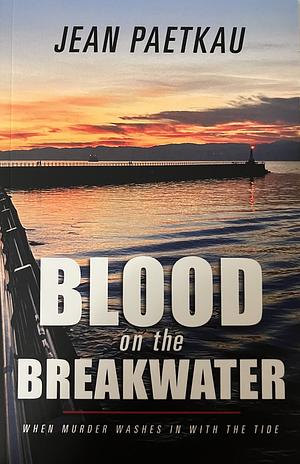
My Christmas holiday reading has been the second book in local indie writer Jean Paetkau’s Breakwater series, which opened with Blood on the Breakwater last year. In Victoria it was a bestseller, and the author did a tremendous job promoting her self-published work. That must be one of the most onerous tasks for a writer who is, mostly, also their own editor, proofreader, fact-checker, agent, and publisher.
I’m reminded of some of the writers I read, during my mystery-focused childhood, who were particularly strong at evoking place. Like Trixie Belden, with her penchant for both local and away-from-home adventures featuring intriguing settings. Or Eric Wilson, whose Canada-trotting teen sleuths introduced legions of Canadian kids to cities from St. John’s to Victoria.
Like Wilson, Paetkau set one novel, Blood on the Breakwater, in significant part at Victoria’s former home of acclaimed landscape artist Emily Carr. Carr’s life and struggles, during the first half of the twentieth century, included years so penurious that she couldn’t afford to purchase canvas for her paintings. Paetkau shares with Wilson an interest in informing readers about Canadian history and heritage sites, and Victoria is the perfect setting for this approach.
But Paetkau is writing for an older readership. Her sleuth Helene, a radio journalist and single mom of two kids with life-threatening allergies, owes more to the feminist mystery fiction of the 1980s and 1990s than to Wilson.
I liked but didn’t love Paetkau’s first book; I’m alone on this, as several friends were over-the-top enthusiasts. I felt that too much was packed in: lots about mothering and friendship and work, which caused the mystery investigation to recede for significant portions of the novel.
This is true to some extent in the early chapters of the sequel, and I worried at first about the lengthy exposition and slow development. Helene is summoned to work on a Sunday, because a news conference has been called at the heritage site of Craigdarroch Castle. A wealthy local man, the descendant of one of Victoria’s most celebrated writers, has an announcement to make about his ancestress and a newly discovered manuscript.
But things start picking up when the proud descendant plummets from a higher floor, and murder is suspected. The academic historian he’s been working with has clearly become closely involved in his life, while his ex-wife, who did well in the divorce, has strong feelings about him.
Perhaps the greatest enmity is expressed by the family whose house was sold to his company of real estate developers. They believe he reneged on a promise to retain, rather than tear down, the property that their late father painstakingly restored.
The novel’s pace does slow periodically, so that Helene can tackle her myriad other responsibilities. But even in these more domestic or work-place scenes, the dialogue is crisp and believable.
And this is very much a novel featuring location as a character. Paetkau carefully traces her sleuth’s passage through the city, naming roads and neighbourhoods (although apparently electing to re-name Oak Bay as Moss Bay–maybe because, as the home of the wealthier tranche of Victorians, it comes in for a certain amount of ribbing about its pretensions). If you live here, or you’ve spent time in Victoria, Paetkau’s settings will be familiar. If you’re new to the city, she is a reliable and engaging guide to its heritage and geography.
 The Landscape of Canadian Women's Crime Fiction
Leave a comment