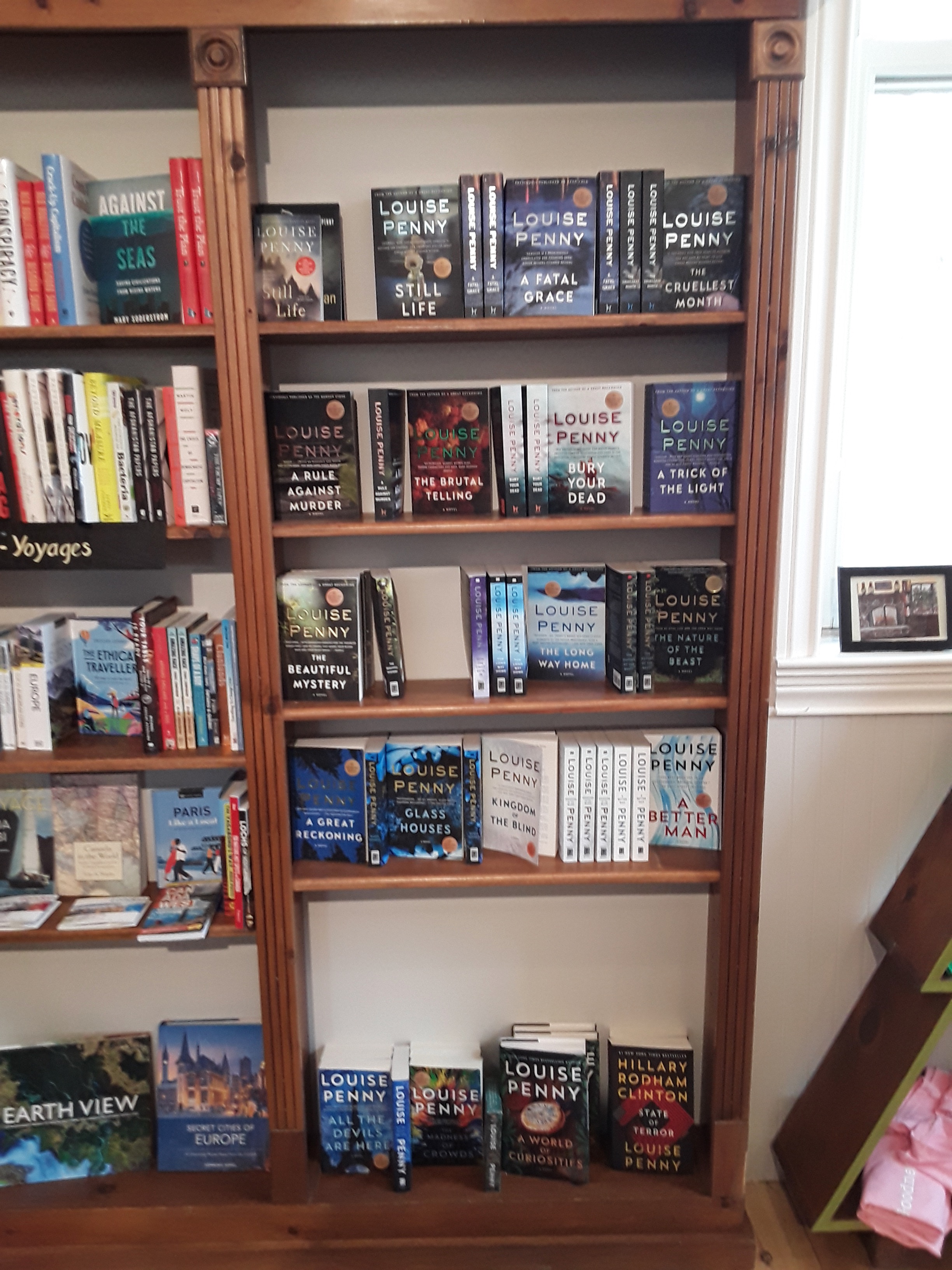
It’s been eighteen months of lots of teaching and creative writing, so the book project has ticked along much more slowly. But it’s also Christmas, and a perfect time to write about Louise Penny’s Three Pines Cookbook–available free online–The Nature of the Feast.
While the title alludes to one of Penny’s most violent and disturbing books, this is a book of gentle Three Pines pleasures. The Cookbook is written by Penny herself (while most of the growing number of mystery-cookbooks are authored by other people, often decades after a novelist first became celebrated). And the recipes work! Always a plus.
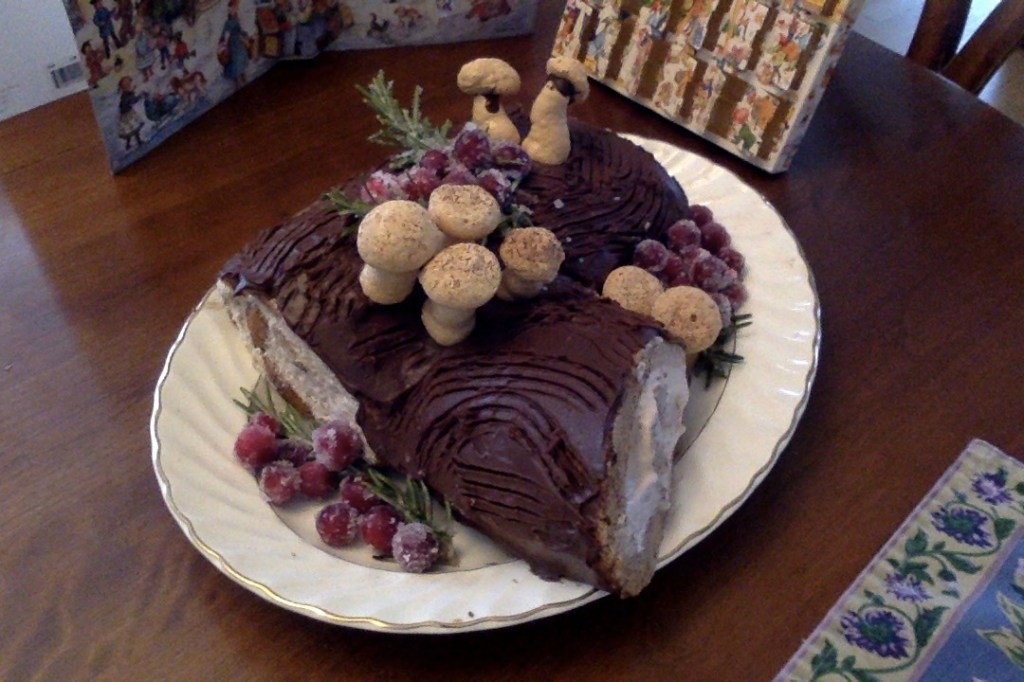
Some options to contemplate for holiday cooking and baking: Roast Turkey and Chestnut Stuffing, from Penny’s first novel, Still Life; from A Fatal Grace, the item you see above, a traditional Bûche de Noël Québécoise (although Penny’s version incorporates marrons–roasted and peeled chestnuts–which are not my favourite); and from How the Light Gets In, an English Trifle. The Sugar Pie, Coq au Vin tinged with maple, and a number of other recipes also look like hearty winter fare.
But spring and summer are represented, too! Lemonade, strawberry shortcake . . one can conjure up the Three Pines villagers setting up the picnic tables for a communal meal to celebrate the season.
There’s some interesting writing about food in Penny’s fiction, much of it in blogs and features. A recent collection of essays edited by Phyllis Betz on the sub-genre of the cozy, which tends to be dominated by women writers, includes a piece on Penny that’s well worth reading. In “Counterpointing the Cozy: Louise Penny’s Three Pines,” Paula T. Connolly provides a thorough and thoughtful assessment of how Penny’s novels both incorporate features of the cozy–food, family, friends–yet also challenge the boundaries of the genre. As a number of commentators, and perhaps most pointedly Pamela Bedore have identified, Penny blends elements of the cozy and the police procedural (and sometimes the eco0thriller) in highly literature novels that owe much to predecessors like P.D. James’s urbane poet-detective Adam Dalgliesh.
Food is the focal point of life in Three Pines, the village that doesn’t appear on any map, with its high body count and its preternaturally relaxed relationships between anglophone and francophone residents. Food brings everyone to the bistro, where Gabri presides over the kitchen, and to the bed and breakfast, Olivier’s domain; it is served at impromptu dinner parties thrown by Myrna, Clara, and–after the Gamaches retire to Three Pines–the police inspector’s wife Reine-Marie, a librarian and archivist.
The food in her books, Penny has suggested, encourages readers’ engagement through multiple vicarious sensory pleasures. And for me, at least, it works.
 The Landscape of Canadian Women's Crime Fiction
Leave a comment