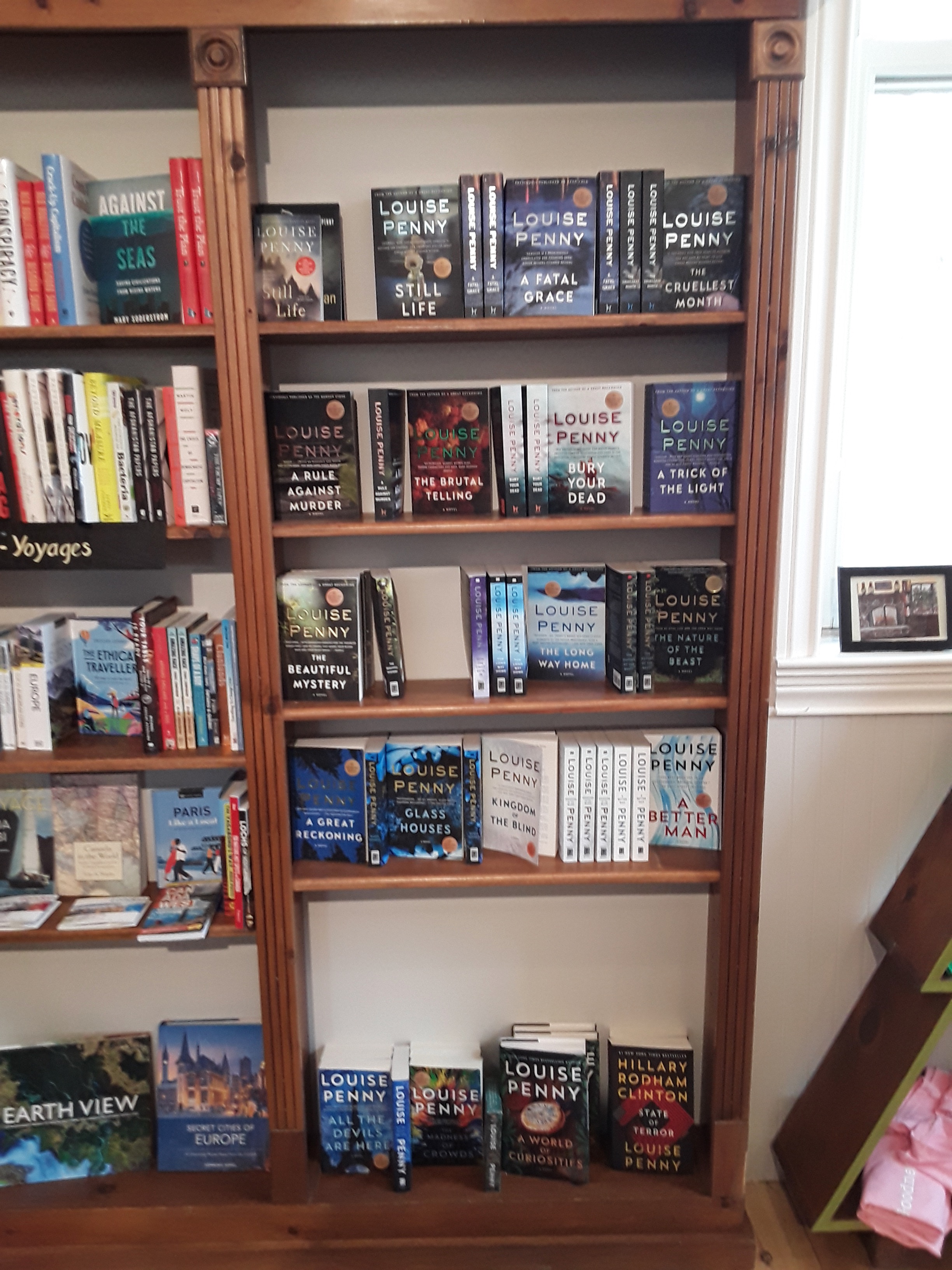
Canadian women writers have incorporated mysteries–historical and contemporary–into their fiction in a variety of ways.
Margaret Atwood’s Alias Grace, based on a nineteenth-century Ontario murder, and adapted to television by Sarah Polley, is a prominent example.
Carol Shields’s novel Swann had a subtitle–A Mystery–added without her knowledge. And given that the book subsequently won a mystery writing award, perhaps that was beneficial, although it’s an odd example: a postmodern academic caper novel about scholars and publishers viewing to control the literary legacy of an Ontario farm wife. Mary Swann was murdered by her husband years earlier, but she survives in the form of a slim volume of homespun poems. And with an impending Symposium on her legacy, her devotees find themselves the victims of a thief who appears to be snatching up all the existing volumes of the book.
Alice Munro has written multiple mysteries into her fiction, but it’s notable how many of her stories about murder or disappearances pose questions about memory, narration, or documentation rather than about the events themselves. In “Cortes Island” a young woman, new to Vancouver and married life, is roped into caring for an elderly and disabled man who struggles to communicate; his wife, the woman’s landlady, presses her into service on the basis that she’s not doing anything else. What she’s doing–what so many of Munro’s young protagonists are doing–is trying to write. But her nascent efforts are a struggle. From this man, and his scrapbook of clippings that he directs her to look at, the protagonist learns that her impressions of the elderly couple are at dramatic odds with their past.
This term I’ll be teaching Women’s Literature, and I’ve paired Munro’s “Silence”–the last story in her sequence of three about Juliet, a classicist, and her relationships to her parents, husband, and daughter–with Atwood’s “The Stone Mattress.”
I have a few goals in mind, some more ideological in orientation, and others more focused on aesthetics.
There’s a film adaptation of “The Stone Mattress” in the works, and it will be interesting to see what they do with Atwood’s story of a woman who encounters a man she’d known decades earlier on a cruise and . . . exacts justice. Or at least, that’s one way to view her actions.
And Munro’s “Silence” is about an inexplicable estrangement between Juliet and her 21-year-old daughter, Penelope, a story that we need to read differently now that we know about the events in Munro’s own life that inspired part of the plot.
I’m also combing through CanLit for other “mystery” stories in literary fiction by women–please let me know if you have suggestions.
 The Landscape of Canadian Women's Crime Fiction
Leave a comment